
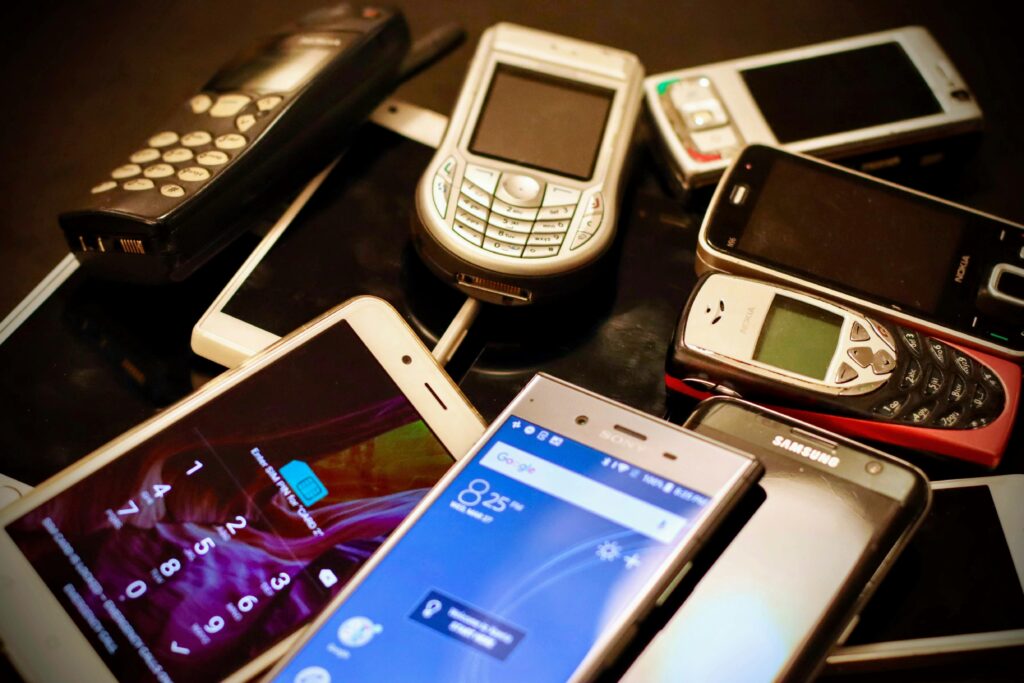
Samsung is the world’s biggest smartphone company in 2026, and Apple is right behind it. After that the race gets crowded, with Xiaomi, Oppo and Vivo swapping places from one quarter to the next.
Here is the part most people miss. The dozen or so phone brands you see in shops are not a dozen separate companies. A handful of parent firms own most of them, and once you know the map, the whole market starts to make sense.
This guide ranks the big players using the latest shipment data from the second quarter of 2026, then shows you who actually owns the brands you shop for. Real numbers, cross-checked against two research firms, no guesswork.
Who is the biggest smartphone company in 2026?
Samsung is the biggest, shipping about 62.7 million phones in the second quarter of 2026 for a 22.6% share of the global market, according to IDC’s Q2 2026 figures. Apple sat second with roughly 55.8 million phones and a 20.1% share. Those two were the only major brands that actually grew that quarter. Apple jumped about 15% year over year, Samsung about 8%, while most of the pack shrank. If you want to browse what Samsung and Apple make beyond phones, both have full profiles in our directory. Between them, these two companies now account for well over four in ten phones sold worldwide.
The top five smartphone companies by shipments
The top five in Q2 2026 were Samsung, Apple, Xiaomi, Oppo and Vivo, in that order. Here is how IDC counted the quarter.
| Rank | Company | Shipments (Q2 2026) | Global share | Year on year |
|---|---|---|---|---|
| 1 | Samsung | 62.7 million | 22.6% | up 8.1% |
| 2 | Apple | 55.8 million | 20.1% | up 15.3% |
| 3 | Xiaomi | 31.2 million | 11.2% | down 26.3% |
| 4 | Oppo | 28.8 million | 10.4% | down 17.5% |
| 5 | Vivo | 21.2 million | 7.6% | down 19.4% |
A second firm, Counterpoint Research, put the same five in the same order but read the shares a little differently: Samsung 24%, Apple 20%, Xiaomi 12%, Oppo 11%, Vivo 8%. The rankings agree, the exact percentages do not, which is normal when two firms use different methods. Both agree the overall market shrank. IDC had it down 6.7% to 277.5 million phones, while Counterpoint called it the weakest second quarter since 2013.
Shipments or sales: what these numbers actually count
These rankings count shipments, not final sales, and that difference matters. A shipment is a phone the maker has sent out to shops and distributors, which is not quite the same as a phone a person has bought and taken home. Firms like IDC and Counterpoint track shipments because that data is easier to collect quickly and gets close enough to demand for most purposes. Each firm builds its own estimate from supplier checks and models, so their totals rarely match to the decimal, which is exactly why Samsung can read as 22.6% in one report and 24% in another. Treat the shares as well-sourced estimates rather than an exact census. The order of the top players, though, is where the firms tend to agree, and that order is the reliable part.
Why are phones getting more expensive in 2026?
A memory chip shortage is the main reason. IDC reported that memory costs are up nearly 300% from a year earlier and now make up more than 65% of the parts cost on cheap phones. That is a brutal squeeze at the low end. The reason, per Counterpoint, is that AI data centers are buying up the same DRAM and NAND memory that phone makers need, so there simply is not enough to go around. This is why the budget brands took the hardest hit while Samsung and Apple, who sell pricier phones and can absorb the cost, kept growing. Counterpoint expects the full year to finish down around 14%, with the shortage likely running into 2027. Short version: if your next phone costs more than you expected, memory is the culprit.
Who owns Oppo, Vivo, OnePlus and Realme?
All four sit under one Chinese parent, BBK Electronics. Oppo launched in 2004 and Vivo in 2009, while Realme started as an Oppo sub-brand built to chase Xiaomi in India, and iQOO arrived in 2020. OnePlus is the clearest case of shared DNA: as Android Central lays out, OnePlus phones are built at Oppo’s Dongguan factory, the first OnePlus was based on an Oppo design, and OnePlus co-founder Pete Lau was an Oppo vice president before he started it. So when you compare an Oppo against a OnePlus, you are really comparing two products from the same house. The brands run separately day to day, but the parent, founded by Duan Yongping, ties them together.
Who owns Tecno, Infinix and itel?
Transsion Holdings, a Shenzhen company, owns all three. You may never have seen these phones in a US shop, and that is the point: Transsion built its business around Africa, where it is the runaway leader. By 2021 its brands combined held roughly 48% of the African smartphone market, more than any single rival, and it passed Samsung there years ago. It also owns the Carlcare repair network and the Oraimo accessories brand. Founded in 2006, it makes cheap, durable phones tuned for local needs, like cameras set up for darker skin tones and batteries built for patchy power. You can see Transsion Holdings and its brands in our directory. It is proof that the biggest names in one region can be near invisible in another.
What about Redmi and Poco?
Both are Xiaomi brands. Redmi began in 2013 as Xiaomi’s budget phone line and became its own named sub-brand in 2019, while Poco sits under the same corporate roof, aimed at value-hunting buyers who want a lot of spec for the money. They chase different shoppers and price bands, but the company behind them is the same one. So if you are weighing a Xiaomi against a Redmi against a Poco on the same shelf, you are choosing between three doors into Xiaomi, not three separate companies. That is worth knowing, because parts, software and updates often flow from the same place.
Is Honor still part of Huawei?
No. Huawei sold Honor in November 2020, and the two are now fully separate. Honor went to a consortium called Shenzhen Zhixin, which included a state-backed Shenzhen group and a set of Honor’s own dealers. The reason was survival: US sanctions had choked Huawei’s chip supply, and spinning Honor off freed it to buy Qualcomm processors and ship Google apps again, options Huawei itself had lost. Huawei confirmed it kept no shares and no say in the new company. So a 2026 Honor phone is not a Huawei phone, even though they share a history. If you want the company details, Honor has its own profile in our directory, separate from Huawei’s.
What happened to Huawei?
Huawei fell out of the global top five, and US sanctions are the reason. A few years ago it was trading blows with Samsung for the number one spot. Then export rules from 2019 cut off its access to the most advanced chips and to Google’s apps and services, which gutted its phone business outside China. Selling Honor in 2020 was part of the fallout, a way to let at least that brand survive with normal chip and software supply. In the Q2 2026 shipment rankings, Huawei no longer appears among the world’s five largest sellers, though it remains a serious name on its home turf. It is the clearest case in this list of how much a single policy decision can reshape a company’s reach.
Who makes Nokia phones now?
A Finnish company called HMD, not Nokia itself. HMD was set up in 2016 and licensed the Nokia brand to put it back on phones and tablets, since Nokia the company had stepped out of the handset business. In practice that means a Nokia-branded phone is an HMD product with a licensed badge. More recently HMD also began selling phones under its own name, so you now see both Nokia-branded and HMD-branded devices from the same maker. It is a smaller player than the giants above, but it is a good example of how a famous phone name can outlive the company that made it famous.
So how many companies really make the world’s phones?
Fewer than the brand count suggests. Roughly six groups cover most of what you can buy: Samsung on its own, Apple on its own, Xiaomi (with Redmi and Poco), BBK (Oppo, Vivo, OnePlus, Realme and iQOO), Transsion (Tecno, Infinix and itel), and Huawei alongside its now-independent former child Honor. Off to the side sits Google, which makes the Pixel in smaller numbers but sets the pace on camera software and on-device AI. Add a few regional names and that is the shape of it. The takeaway is simple: a shelf that looks like fifteen rival brands is often five or six companies wearing different badges.
What this means when you buy a phone
Knowing the parent company helps you shop smarter. When two brands share an owner, they usually share parts, software habits and repair networks, so the choice between them comes down to price and design rather than one company being more trustworthy than the other. It also explains why an Oppo and a OnePlus can feel so similar, or why a Redmi undercuts a Xiaomi that looks almost identical. If you are ready to pick an actual handset, our plain-English buying guides do the narrowing for you: start with the best Android phones worth buying in 2026, or jump straight to which iPhone to buy and which Samsung Galaxy to buy.
Next time you compare an Oppo against a OnePlus, or a Redmi against a Poco, remember you are often comparing two doors into the same house. Pick the price and the design you like. Do not assume the pricier badge was built by a different company, because more often than not, it was not.
Quick questions and answers
Which company sells the most phones in the world? Samsung, followed by Apple, based on IDC’s shipment count for the second quarter of 2026.
Are Oppo and OnePlus the same company? Effectively yes. Both sit under BBK Electronics, and OnePlus phones are even built in an Oppo factory.
Why are budget phones pricier in 2026? A memory chip shortage, driven partly by AI data center demand, has pushed component costs up sharply, and cheap phones feel it most.
Is Honor a Chinese state company? No. A consortium that included a state-backed Shenzhen group bought Honor from Huawei in 2020, but it runs as an independent business.
Who owns Tecno and Infinix? Transsion Holdings, a Shenzhen company that leads the African smartphone market.
About this article. Written and fact-checked by the Brandligo editorial desk. AI tooling was used to gather and cross-check sources; every fact and figure here was verified against the primary sources linked above before publication. Published 10 August 2026. If you spot something out of date, tell us at [email protected].