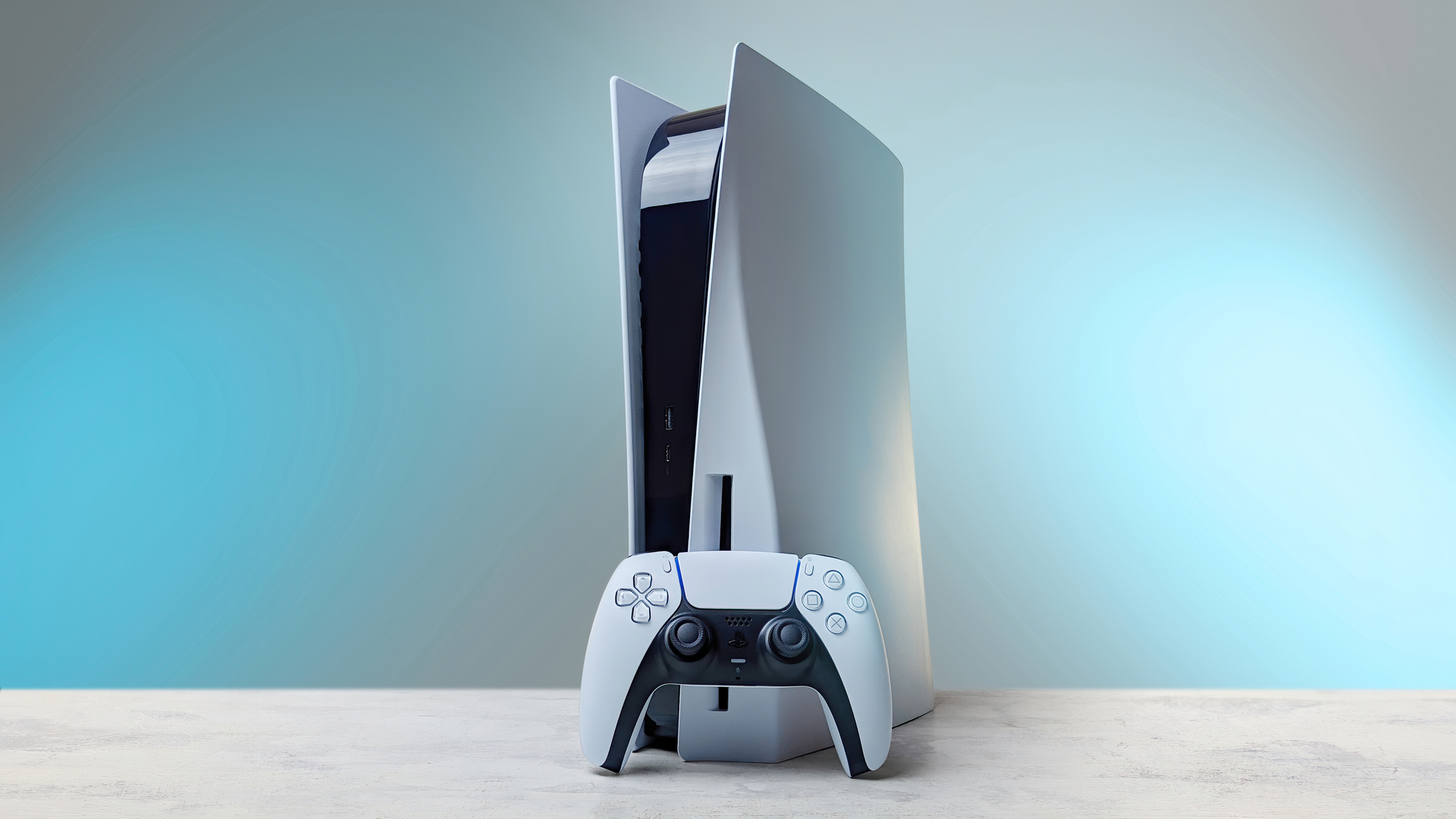
Quick answer: The PlayStation 5 is no longer a single launch-era console. In 2026, buyers may encounter the current PS5 and PS5 Digital Edition designs, the higher-end PS5 Pro, and older original PS5 hardware on the used market. The right choice depends less on old “next-generation” marketing and more on disc support, storage, display capability, game requirements, and total setup cost.
Updated September 4, 2026.
This page is maintained as a concise hardware reference rather than a broad “future of gaming” prediction. Brandligo has not independently benchmarked every PS5 model, SSD, monitor, TV, or projector discussed.
What changed since the original PS5 launch?
The original PS5 launched with an 825GB internal SSD and established the platform around a custom AMD CPU/GPU architecture, fast solid-state storage, ray-tracing support, HDR, high-frame-rate output in supported games, and the DualSense controller.
The platform has since expanded. Sony now sells PS5, PS5 Digital Edition, and PS5 Pro variants in major markets, so buyers should confirm the exact model rather than assume every listing has the same storage, optical-drive configuration, graphics features, or price. Sony’s March 27, 2026 pricing announcement, for example, separately lists PS5, PS5 Digital Edition, and PS5 Pro as current products.
Official current-model and regional availability can change, so verify the model number and retailer listing before purchasing rather than relying on launch-era specifications.
PS5 Pro is a different buying decision
PS5 Pro is positioned above the standard PS5 family for buyers who prioritize image quality and performance in games that support its enhanced features. Sony rolled out an upgraded version of PlayStation Spectral Super Resolution (PSSR) in March 2026. The reconstruction technology is now integrated into current PS5 Pro system software and is being adopted by supported games to improve image clarity and stability.
That does not mean every game automatically looks or performs the same way. Support varies by title and mode, so compare the games you actually play rather than buying from one headline specification.
Storage matters more than the old 825GB headline
PS5 storage varies by hardware generation, and game installations can consume substantial space. Sony supports compatible PCIe Gen4x4 M.2 NVMe SSD expansion for PS5 consoles. Its current requirements allow supported drives from 250GB to 8TB and recommend sequential read speeds of 5,500MB/s or faster, together with an appropriate heat-dissipation mechanism.
PS5 games can be downloaded to, moved to, and played from a compatible installed M.2 SSD. USB extended storage is useful for storage and PS4 games, but PS5 games stored on USB need to be copied back to console or M.2 SSD storage before they can be played.
See Sony’s current PS5 M.2 SSD requirements and installation guidance before buying an expansion drive.
4K/120Hz depends on the entire display chain
A PS5 can output high-resolution and high-refresh-rate video in supported games, but buying a “4K projector” or “4K monitor” does not guarantee 4K at 120Hz. The console, game, HDMI port, cable, AV receiver or switch, and display must all support the requested signal path.
For projector users, the safest approach is to compare input lag at the exact resolution and refresh rate you plan to use. A projector may advertise 120Hz or 240Hz only at a lower resolution while operating at 60Hz at 4K.
PS5 Pro can support up to 8K in select games, but Sony currently lists the console system UI and media apps at up to 4K. An 8K PS5 Pro setup also requires a compatible 8K/60Hz display with Display Stream Compression, so “8K ready” should not be treated as a reason to buy a display unless the specific game and full signal chain support it.
If you are building a projector setup, use Brandligo’s PS4/PS5 projector setup guide for HDMI, HDR, 4K/120Hz, audio, and troubleshooting steps. For purchase decisions, compare current models in Best Projectors for Gaming in 2026.
Monitor, TV, or projector?
The best display format depends on how the console will be used. A gaming monitor is usually the most natural choice for desk-based play where latency, refresh rate, text clarity, and near-field viewing matter. A TV is often the simplest living-room option. A projector makes more sense when a much larger shared image is the priority and the room can accommodate throw distance, screen placement, ambient-light control, and audio routing.
Brandligo’s Gaming Monitor vs Projector guide explains those trade-offs without assuming one format is universally better.
For esports labs, gaming lounges, schools, and event operators, the procurement decision should also include fleet consistency, spare displays and cables, mounting, power, HDMI switching or capture hardware, and recovery when a station fails. Monitors are usually easier to standardize per competitive station, while projection is better suited to spectator viewing, coaching, shared demonstrations, and tournament presentation.
Should you buy a PS5 in 2026?
The PS5 platform remains actively supported, but the buying question is now model-specific. Compare the standard PS5 family with PS5 Pro based on the games you play, whether you need disc support, available storage, your display’s real HDMI capabilities, and the cost of the complete setup.
A used original PS5 can also be reasonable when priced appropriately, but buyers should check the exact model, storage condition, controller condition, included accessories, warranty status, and whether the seller’s listing matches the actual hardware.
Sources and verification
For current hardware and pricing context, see Sony Interactive Entertainment’s March 27, 2026 PS5 pricing announcement. For storage compatibility, use Sony’s official M.2 SSD support documentation. For current PS5 Pro display limits, including select-game 8K support, see Sony’s PS5 Pro compatibility guide. Sony’s March 16, 2026 PSSR update documents the upgraded PSSR rollout. Current model availability, firmware features, supported game modes, and retailer pricing can change after publication.