A vendor onboarding checklist should turn an approved supplier into a controlled, operational relationship. Selection is not the finish line. Before a software or technology vendor receives data, system access, payment details or a production role, the buyer still needs to complete the contractual, security, finance, access, implementation and ownership steps that make the relationship safe to operate.
The most useful onboarding process is risk-based. A low-risk tool with no sensitive data and no integration should not face the same workflow as a critical SaaS platform with production access. The checklist below gives procurement, IT, security, finance and business owners a practical baseline, with explicit evidence, owners and go-live gates.
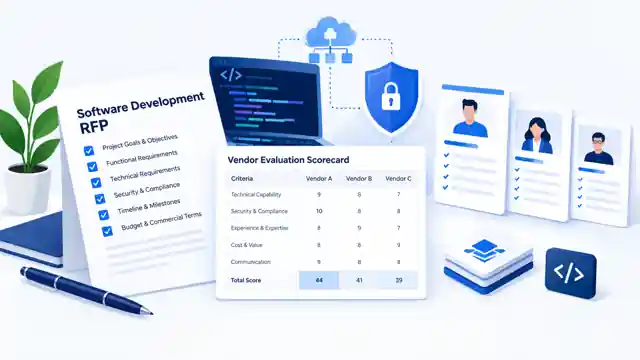
If you are still choosing a supplier, start with Brandligo’s software vendor evaluation scorecard. Before signature, use the software vendor due diligence checklist. This guide starts where those decisions end: converting the selected vendor into an operationally ready relationship.
Vendor onboarding checklist: the short version
| Gate | What must be ready | Typical owner |
|---|---|---|
| 1. Approval handoff | Selection decision, scope, risk tier, open conditions | Procurement / business owner |
| 2. Contract | Executed agreement, DPA where needed, SLA, exit terms | Legal / procurement |
| 3. Security & privacy | Evidence reviewed, gaps owned, incident contacts established | Security / privacy |
| 4. Finance | Verified vendor record, payment terms, PO/invoice process | Finance / procurement |
| 5. Access & integration | Least-privilege access, SSO/MFA, environments, logging | IT / system owner |
| 6. Implementation | Plan, milestones, acceptance, dependencies, escalation path | Project / product owner |
| 7. Go-live | Required gates complete or exceptions formally approved | Business owner |
| 8. Ongoing governance | Renewal date, review cadence, performance and risk monitoring | Vendor owner / procurement |
The key design principle is simple: do not treat “contract signed” as “vendor ready.” A signed order form does not prove that access is controlled, bank details are verified, data flows are understood, support contacts exist or the exit path has been documented.
1. Hand off the selection decision without losing context
Vendor onboarding often fails at the transition from selection to operations. The evaluation team knows why the vendor won, which assumptions mattered and which gaps were accepted; the implementation team may receive only a signed contract and a kickoff date.
Create a short onboarding record before operational setup begins. It should identify the legal vendor entity, product or service, business owner, procurement owner, contract owner, technical owner, security/privacy contacts, approved use case, risk tier, expected spend, implementation scope and any unresolved conditions from evaluation.
Carry forward the evidence behind the decision. If the vendor received an exception for a missing control, roadmap dependency or contractual point, onboarding should not silently erase it. Give the exception an owner, mitigation, approval record and review date.
2. Use risk tiering to decide how much onboarding is necessary
A universal checklist creates two bad outcomes: low-risk vendors get unnecessary bureaucracy, while high-risk vendors can appear compliant simply because they completed the same generic form. Instead, determine onboarding depth from the relationship.
Useful questions include: Will the vendor process personal, confidential or regulated data? Will it receive production, administrative or privileged access? Is the service important to revenue, customer delivery or core operations? Is replacement difficult? Does the service introduce subprocessors, integrations or software supply-chain dependencies?
| Example tier | Typical profile | Onboarding depth |
|---|---|---|
| Low | No sensitive data, no privileged access, limited business dependency | Basic legal, finance, ownership and service setup |
| Medium | Internal/personal data, integrations or meaningful operational dependency | Add security/privacy evidence, access controls and scheduled review |
| High/Critical | Sensitive data, production access, major resilience or customer impact | Deep evidence review, contract controls, recovery/incident validation, formal approval and closer monitoring |
NIST’s finalized SP 1326 C-SCRM Due Diligence Assessment Quick-Start Guide, published July 8, 2026, reinforces a risk-informed approach to supplier research and highlights areas including provenance, resilience, foundational cyber practices and supply-chain tiers. It is written for ICT supplier due diligence, not as a universal onboarding template, but it is a useful primary reference when technology suppliers create material supply-chain risk.
3. Finish contract and data obligations before granting broad access
Confirm that the executed documents match what was approved. Depending on the relationship, this can include the master agreement, statement of work or order form, data-processing terms, service levels, security schedule, confidentiality terms, intellectual-property provisions and support commitments.
For software and technology vendors, onboarding should also make the exit path operationally understandable. Record what happens to customer data at termination, how it can be exported, who owns source code or deliverables where applicable, how credentials are removed, how long the vendor retains data and what transition assistance is available.
Do not copy legal clauses from a generic checklist. Jurisdiction, data type, industry and contract structure matter. Use qualified legal/privacy review for the actual agreement.
4. Convert security due diligence into operational controls
Security evidence collected during procurement only becomes useful when it affects how the service is configured and governed. Record which evidence was reviewed, its scope and date, open findings and the person accountable for each remediation or accepted risk.
For higher-risk software suppliers, onboarding may need to validate identity controls, administrative roles, encryption expectations, logging, vulnerability handling, incident notification, backup/recovery, secure development evidence and relevant subprocessors.
NIST’s software supply-chain guidance recommends enhanced scrutiny of vendor secure-development capabilities and security posture where appropriate. It also discusses software bills of materials (SBOMs), vulnerability disclosure and supplier practices as tools for improving visibility into software supply-chain risk. Apply these proportionately; not every SaaS purchase needs the same artifacts.
5. Set up finance without creating a payment-fraud gap
Create the vendor master record only after the legal entity and approved relationship are clear. Capture the agreed currency, payment terms, tax information required for the relevant jurisdiction, purchase-order process, invoice destination and internal cost owner.
Bank-account changes deserve a controlled verification process rather than trust in an emailed request. Separate the person requesting a change from the person approving it where your organization’s controls require that separation, and use an independently established contact method for material payment-detail changes.
Also reconcile commercial assumptions from selection with the operational billing setup. Usage-based SaaS, cloud consumption, implementation milestones and support tiers can create invoices that look unexpected even when they are contractually correct. Record who reviews consumption and who can approve additional spend.
6. Provision the minimum access needed for implementation
Do not give a vendor broad production access merely because implementation has started. Define named users or service identities, roles, environments, authentication requirements, approval owners and expiration/review dates.
Where supported, use SSO and MFA, avoid shared administrator credentials, separate development/test access from production, and log privileged activity. Temporary implementation access should have an end condition rather than remaining indefinitely because nobody remembered to remove it.
For integrations, document the data exchanged, direction of flow, authentication method, API scopes, rate/availability dependencies, error handling and technical owner. This record becomes valuable during incidents, renewals and eventual offboarding.
7. Turn the contract into an implementation plan
A vendor can be contractually onboarded and still fail operationally because responsibilities are unclear. Create an implementation plan that names the buyer and vendor owners, milestones, dependencies, acceptance evidence, environments, migration responsibilities, training, communications and escalation path.
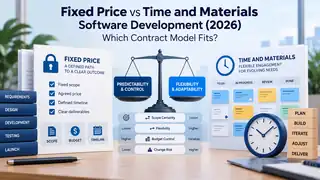
For custom software or complex implementation work, connect this plan back to the procurement artifacts. Brandligo’s software development RFP template explains how scope, acceptance, technical constraints and vendor evidence can be structured before selection, while the fixed price vs time and materials guide covers the governance implications of different engagement models.
8. Use an explicit go-live gate
Go-live should be a decision, not merely the date on the project plan. Before activation, confirm which required onboarding gates are complete and which are formally waived or accepted.
A practical go-live record can include contract status, security/privacy approval, production-access approval, integration testing, data-migration checks, support contacts, incident/escalation contacts, billing readiness, user training, acceptance criteria, backup/recovery expectations and outstanding risks.
Do not hide incomplete requirements by marking them “not applicable.” If a requirement is intentionally waived, record who approved the exception, why, what compensating control exists and when the decision will be reviewed.
9. Set renewal, reassessment and offboarding dates during onboarding
The best time to prepare for renewal and exit is when the relationship begins. Record contract start/end dates, notice windows, price-review dates, evidence-expiry dates and the next risk/performance review.
Define events that should trigger an earlier reassessment: a security incident, major architecture change, new subprocessor, acquisition/ownership change, significant outage, material change in data processing, new privileged access or expansion into a more critical business process.
Also establish an offboarding owner. The eventual exit should cover access removal, credential rotation where necessary, data return/deletion, asset return, repository or documentation handover, integration shutdown, final invoices and confirmation that business continuity is protected.
A reusable vendor onboarding record
Instead of keeping the checklist only as completed boxes, maintain a small evidence-based record for each vendor:
- Vendor and service: legal entity, product/service and approved use case.
- Owners: business, procurement, technical, security/privacy and contract contacts.
- Risk tier: classification and rationale.
- Contracts: executed documents and key dates.
- Data and access: information handled, integrations and privileges granted.
- Evidence: security, privacy, resilience or financial evidence actually reviewed.
- Exceptions: accepted gaps, approver, mitigation and review date.
- Implementation: milestones, dependencies and acceptance owner.
- Operations: support, incident and escalation contacts.
- Lifecycle dates: renewal, reassessment and termination/offboarding triggers.
This turns onboarding into an auditable handoff rather than a one-time document collection exercise.
Common vendor onboarding mistakes
- Starting implementation before the risk level is understood. Depth should follow the vendor’s data, access and criticality.
- Assuming due diligence equals onboarding. Evaluation evidence still has to become contracts, controls, owners and operating procedures.
- Granting permanent access for temporary implementation work. Set ownership, scope and review/expiry conditions.
- Ignoring unresolved selection conditions. Carry exceptions into the operational record.
- Failing to verify payment changes independently. Vendor setup is a financial-control process as well as a procurement process.
- Leaving renewal until the contract is almost over. Capture notice and review dates at onboarding.
- Forgetting exit requirements. Data, access, integrations and documentation need a defined end state.
How onboarding fits the full vendor lifecycle
A clean procurement lifecycle separates related decisions rather than forcing them into one giant checklist:
- Define the requirement. Clarify the business outcome, constraints and budget.
- Compare vendors. Use consistent gates, evidence and weighted criteria.
- Perform due diligence. Verify material claims and risks before signature.
- Contract and onboard. Convert the approved decision into controlled operational access, payment and implementation.
- Monitor and renew. Review performance, risk, spend and changes during the relationship.
- Offboard. Remove access, handle data, close financial obligations and preserve continuity.
For the selection stage, use Brandligo’s vendor evaluation scorecard. For pre-signature verification, use the 25-check due diligence framework. Together with this onboarding guide, they form a clearer sequence from shortlist to operating relationship.
Frequently asked questions
What should a vendor onboarding checklist include?
It should cover the selection handoff, risk tier, executed contracts, security/privacy conditions, finance setup, access and integrations, implementation responsibilities, go-live approval, renewal/reassessment dates and offboarding requirements. The depth should be proportional to the vendor’s risk.
Who owns vendor onboarding?
There is rarely one universal owner. Procurement commonly coordinates the process, while the business owner owns the relationship and security, privacy, legal, finance and IT approve their respective gates. Assign one accountable coordinator so cross-functional tasks do not become ownerless.
Is vendor onboarding the same as vendor due diligence?
No. Due diligence investigates whether the supplier and proposed relationship are acceptable before commitment. Onboarding operationalizes the approved relationship by completing contracts, controls, access, payment setup, implementation and lifecycle governance. Some organizations overlap the stages, but the decisions are different.
Should every vendor complete the same checklist?
No. Use a common baseline but vary depth by data sensitivity, access, business criticality, regulatory impact, resilience dependency and supply-chain exposure. A proportionate process reduces friction without weakening controls for high-risk vendors.
When is a vendor ready to go live?
When the organization’s required gates are complete and any remaining exceptions have been explicitly accepted by authorized owners. A contract signature or implementation deadline alone should not be treated as evidence of readiness.
Final takeaway
A good vendor onboarding checklist is not a pile of documents. It is a controlled handoff from procurement decision to operational ownership. Tier the relationship by risk, preserve the evidence and exceptions from selection, grant only the access needed, make go-live explicit, and set renewal and exit controls before everyone moves on to the next project.
This guide is general procurement and technology-risk information, not legal, tax, privacy or regulatory advice. Adapt the checklist to your organization, jurisdiction and risk profile and involve qualified specialists where required.
Leave a Reply