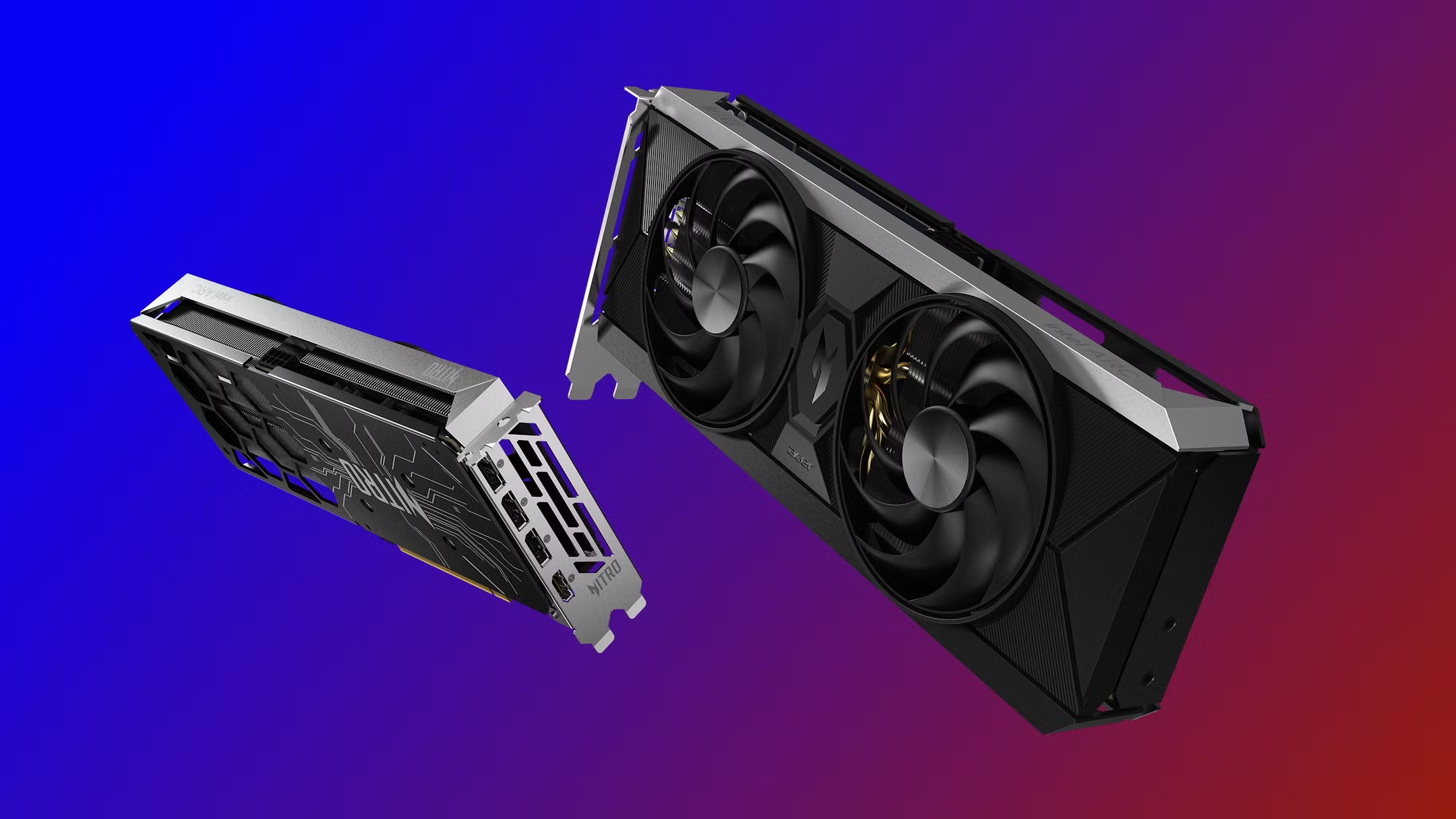
Intel Arc B-Series graphics cards are Intel’s second-generation discrete gaming GPUs, built on the Xe2 “Battlemage” architecture. The desktop lineup centers on the Arc B580 and B570. Both are aimed at value-conscious PC builders who want modern 1080p/1440p gaming features, hardware ray tracing, AV1 media support and Intel XeSS 2 without moving into premium GPU pricing.
The key difference is straightforward: the B580 is the stronger choice, with 20 Xe-cores, 12GB of GDDR6 memory on a 192-bit bus and a 190W total board power rating. The B570 scales that down to 18 Xe-cores, 10GB of GDDR6 on a 160-bit bus and 150W. Intel launched the B580 at $249 and the B570 at $219; those are launch MSRPs, not promises about current retail pricing.
Intel Arc B580 vs B570 specifications
| Specification | Arc B580 | Arc B570 |
|---|---|---|
| Architecture | Xe2 / Battlemage | Xe2 / Battlemage |
| Xe-cores | 20 | 18 |
| Ray-tracing units | 20 | 18 |
| VRAM | 12GB GDDR6 | 10GB GDDR6 |
| Memory bus | 192-bit | 160-bit |
| Memory bandwidth | 456 GB/s | 380 GB/s |
| Total board power | 190W | 150W |
| Launch MSRP | $249 | $219 |
| Launch availability | December 13, 2024 | January 16, 2025 |
For buyers, the extra memory capacity and bandwidth make the B580 the more capable of the two for demanding games and higher-resolution textures. The B570 is the lower-power, lower-cost option where the price difference is meaningful.
What changed with Battlemage?
Intel says the second-generation Xe-core delivers up to 70% better performance per Xe-core and 50% better performance per watt than the previous generation in its tested workloads. Those figures are Intel claims rather than universal real-world guarantees, so game-specific independent benchmarks remain important when choosing a card.
The architecture also includes second-generation ray-tracing units and XMX AI engines. Intel positions the B-Series for gaming as well as local AI acceleration and media workloads.
What is XeSS 2?
XeSS 2 combines three technologies: XeSS Super Resolution, XeSS Frame Generation and Xe Low Latency. Super Resolution renders at a lower internal resolution and reconstructs the image; Frame Generation can insert additional generated frames; Low Latency is intended to reduce the responsiveness penalty that frame generation can introduce.
Intel demonstrated gains of up to 3.9× in a specific F1 24 test with XeSS features enabled. Treat that as a best-case vendor demonstration rather than an expected uplift across every game. Support and results depend on the title and settings.
Gaming, creation and AI workloads
The B580 and B570 include hardware support for modern media formats including AV1, H.265/HEVC, H.264 and VP9. That can make Arc relevant to creators who encode video as well as gamers. Intel also supports its AI Playground application for local image generation, photo editing, upscaling and chatbot experimentation.
For gaming, the 10GB and 12GB memory configurations are notable in a budget segment where some competing cards have historically shipped with 8GB. VRAM alone does not determine performance, however: game engine, driver quality, CPU platform, ray tracing and upscaling support can materially change the result.
Which Intel Arc B-Series card should you choose?
Choose the B580 when the price premium over the B570 is modest and you want the stronger 1440p-oriented option, more VRAM and more memory bandwidth. Consider the B570 when total system cost and power consumption matter more and its real retail price is sufficiently lower.
Before buying either card, compare current street prices rather than relying on launch MSRP, check benchmarks for the games or applications you actually use, confirm your power supply and case can support the specific partner card, and make sure your PC platform supports the features required for good Arc performance.
What to verify before buying
- Current price: GPU value changes quickly, so compare the B580 and B570 against current AMD and NVIDIA alternatives at the same actual checkout price.
- Your workload: prioritize benchmarks for your own games, editing software or AI tools instead of relying on a single aggregate score.
- Driver and application compatibility: check recent results for older games and specialist professional applications.
- Memory needs: 12GB gives the B580 more headroom than the B570’s 10GB, but memory capacity should be considered alongside overall GPU performance.
Bottom line
The Arc B580 and B570 made Intel a more credible option in the value GPU segment. The B580 is the more compelling specification on paper, while the B570 can make sense when its lower price and power draw materially benefit the build. Neither should be selected on specifications alone: use current pricing and workload-specific independent benchmarks as the final decision criteria.
Sources: Intel’s official Arc B-Series launch materials provide the architecture, launch pricing, memory, power and XeSS 2 specifications. Independent testing from established hardware publications should be used to validate performance for the games and workloads that matter to you.