
Author: Brandligo Editor

Brandligo Editor is the editorial desk behind the Brandligo blog. We cover the companies, brands and products listed in the Brandligo directory: AI model launches and feature changes, company profiles, and buying guides written for people who are not engineers. Our method is simple. We check a company's own published page before repeating what other sites say. Prices, specs and dates are verified against primary sources on the day of writing, and anything we cannot confirm is left out rather than estimated. Where two sources disagree, we say so. We do not publish rumours as fact. We use AI tooling to gather and cross-check sources. Every article is verified against the primary sources it links to before it goes live, and each one carries a note saying so. If you find something out of date, email [email protected] and we will fix it.
AI PCs Explained: Do You Actually Need an NPU in 2026?
General

AI PCs Explained: Do You Actually Need an NPU in 2026?

Short version: most people do not need to rush out and buy an AI PC in 2026. If the laptop you own still feels quick, the NPU tucked inside a shiny new one will not change your day much yet. But the label is everywhere now. Walk into any shop or scroll any laptop page and you will see the same words fighting for your attention: AI PC, Copilot+, NPU, TOPS. Some of it matters. A lot of it is marketing. So let's cut through it in plain English. What an AI PC actually is, what the extra chip inside does, and who should care this year. Every bit of jargon gets a translation the first time it shows up. What is an AI PC? An AI PC is a computer with a dedicated chip, called an NPU, built to run artificial intelligence tasks on the device itself rather than sending them off to the cloud. That is...
What Does Google Actually Make in 2026?
Company Guides

What Does Google Actually Make in 2026?

Google makes most of its money selling ads. That one sentence explains a company that also builds your phone's software, your email, the maps you drive with, the video app you watch at night, and one of the biggest AI systems on the planet. Here is the short version. Google runs a huge stack of products, most of them free to use, and it pays for all of it with advertising. It also sits inside a bigger parent company called Alphabet, which owns some wilder projects like the Waymo robotaxis. If you have ever wondered what Google actually is in 2026, this is the map. The figures below come from Alphabet's July 2026 earnings and Google's own product pages, so you are looking at what the company reports now, not a memory from five years ago. Is Google the same thing as Alphabet? No. Google i...
Google’s Gemini 3.7 Flash Halves Coding Costs, but the Discount Ends in January
AI News

Google’s Gemini 3.7 Flash Halves Coding Costs, but the Discount Ends in January

Google just made its cheapest coding model a lot better, and for now, a lot cheaper too. On August 13, 2026, it released Gemini 3.7 Flash, a workhorse model built for coding and AI agents, and set the price at $0.75 per million input tokens and $3.75 per million output tokens. Here is the part most headlines skip. That price is introductory. It runs through December 31, 2026, and on January 1 it doubles to $1.50 and $7.50 per million tokens. So the discount has an expiry date. Build on it, and your bill jumps in the new year. The model itself is a genuine step up for code and agent work. The pricing is the thing to read twice. What is Gemini 3.7 Flash? Gemini 3.7 Flash is Google's latest workhorse model, the cheaper and faster tier of its Gemini family built for high-volume tasks rather...
Grok 4.6 Lands: What Is New, What It Costs, and the Catch
AI News

Grok 4.6 Lands: What Is New, What It Costs, and the Catch

xAI shipped Grok 4.6 on August 12, 2026, an upgrade to Grok 4.5 built for long-running agents and heavier interactive work. It keeps the same 500,000 token context and the same $2 and $6 headline API price, and it adds a new top-tier reasoning mode called xhigh. So this is a refinement, not a reinvention. xAI's own benchmark numbers put it at rough parity with the best models rather than out in front, and the most interesting detail for anyone building on it is a pricing rule that can quietly double the bill. Here is what actually changed, what it costs, and who should care. What is Grok 4.6? Grok 4.6 is xAI's newest Grok model, released on August 12, 2026, taking text and image input and producing text output with no set output limit. xAI says it builds on Grok 4.5 with a focus on long...
Which Apple Watch Should You Buy in 2026?
General

Which Apple Watch Should You Buy in 2026?

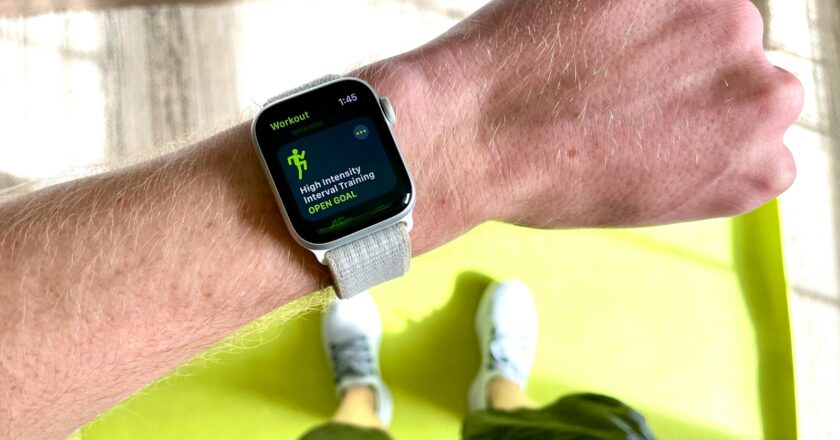
Three watches, one decision. In 2026 Apple sells exactly three: the Apple Watch Series 11, the cheaper Apple Watch SE 3, and the big rugged Apple Watch Ultra 3. For most people the Series 11 is the right pick, and the other two only make sense for a specific kind of buyer. So this is really a question of which kind of buyer you are. Watching your budget? Training for a marathon? Buying a first watch for a kid? Each of those points at a different model. Here is the plain-English version, with what each one costs, what it does, and where you can safely spend less. What Apple Watch models can you actually buy in 2026? Apple currently sells three Apple Watch models: the Series 11 from 399 dollars, the SE 3 from 249 dollars, and the Ultra 3 from 799 dollars. All three arrived together in Sep...
What Does HP Actually Make in 2026?
Company Guides

What Does HP Actually Make in 2026?

HP makes a lot more than printers. In 2026 it builds laptops, desktops, gaming gear, video-meeting hardware, mobile workstations, and the security software that runs on top of all of it. If the only HP product in your house is an inkjet that nags you about low ink, that is a very old picture of the company. Printing still matters to HP. It just isn't the biggest part of the business anymore. Here is the plain-English version of what HP actually sells today, why the laptop names all changed, and which HP you are even looking at when you see the logo. Because there are two of them. So what does HP actually make? HP makes personal computers and printers, plus gaming hardware, meeting-room gear, workstations, and endpoint security, sold to both regular shoppers and big companies. Inside the...
Meta’s Muse Glimmer Puts a 30B AI Agent on Your Laptop, No Cloud Needed
AI News

Meta’s Muse Glimmer Puts a 30B AI Agent on Your Laptop, No Cloud Needed

Meta just put a capable AI agent on your laptop, no cloud account required. On 10 August 2026 it released Muse Glimmer, a 30-billion-parameter open-weight model that runs on a single consumer GPU or a high-end Mac, and it can use tools, write code and work through multi-step tasks on its own. The headline is the size. Most agents this capable live on a server farm and bill you per token. Glimmer fits in about 20GB once compressed, so a gaming PC or a maxed-out MacBook can run it offline, with your data never leaving the machine. Here is what it does, what it needs, where it is strong, and where it quietly falls short. What is Meta's Muse Glimmer? Muse Glimmer is a 30-billion-parameter open-weight AI model from Meta, built to act as an on-device agent rather than a chatbot. Meta publishe...
The Biggest Smartphone Companies in 2026, and the Brands They Own
Company Guides

The Biggest Smartphone Companies in 2026, and the Brands They Own

Samsung is the world's biggest smartphone company in 2026, and Apple is right behind it. After that the race gets crowded, with Xiaomi, Oppo and Vivo swapping places from one quarter to the next. Here is the part most people miss. The dozen or so phone brands you see in shops are not a dozen separate companies. A handful of parent firms own most of them, and once you know the map, the whole market starts to make sense. This guide ranks the big players using the latest shipment data from the second quarter of 2026, then shows you who actually owns the brands you shop for. Real numbers, cross-checked against two research firms, no guesswork. Who is the biggest smartphone company in 2026? Samsung is the biggest, shipping about 62.7 million phones in the second quarter of 2026 for a 22.6% s...
OLED vs QLED vs Mini-LED: Which TV Should You Buy in 2026?
General

OLED vs QLED vs Mini-LED: Which TV Should You Buy in 2026?

Buying a TV in 2026 comes down to three letters that sound almost identical: OLED, QLED, and Mini-LED. The short version is that OLED gives you the deepest black and best contrast you can buy, Mini-LED gets far brighter for less money, and plain QLED is the budget tier that sits below both. That is the answer most people need. The right pick, though, genuinely depends on your room, what you watch, and how much you want to spend. So here is the plain-English breakdown. What each technology actually does, what it looks like on screen, and which one is worth your money this year. What is the actual difference between OLED, QLED, and Mini-LED? The difference is how each screen makes light. OLED pixels make their own light, so every single one can switch off completely for a true black. QLED is...
How to Choose a Software Development Company in 2026
Company Guides

How to Choose a Software Development Company in 2026

Picking a software development company comes down to three things: match the team to the size and risk of your project, check that they can prove past work and protect your code, and treat the hourly rate as the last question, not the first. Get those in that order and you dodge most of the horror stories. The catch is that every firm sounds brilliant on a sales call. The gap between a real partner and an expensive mistake hides in the boring details. Who owns the code. Who actually writes it. What happens when something breaks at 2am and your point of contact has gone quiet. Here is a plain guide to working through all of it, with real 2026 rate ranges, the trade-offs between local and offshore teams, and the checks that catch a bad fit before you sign anything. Figure out what you are...