Google makes most of its money selling ads. That one sentence explains a company that also builds your phone’s software, your email, the maps you drive with, the video app you watch at night, and one of the biggest AI systems on the planet.
Here is the short version. Google runs a huge stack of products, most of them free to use, and it pays for all of it with advertising. It also sits inside a bigger parent company called Alphabet, which owns some wilder projects like the Waymo robotaxis. If you have ever wondered what Google actually is in 2026, this is the map.
The figures below come from Alphabet’s July 2026 earnings and Google’s own product pages, so you are looking at what the company reports now, not a memory from five years ago.
Is Google the same thing as Alphabet?
No. Google is the main business inside a parent company called Alphabet, which was set up in 2015. Think of Alphabet as the holding company and Google as its giant, money-making engine. The split let Google’s more experimental projects live in separate companies rather than getting buried inside the search business. Sundar Pichai runs both, as chief executive of Alphabet and of Google. When you buy a Pixel, search the web, or open Gmail, you are dealing with Google. When people talk about Waymo cars or drone delivery, those sit under Alphabet, next to Google rather than inside it. For most everyday purposes the name that matters is Google. Alphabet is mostly a structure for investors and for keeping the odd bets at arm’s length. You can see the whole business mapped out on Google’s company profile in our directory.
How does Google actually make its money?
Almost entirely from advertising. In the three months ending June 2026, Alphabet reported 119.8 billion dollars in revenue, up 24 percent from a year earlier. Roughly 81.6 billion of that, about 68 cents of every dollar, came from ads. The single biggest slice is Search and the ads that sit around it, which brought in 63.3 billion. YouTube ads added 11.1 billion. The rest of the money comes from Google Cloud, which is growing fast, and from subscriptions, app-store fees, and hardware. So the free products you use are really the shop window. The till is the ad business quietly running underneath them. That is worth remembering every time Google gives something away for nothing.
| Where the money comes from | Q2 2026 revenue | Change vs a year earlier |
|---|---|---|
| Search and other ads | 63.3 billion | up 17 percent |
| YouTube ads | 11.1 billion | up 13 percent |
| Google Network ads | 7.3 billion | down 1 percent |
| Subscriptions, platforms, devices | 12.9 billion | up 15 percent |
| Google Cloud | 24.8 billion | up 82 percent |
So what products does Google actually make?
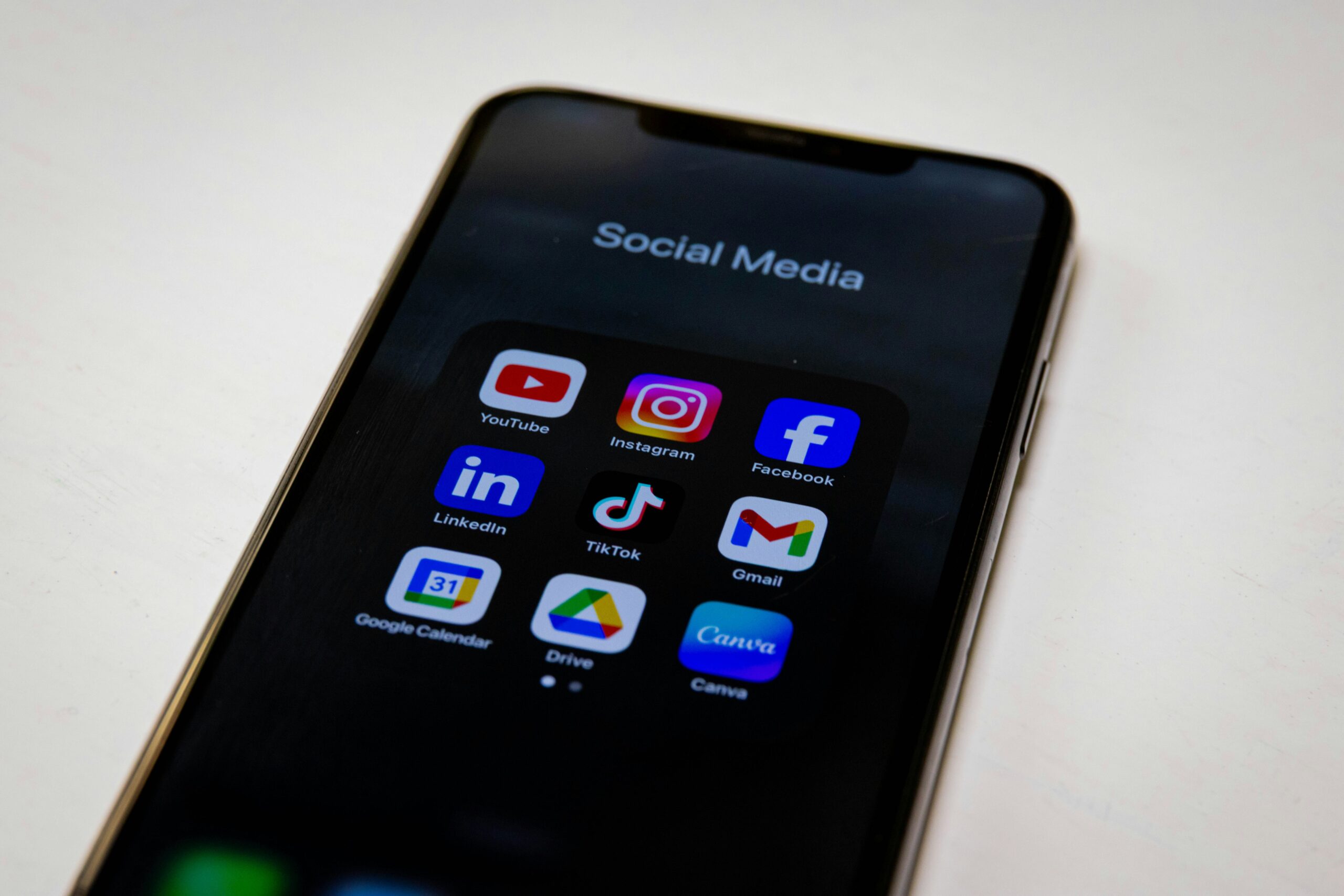
Dozens, but they fall into a handful of buckets. There is Search and the tools clustered around it: Maps, Lens, Flights, News, and Translate. There is Android, the operating system on most of the world’s phones, plus the Chrome browser and ChromeOS on laptops. There is Gemini, Google’s AI, now woven through the lot. YouTube is its own giant, with Music, TV, and Kids versions. Google Play sells apps, games, and books. Workspace bundles the office tools you probably already use: Gmail, Docs, Sheets, Slides, Drive, Calendar, and Meet. Photos backs up your pictures. Then there is hardware, which we will get to below. Most of these are free at the door because ads pay the bill, though Workspace and extra storage cost money. You can browse the individual pieces, from Google Search to Google Workspace, in our directory.
Where does Android fit in all this?
Android is the free software that runs most of the world’s smartphones, and it is one of Google’s smartest business moves. Google hands Android to phone makers like Samsung, Xiaomi, and Motorola at no charge. In return, most of those phones arrive with Google Search, Chrome, and the Play Store built in, which funnels people straight back to the products that earn ad money. So Android looks like a giveaway, but it is really a giant distribution system for the advertising business. It also anchors Google’s own Pixel phones and stretches into cars through Android Auto, televisions through Google TV, and smartwatches through Wear OS. The point worth holding onto: when Google spends money building Android and giving it away, it is buying the default spot on billions of screens.
What is Gemini, and why is it suddenly everywhere?
Gemini is Google’s AI system, and in 2026 it is baked into almost everything the company makes. It answers questions at the top of Search through a feature called AI Overviews, and it powers a chattier AI Mode for people who want a back-and-forth instead of blue links. It writes and summarises inside Workspace, helps on Pixel phones, and runs as a standalone app and website you can talk to directly. Google’s AI models are built by its research team, Google DeepMind, which went through a leadership shake-up earlier this month that you can read about in our coverage of the DeepMind reshuffle. Gemini also comes in paid developer versions, and the pricing shifts often, as our write-up of the latest Gemini 3.7 Flash release shows. For a plain-language look at what Gemini is, start with its Gemini profile.
Does Google make its own hardware?
Yes, and more of it than most people realise. The headline product is the Pixel phone, Google’s own Android handset and the place it shows off new AI features first. Around it sits a small family of gadgets: the Pixel Watch, Pixel Buds earbuds, and the Pixel Tablet. Google also owns Nest, the smart-home brand behind its speakers, thermostats, doorbells, and cameras, plus the Google TV Streamer for turning any television into a smart one. Fitbit, the fitness-tracker maker, belongs to Google too. Chromebooks run Google’s ChromeOS but are mostly built by partners like Acer and Lenovo. Hardware is a smaller earner than ads, but it matters because it gives Google a physical home for its software and AI. The Pixel range and the Nest smart-home line both have their own pages in our directory.
Which Google products cost money?
Most Google products are free, but a growing number are not, and that is on purpose. The clearest paid tier is hardware: Pixel phones, the Pixel Watch, Nest devices, and Fitbit trackers all cost real money up front. Then come the subscriptions. Google One sells extra storage for your photos and files. YouTube Premium strips out the ads, and YouTube TV is a full live-television package. Workspace charges businesses for the professional version of Gmail, Docs, and Meet. Google Cloud bills companies for raw computing power, and it is the fastest-growing part of the entire business, up 82 percent in the second quarter of 2026. The pattern is easy to read. Google still leads with free, ad-supported tools, then builds paid products on top so it depends a little less on advertising alone.
What are Google’s “Other Bets”?
These are Alphabet’s side companies, the moonshots that sit outside Google itself. The most advanced is Waymo, the self-driving car business. As of March 2026 it was giving around 500,000 paid robotaxi rides every week across 10 US cities, including Phoenix, San Francisco, Los Angeles, and Austin, with a fleet of more than 3,000 vehicles. Others are further from profit: Verily and Isomorphic Labs work on health and drug discovery, Wing runs drone deliveries, and Alphabet also holds investment arms that back outside startups. Together these bets are a tiny sliver of revenue, well under a tenth of the total. The idea is that one of them might one day be as big as Search. Most will not be, which Alphabet accepts as the cost of taking real swings.
Why does Google keep killing products?
Because it launches far more than it keeps, and it retires the ones that do not catch on. The most famous recent example is Stadia, Google’s game-streaming service. It launched in 2019, promising console-quality gaming with no console. Google announced its closure in September 2022 and shut it down on 18 January 2023, refunding what players had spent. Over the years the list of retired apps and services has grown long enough that fans nicknamed it the Google graveyard. For you, the lesson is practical. Lean on the core money-makers for anything you actually depend on, because Search, Android, YouTube, Workspace, Gmail, Pixel, and Cloud are not going anywhere. Treat a brand-new side app as an experiment that might not last, and avoid pouring years of data into something Google itself is still testing.
Where is Google actually vulnerable?
Google looks unstoppable, but it has real soft spots. The biggest is how much it leans on a single income stream. With roughly two thirds of revenue coming from ads, anything that dents search advertising, whether that is regulators or a change in how people look things up, hits the whole company. AI is the live example. Chatbots from OpenAI and Anthropic gave people a new way to get answers without a page of blue links, and the price of those assistants keeps moving, as our guide to AI assistant pricing lays out. That pressure is exactly why Google rushed Gemini into Search. In cloud computing Google still runs third behind Amazon and Microsoft, even after that 82 percent jump. And in phones and watches, Pixel is well liked but small next to Apple and Samsung. None of this is fatal. It is just a reminder that even giants have exposed flanks.
The takeaway: an ad company that funds a product lab
The clearest way to understand Google is this. It is an advertising business that uses the profits to run one of the largest product labs in the world, and lately to bet heavily on AI. That is why so much of what it makes is free, and why the free things come and go. When you are deciding whether to build your life around a Google product, ask a simple question: does this thing make Google money, or does it feed something that does? Search, YouTube, Android, Workspace, Pixel, and Cloud all clear that bar, so they are safe places to invest your time. The clever little app that launched last month might be gone by next year. Pick accordingly, and you will rarely be caught out.
Quick questions
Is Google owned by another company? Yes. Google is the largest subsidiary of Alphabet, a parent company created in 2015. Sundar Pichai is chief executive of both.
What is Google’s biggest source of revenue? Advertising, and Search ads most of all. Ads brought in about 68 percent of Alphabet’s 119.8 billion dollars of revenue in the second quarter of 2026.
Does Google make phones? Yes. Its Pixel line is a full range of Android phones, watches, earbuds, and a tablet, and it usually gets Google’s newest AI features first.
Is Waymo part of Google? Not exactly. Waymo is a separate company under Alphabet, sitting alongside Google rather than inside it. It runs paid robotaxi rides in several US cities.
About this article. Written and fact-checked by the Brandligo editorial desk. AI tooling was used to gather and cross-check sources; every fact and figure here was verified against the primary sources linked above before publication. Published 16 August 2026. If you spot something out of date, tell us at [email protected].