About EB-PQ2008W
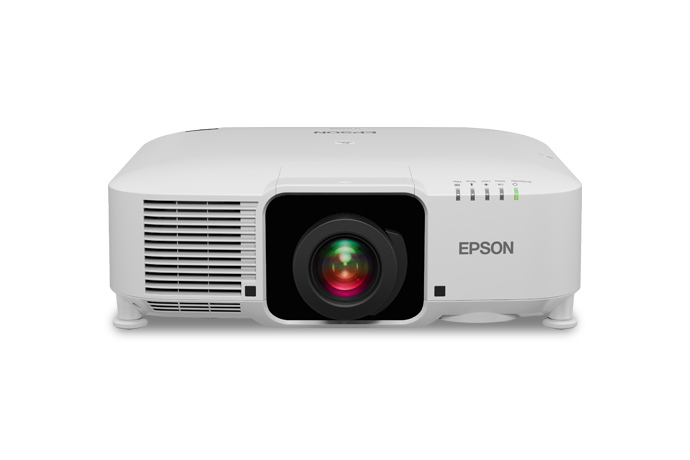
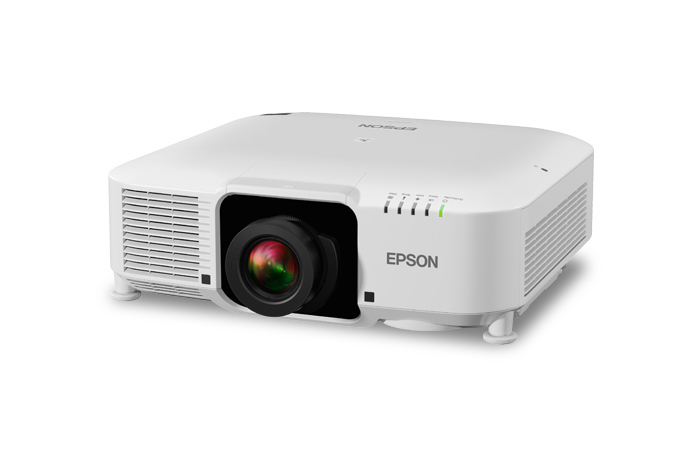
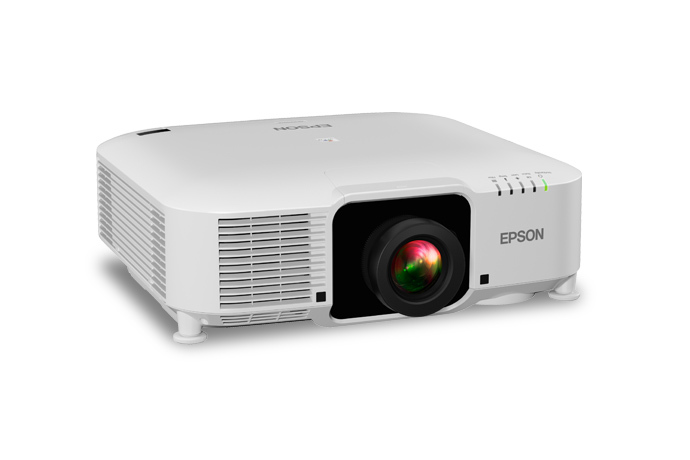
The Epson EB-PQ2008W is the white version of the 8,000-lumen entry point in Epson's EB-PQ large-venue projector family. It is aimed at museums, higher education, corporate auditoriums, houses of worship, visitor attractions and event spaces that need a bright 4K image, interchangeable lenses and professional installation tools without stepping up to the cost and power demands of Epson's higher-output EB-PQ models. The white cabinet is especially useful where the projector needs to blend into a light ceiling or architectural space.
Key specifications
Imaging
| White brightness | 8,000 lumens in Normal light source mode |
|---|---|
| Color brightness | 8,000 lumens in Normal light source mode |
| Display technology | 3-chip 3LCD |
| On-screen resolution | 3840 x 2160 via 4K Crystal Motion technology |
Light source
| Type | Laser diode |
|---|---|
| Rated life | Up to about 20,000 hours Normal/Quiet; up to about 30,000 hours Extended |
Installation
| Lenses | 10 optional powered lenses; lens sold separately |
|---|---|
| Setup tools | Built-in NFC; optional PixAlign camera support |
Connectivity
| HDMI | Two inputs and one output for daisy chaining |
|---|---|
| Professional transport | HDBaseT input |
Power
| Supply | 100 to 240 V AC, 50/60 Hz |
|---|
Identification
| Epson model | V11HB01920 |
|---|
What does the EB-PQ2008W deliver?
Epson rates the EB-PQ2008W at 8,000 lumens of equal white and color brightness in Normal light source mode. It uses Epson's 3-chip 3LCD system and 4K Crystal Motion technology to produce 3840 x 2160 imagery on screen. Epson also includes HDR support, frame interpolation and scene adaptive gamma correction, features that matter when the content includes detailed video, fast movement or dark and bright material in the same program.
This is a laser installation projector rather than a lamp model. Epson rates the light source for up to about 20,000 hours in Normal or Quiet mode and up to about 30,000 hours in Extended mode, with actual life depending on use and environment.
How flexible is installation?
The projector supports 10 optional powered lenses, and the lens is not included with the chassis. That makes the initial quote less simple than buying a fixed-lens projector, but it gives an integrator much more freedom over throw distance, screen size and projector position. Epson also offers an ultra short throw lens option for installations where a conventional long throw is impractical.
Built-in NFC can help technicians configure multiple units, while Epson's optional PixAlign camera supports tools for multi-projector work such as edge blending assistance, stacking assistance, automatic color calibration and screen matching. HDMI connectivity includes two inputs and one output for daisy chaining, and HDBaseT is available for professional signal distribution.
What should buyers budget beyond the projector?
The chassis is only one part of an EB-PQ installation. A compatible powered lens must be selected separately, and a real project may also need a mount, long-distance signal transport, control hardware, calibration and professional installation. Buyers planning projection mapping or blended canvases should also account for the optional camera and the time needed to commission the system.
Power requirements are more manageable than on Epson's highest-brightness EB-PQ models. Epson specifies 100 to 240 V AC operation. Its published electrical specifications list up to 522 W in Normal or Custom light source mode at 100 to 120 V, or 502 W at 220 to 240 V.
How does it compare with EB-PQ2010W?
The EB-PQ2010W is the closest white-chassis step up. It raises rated white and color brightness from 8,000 to 10,000 lumens while keeping the same general compact EB-PQ platform and 10-lens installation ecosystem. That extra output is useful for larger screens, brighter rooms or projects that need more brightness headroom.
The EB-PQ2008W is the more sensible choice when 8,000 lumens already satisfies the screen and ambient-light calculation. Choosing the lower tier can reduce power use and avoid paying for output the venue does not need. The black EB-PQ2008B offers the same brightness tier when a dark chassis is better for theaters or staging.
What are the main limitations?
This is not a projector to buy from the brightness number alone. The lens is separate, installed cost can rise quickly, and 8,000 lumens may be insufficient for very large screens or strong ambient light. Epson's own specifications also show lower brightness in Quiet or Extended light source modes, so designs that depend on the full 8,000-lumen rating should be calculated around the intended operating mode.
The projector is built for professional deployment, which means buyers get the most value when throw distance, lens choice, mounting, signal paths and service access are planned before purchase. A fixed-lens model can be easier for a straightforward classroom or meeting room.
Who should choose something else?
Choose the EB-PQ2010W or a higher-output EB-PQ model if the screen, ambient light or projection-mapping design calls for more than 8,000 lumens. Choose the black EB-PQ2008B when the projector should visually disappear into a dark venue rather than a white ceiling.
Small classrooms, ordinary conference rooms and portable presenters should usually look at Epson's PowerLite range instead. Home cinema buyers should consider Epson's Q-Series, Pro Cinema or other entertainment-focused projectors, where features and installation assumptions are designed around residential viewing rather than large-venue integration.
Reviews
No reviews yet
Nobody has reviewed EB-PQ2008W here yet.