About SmartThings Energy
SmartThings Energy is the home energy monitoring and saving service inside Samsung's smart home platform. It is not a separate download and not a piece of hardware: it lives in the SmartThings app, under the Life tab, and it reports what connected devices are drawing, compares that against previous months, estimates cost, and offers to cut consumption automatically. Of the four things people mean by SmartThings, this is the one whose value depends least on the app being pretty and most on what you happen to own. The app is the control surface, the hub is the radio bridge, Find is the lost-device network, and Energy is the layer that turns all of it into a number on a bill. TechRadar reported on 26 July 2021 that Samsung had taken the service beyond Korea into the US and UK, working at that point with roughly forty SmartThings-enabled Samsung appliances including washers, dryers, refrigerators and HVAC systems.
What SmartThings Energy actually measures
There are two very different things a service like this can do, and it is worth being clear about which one you are getting. The first is appliance-level reporting, where a Samsung washer or air conditioner tells the app how much it drew. The second is whole-home measurement, which needs a meter at the consumer unit or a live feed from the utility. Samsung's own November 2021 Newsroom post on expanding the service names third parties for exactly this: Copper Labs for whole-home real-time consumption using utility-side technology, Eyedro for device-level monitoring hardware installed at the electrical panel, and WattBuy for comparing energy providers and connecting to solar.
The practical consequence is that a house with no Samsung appliances and no external meter has very little to show in the Energy dashboard. TechRadar made the same point at launch, noting the service was restricted to around forty Samsung appliances and would be more useful when it reached other manufacturers' hardware. Samsung's June 2023 press release states that support was later extended beyond Samsung appliances and HVAC to third-party smart lights, thermostats and outlets.
The dashboard and targets
Samsung's own support documentation describes tracking consumption by device and by time period, viewable hourly, daily, weekly or monthly, so you can see which devices use the most power and when. It also describes setting a target, such as the maximum energy you want to use in a month, with a notification when you go past it. TechRadar's 2021 coverage described monthly comparisons, cost estimates, and alerts when devices are left on while you are away.
A target with an alert is a modest tool, but it is the one that changes behaviour most reliably, because it turns an abstract bill into a mid-month warning.
AI Energy Mode and what Samsung claims for it
AI Energy Mode is the automated half of the service. Rather than showing you a chart and leaving you to act, it adjusts compatible Samsung appliances and TVs to use less power. Samsung's support pages describe it as reducing consumption based on your habits and preferences without manual adjustment.
The number Samsung attaches to it needs reading carefully. A SmartThings press release dated 27 June 2023 states that AI Energy Mode saves up to 70 percent energy on select cycles and products, and that customers in the United States saved over 1.8 gigawatt hours in the preceding year. The phrase doing the work there is select cycles and products: 70 percent is a ceiling on particular appliance modes, not a claim about a household bill. Samsung Newsroom in India returned to the theme on 24 December 2024, describing the mode as analysing power consumption and adapting to household routines, again without a household-level figure. Treat AI Energy Mode as a way to shave the worst-behaved appliances rather than as a discount on your electricity.
Tariffs, demand response and utility programmes
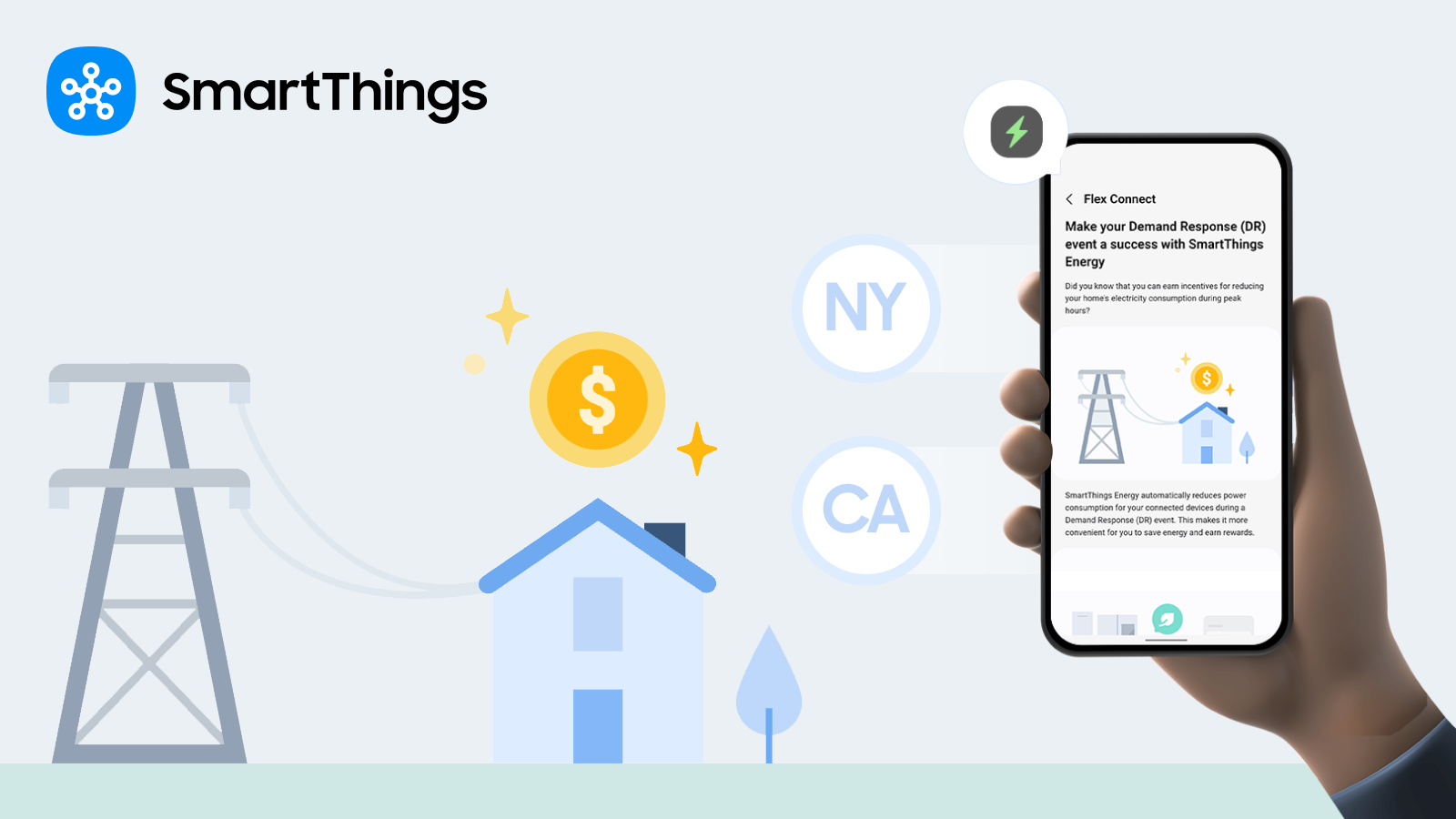
The more interesting part of the service is the connection to the grid rather than to the appliance. Samsung's 2021 announcement describes automations that respond to energy costs and to demand response events, plus recommendations based on your behaviour and your tariff plan. The June 2023 release describes automatic demand response, where enrolled devices adjust themselves during a grid event with no action from you, and names two concrete programmes: GridRewards in New York, described as offering more than 100 US dollars a year during peak hours, and Resideo's Connected Savings programme in California, described as a one-time reward of up to 150 US dollars. That release also names Electricity Maps as a partner providing information on generation sources and carbon dioxide emissions.
These programmes are regional, and the payments quoted date from 2023. Check what is running in your area now rather than assuming those figures still stand.
Rewards and the gamified layer
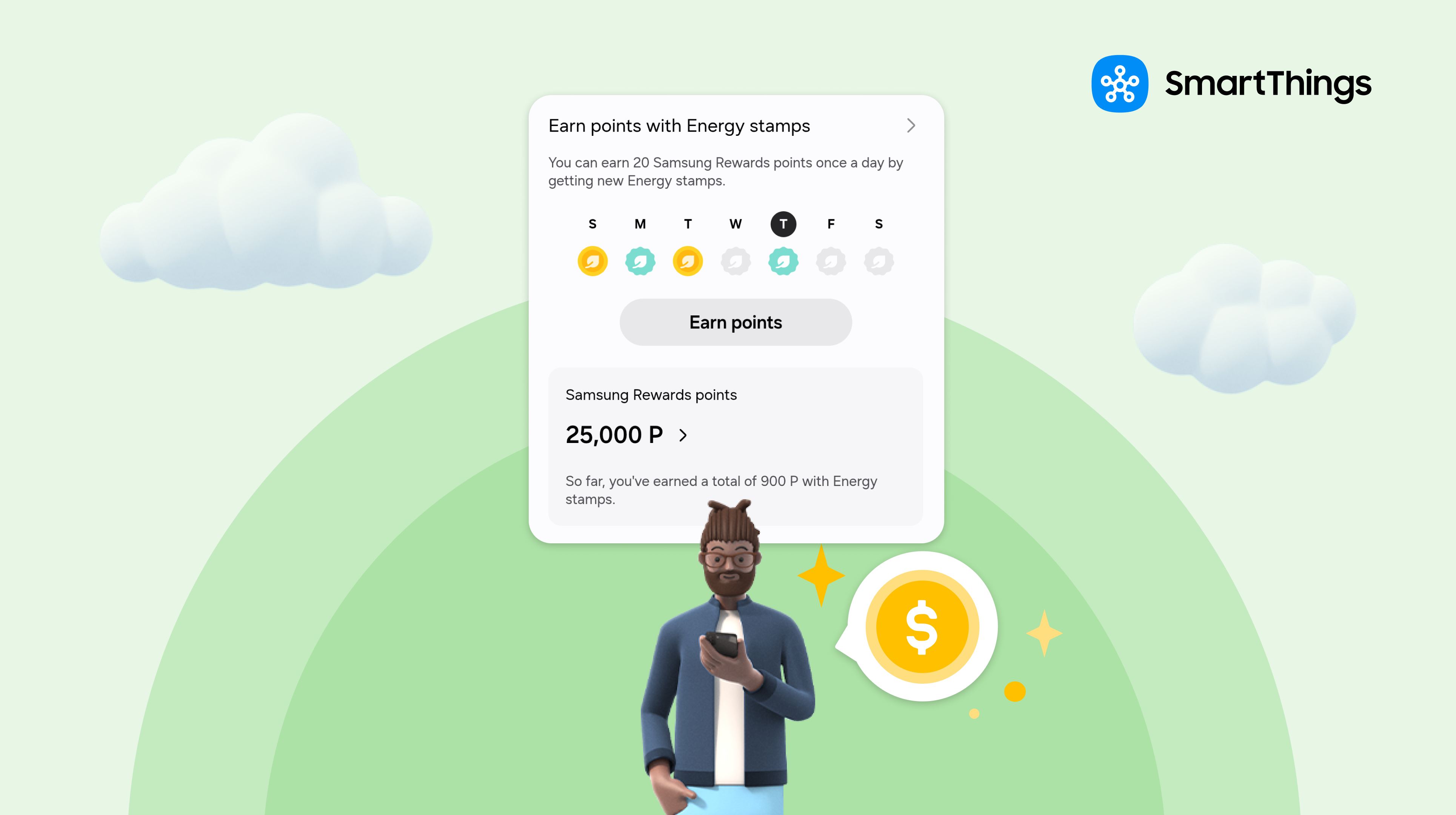
Samsung has attached a points scheme to all this. The SmartThings blog, on 15 May 2025, describes Energy Stamps earned for every 400 watt hours saved, which convert into Samsung Rewards redeemable against purchases in the Samsung store, with progress shown on an Energy Scorecard. Samsung's July 2024 Newsroom post on app updates described the same idea in terms of badges and Rewards points.
Whether this is motivating or faintly ridiculous depends on the person. It is worth knowing it exists, because it is a Samsung store discount rather than money, and the accounting is Samsung's.
How it compares with the alternatives
The nearest rivals are not other smart home platforms. Apple Home, Google Home and Alexa do not offer anything equivalent to appliance-level energy reporting, so the comparison is really against dedicated energy monitors and against Home Assistant.
A clamp-based whole-home monitor from a specialist gives you a truer picture of the house than any appliance-reported figure, because it measures what the meter measures rather than what a washing machine believes about itself. Home Assistant has a well-regarded energy dashboard that will take feeds from most of those monitors, from solar inverters and from utility meters, and will do it locally. What neither gives you is the ability to change how a Samsung dryer runs its cycle, which is the one thing SmartThings Energy can do that nothing else can.
Who should use something else
If you own no Samsung appliances, there is little here. The dashboard is populated by what it can see, and without Samsung hardware or a third-party meter it sees very little. A standalone energy monitor at the consumer unit will tell you far more for a one-off cost.
If you want accurate whole-home measurement, buy a meter. Appliance self-reporting is an estimate, and estimates from a dozen devices do not add up to a bill. This is not a criticism of Samsung specifically; it is what device-level reporting is.
If you want your energy data to stay in your house, use Home Assistant. SmartThings Energy is a cloud service, and its usefulness comes partly from Samsung comparing your usage against tariffs and grid events on its own servers.
If your motivation is solar or battery optimisation, look at the tools built by your inverter or battery manufacturer, or at Home Assistant, both of which model generation, storage and export in a way this service does not attempt.
And if you are outside the regions where the utility partnerships operate, discount the demand response and rewards material entirely. The programmes named above were US-specific, and what remains is a monitoring dashboard and an appliance-level saving mode.
Reviews
No reviews yet
Nobody has reviewed SmartThings Energy here yet.