About Samsung QLED
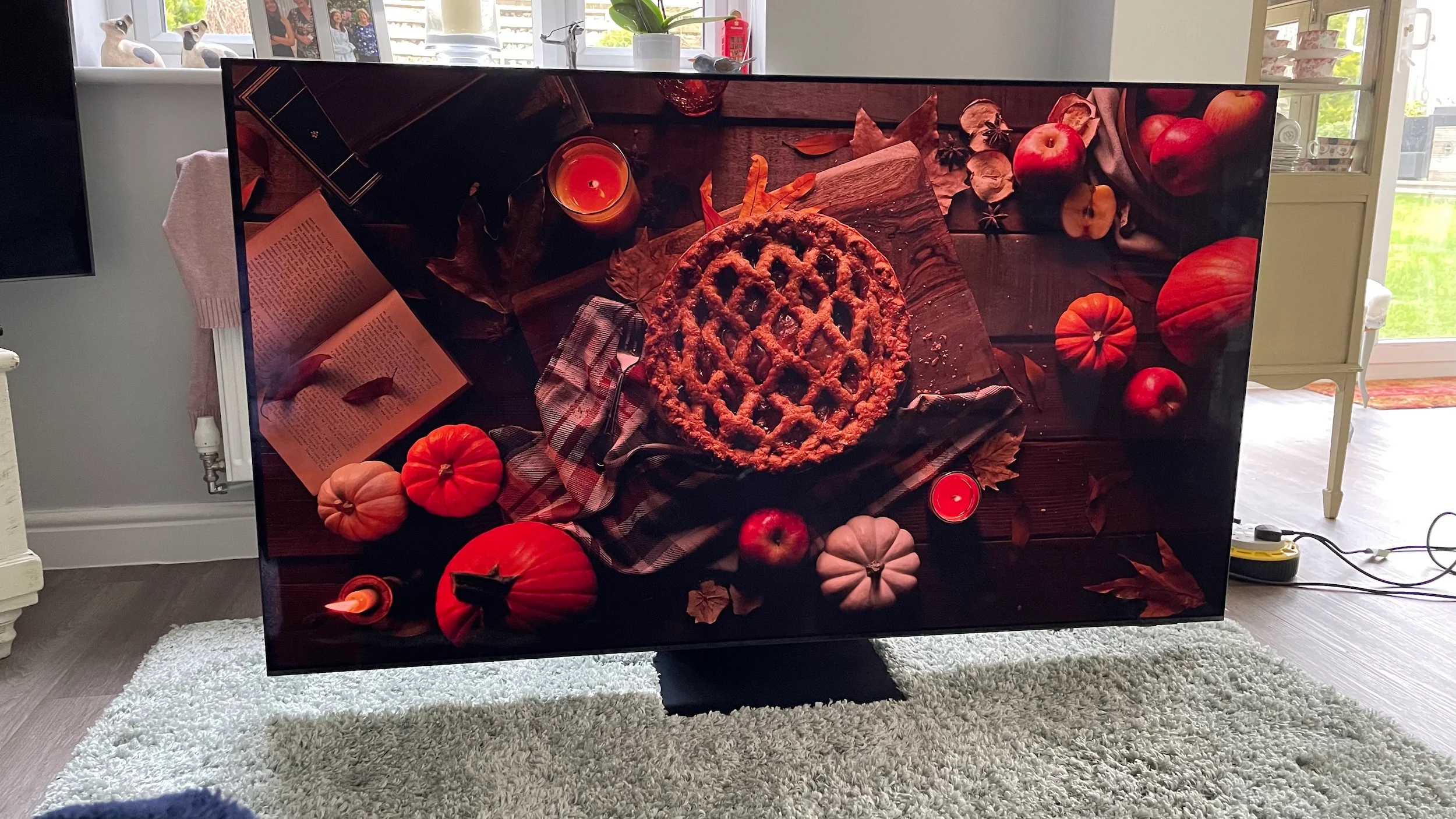
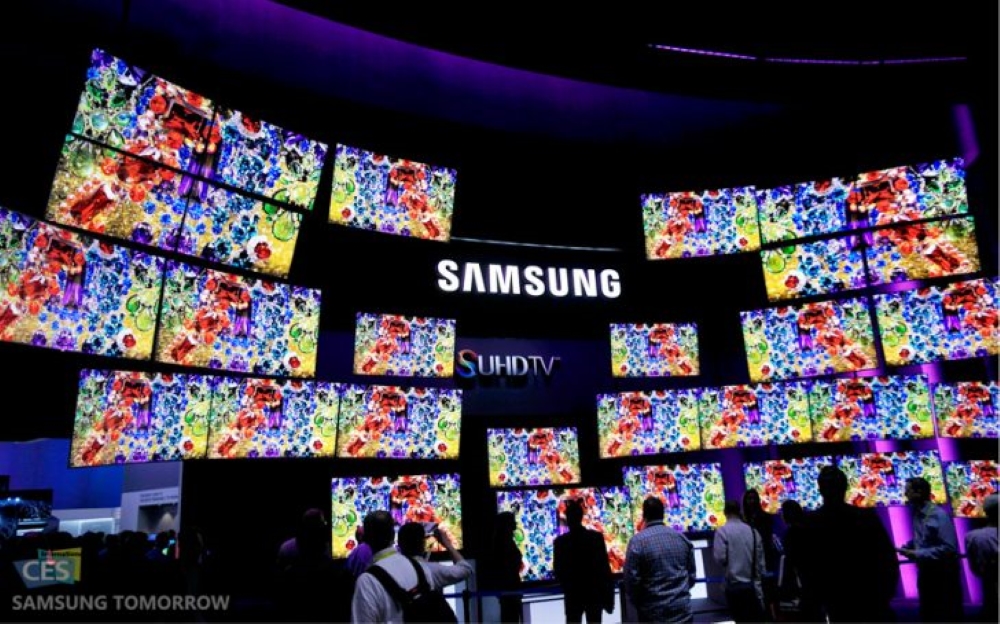
Samsung QLED is the company's quantum dot LCD range without a Mini LED backlight. It sits above the plain Crystal UHD sets and below Neo QLED, which is where Samsung puts Mini LED and its Quantum Matrix dimming. In practice this is the volume part of the television line: the sets that fill the price brackets most people actually shop in, sold as Q6F, Q7F and Q8F in the 2025 range and as Q60, Q70 and Q80 series in earlier years. Samsung describes quantum dots on its own QLED pages as "tiny particles that glow when lit" that raise brightness and colour accuracy. What you are buying is that colour treatment applied to a conventional LED-backlit LCD, at prices well below the Mini LED and OLED tiers above it.
Key specifications
Display
| Panel technology | Quantum dot film over an LCD panel with a conventional LED backlight. Mini LED backlights are branded Neo QLED and sit outside this line. |
|---|---|
| Dolby Vision | Not supported. Samsung's stated HDR formats are HDR10, HDR10+ and HLG. |
Software
| Smart platform | Samsung Tizen, with Samsung Gaming Hub and Samsung TV Plus. |
|---|
Where QLED sits in Samsung's television range
Samsung's range runs in broad layers. Crystal UHD at the bottom has no quantum dot film at all. QLED adds it. Neo QLED replaces the backlight with Mini LEDs and Samsung's Quantum Matrix local dimming. The OLED sets above that use a self-emissive panel with no backlight.
Crutchfield's breakdown of the 2025 line records the QLED tier as the Q7F, using a direct LED backlight with frame dimming and a 60Hz panel, and the Q8F, using an edge-lit Dual LED backlight with frame dimming and up to 144Hz on the 55-inch and larger sizes. Both run Samsung's NQ4 AI processor. From the QN70F upward, Crutchfield lists Quantum Matrix Mini LED instead.
Samsung's own newsroom confirms where the line stops. When TUV Rheinland issued its Real Quantum Dot Display certification on 12 May 2025, the QLED 4K entries were named as the Q8F, Q7F and Q6F, listed separately from the Neo QLED QN90F, QN80F and QN70F.
What the quantum dot layer does, and what it does not do
Quantum dots widen the colour a backlight can produce. They do not change how that backlight is controlled, and that distinction is the whole story of this range.
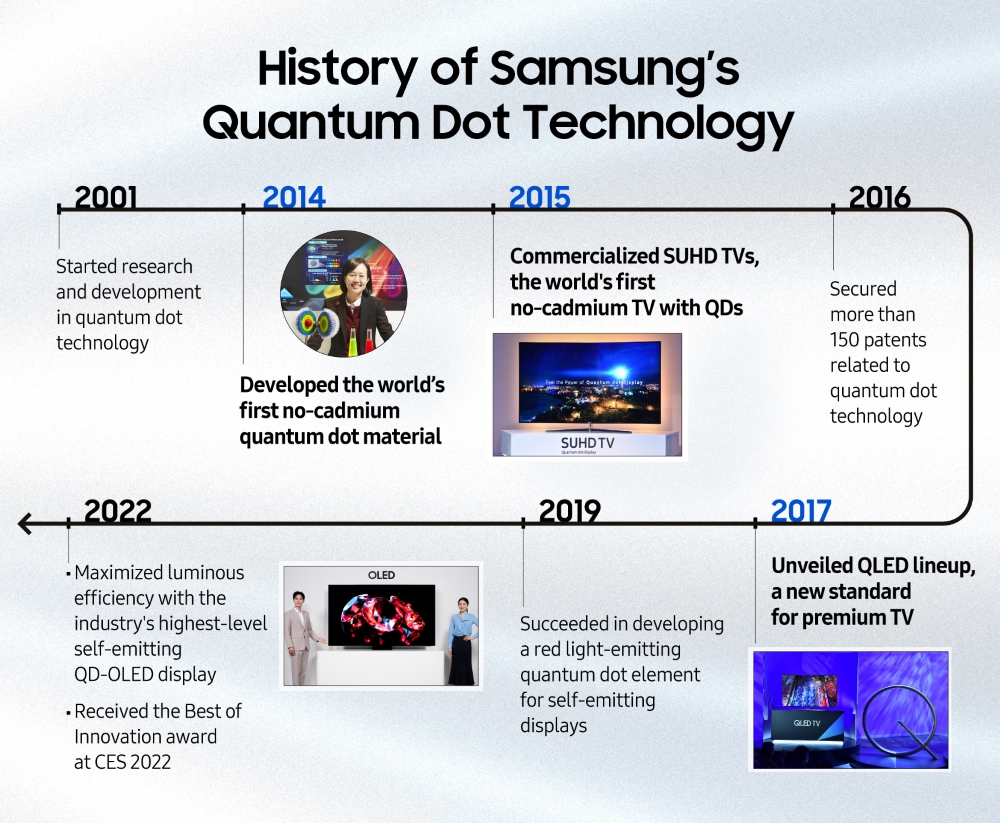
Samsung's newsroom guide to Real Quantum Dot says the company shipped the first cadmium-free quantum dots in 2014, and that its own definition of a real quantum dot display requires a minimum of 3,000 parts per million of quantum dot content, verified by TUV Rheinland against the IEC 62595-1-6 standard. That is a defensible claim about colour. It is not a claim about contrast.
Because a QLED set has no Mini LED array behind the panel, black levels come down to whatever coarse dimming the backlight allows. TechRadar measured the Q60D at 417 nits on a 10 percent HDR white window in Standard mode and 384 nits in Filmmaker mode, and described its backlight as Dual LED rather than full-array local dimming. SamMobile reached the same conclusion on the 2025 Q7F: no full-array local dimming, and peak brightness named as the set's main weakness for HDR. Expect good colour in a bright room and mediocre depth in a dark one.
Who this line is actually for
This is a range for a living room with the curtains open. Daytime television, sport, news, streaming with the lights on, a big screen in a kitchen or a bedroom. Quantum dot colour holds up under ambient light in a way a cheap LCD does not, and Samsung's build quality and Tizen software at this price are both better than the money suggests.
It is also the range to look at when screen size matters more than picture depth. Samsung's QLED 4K pages list sizes from 32-inch class up to 85-inch class, and the Q7F extends to a 98-inch model. Buying a larger QLED usually beats buying a smaller Neo QLED if the room is big and the seating is far back.
Gaming, refresh rate and HDR formats
Refresh rate is not consistent across the line, so check the model and the size. TechRadar recorded the Q60D as a 60Hz panel with three HDMI 2.0 ports, no VRR and no 4K 120Hz, though with ALLM, Samsung Gaming Hub and 9.6ms of input lag. SamMobile noted the 2025 Q7F is also 60Hz, a step back from earlier Q70 models that ran at 120Hz. Crutchfield lists the Q8F as reaching up to 144Hz on 55-inch and larger sizes.
HDR format support is worth knowing before you buy. Crutchfield's 2025 rundown lists HDR10, HDR10+ and HLG, with no mention of Dolby Vision anywhere in the Samsung range, and TechRadar states plainly that the Q60D lacks Dolby Vision. If your library leans on Dolby Vision, Samsung is the wrong brand entirely, not just the wrong tier.
How QLED compares with LG, TCL and Hisense
Against LG's OLED sets this is not a close contest on picture, and not a close contest on price either. An OLED delivers per-pixel black no backlit LCD can approach, and costs a great deal more. QLED wins on brightness per pound, on very large sizes, and on not worrying about static logos.
The harder comparison is against budget Mini LED from TCL and Hisense. Those brands now put full-array local dimming into sets priced against Samsung's QLED tier, which buys real contrast rather than wider colour on a flat backlight. TechRadar made exactly this point in its Q60D review, naming the Hisense U6N and TCL C805 as offering more features at comparable money. Samsung's counter-arguments are Tizen, the build finish and a support position those brands do not yet match. Whether that is worth the contrast you give up is the decision this range turns on.
Who should buy something else
Buy something else if you watch films in a dark room. Without a Mini LED array this line cannot produce convincing black, and letterbox bars will grey out. A Samsung Neo QLED, an OLED from either Samsung or LG, or a Hisense or TCL Mini LED set will serve you better for the same money or not much more.
Buy something else if you need Dolby Vision. Samsung does not support it on its televisions, and no software update is going to add it.
Buy something else if you game at 120Hz and are shopping at the bottom of this range. The Q60-class and Q7F sets are 60Hz with HDMI 2.0. Move up to the Q8F in a 55-inch or larger size, or to Neo QLED, or to a rival with HDMI 2.1 as standard.
Buy something else if built-in sound matters and you will not add a soundbar. Both TechRadar and SamMobile flagged audio as the weak point on the sets they tested.
And buy something else if you are chasing measured performance per pound above all. On that metric the budget Mini LED sets currently win, and the honest reason to choose a Samsung QLED instead is the software, the design and the brand's support rather than the numbers.
Reviews
No reviews yet
Nobody has reviewed Samsung QLED here yet.