About Samsung Micro RGB
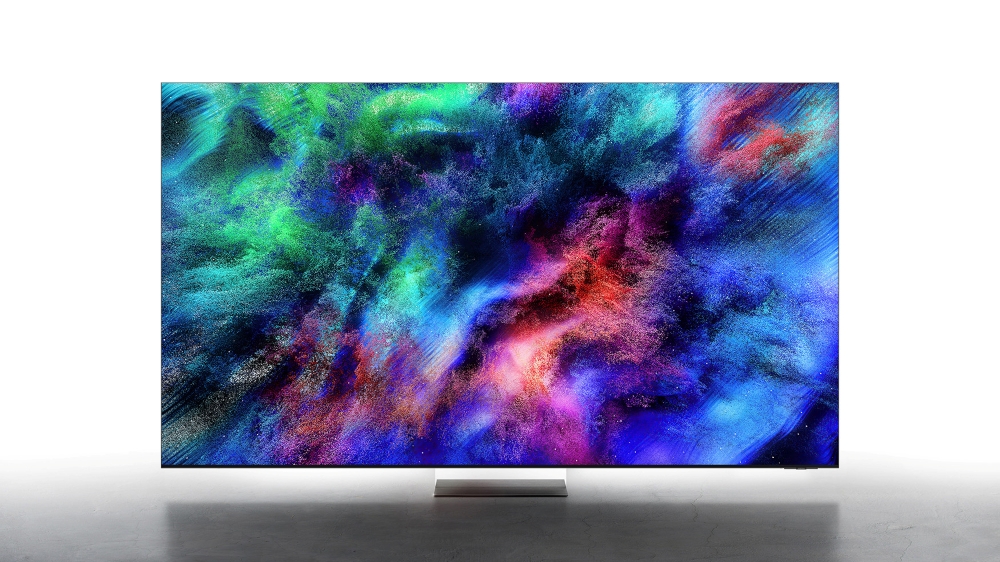
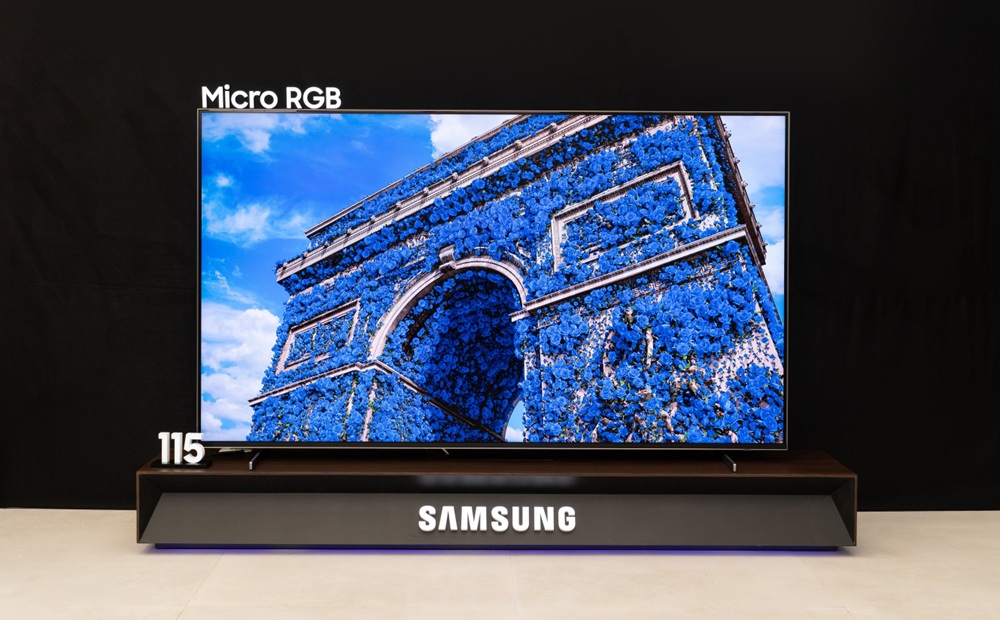
Samsung Micro RGB sits at the top of Samsung's television range and is the newest of its panel technologies. It is not a new kind of panel. It is an LCD whose backlight has been rebuilt from individual red, green and blue LEDs, each under 100 micrometres, in place of the white LEDs and colour filters that light a conventional set. Samsung launched it in Korea on 12 August 2025 at 115 inches, calling it the world's first display with a micro-scale RGB LED backlight at that size, and announced a full range of sizes for 2026 on 17 December 2025. The claim it rests on is colour: 100 percent coverage of the BT.2020 gamut, certified by VDE. The thing to hold on to before spending is that it is still an LCD, with everything that follows from having a backlight at all.
Key specifications
Display
| Panel technology | LCD with a backlight of individually controlled red, green and blue LEDs, each stated by Samsung as under 100 micrometres. Not a self-emissive MicroLED panel. |
|---|---|
| Colour gamut | Micro RGB Precision Color, stated by Samsung as 100 percent coverage of BT.2020 and certified by VDE. |
| Dolby Vision | Not supported. Samsung's stated HDR formats are HDR10, HDR10+ and HLG. |
Software
| Smart platform | Samsung Tizen with Vision AI and the Vision AI Companion. |
|---|
What Micro RGB actually is, and what it is not
The name invites a confusion Samsung has not worked hard to prevent. Micro RGB is not MicroLED. FlatpanelsHD puts it plainly: micro RGB is LCD with an RGB LED backlight, and it should not be confused with MicroLED televisions, which remove the LCD layer entirely. Tom's Guide draws the same line, noting Micro RGB still uses an LCD panel with a colour filter layer while MicroLED is self-emissive with no backlight involved.
What changes is where the colour comes from. A normal LED-backlit set produces white light and filters it into red, green and blue, losing energy and gamut at the filter. Micro RGB drives red, green and blue emitters directly, so the backlight itself is already coloured and can be steered per zone. That is a real engineering change and it does widen the gamut.
It is also not unique to Samsung. FlatpanelsHD notes rivals shipping the same underlying idea under names including True RGB and RGB Mini LED, worth remembering when a shop assistant presents Micro RGB as a category of one.
What Samsung claims, and what has been checked
Samsung's August 2025 launch material sets out the specific claims. The RGB LEDs are each less than 100 micrometres. Micro RGB Precision Color is stated to reach 100 percent coverage of BT.2020, the colour space underpinning modern HDR standards, and Samsung says this was certified by VDE, the German electrical engineering body. A Micro RGB AI Engine analyses each frame to adjust picture and sound, and Micro RGB Color Booster Pro lifts colour in scenes it judges dull.
The December 2025 announcement carries the claims forward for the 2026 range as Micro RGB Precision Color 100, again VDE certified, with a Micro RGB AI Engine Pro, 4K AI Upscaling Pro and AI Motion Enhancer Pro on selected models, Glare Free treatment on selected models, and audio covering Dolby Atmos, Q-Symphony, Adaptive Sound Pro and Eclipsa Audio.
The colour certification is the part with an outside name attached. The AI picture and sound features are Samsung's own descriptions and have not been independently quantified in the sources used here.
Sizes, models and what they cost
The line started as a single 115-inch set, reviewed by Tech Guide and others under the model code MR95F. Samsung's December 2025 announcement extended Micro RGB to 55, 65, 75, 85, 100 and 115 inches for 2026, shown publicly at CES 2026 in January.
CE Pro reports the expanded range as two series, the R95H and the R85H, spanning 55 to 115 inches, with refresh rates up to 165Hz on the R95H and 144Hz on the R85H, and prices running from 1,599 dollars for the 55-inch R85H up to 29,999 dollars for the 115-inch. Tom's Guide gives the same entry point, around 1,600 dollars for the 55-inch. FlatpanelsHD reported the sets as widely available in the US, the UK and Europe, and expects prices to fall notably later in 2026.
That spread matters. Micro RGB is described as the flagship technology, but by 2026 it reaches a price where it competes with ordinary premium Mini LED rather than only with the top of the market.
How it performs and where the limits are
Reviews of the 115-inch set are positive. Tech Guide scored it 95 percent, praising colour depth and accuracy, contrast and clarity, the Glare Free screen and the built-in audio, and calling it the best television Samsung has made. Its single stated criticism was the price.
The limits are structural rather than a matter of tuning. Because there is still an LCD layer and a backlight, Tom's Guide notes Micro RGB improves local dimming but cannot reach true black and can show blooming. Ecoustics makes the same point, and flags the familiar LCD artefacts of haloing around bright objects and uneven lighting as risks. Ecoustics also lists the 115-inch as having four HDMI ports at 4K and 144Hz, HDR10, HDR10+ and HLG, and a matte glare-free coating, and puts it against the Hisense 116UX at a similar size.
In other words, this is the best LCD picture Samsung currently sells, and it is still an LCD picture.
Micro RGB against OLED, MicroLED and RGB Mini LED rivals
Against OLED the trade is the usual one, moved further in the LCD favour. Micro RGB should go brighter and much larger than any OLED. OLED still wins on absolute black, on off-angle consistency and on the absence of blooming. Tom's Guide frames the real choice as Micro RGB against OLED rather than Micro RGB against MicroLED, which is right: MicroLED remains priced out of reach.
Against Samsung's own Neo QLED, Micro RGB is a genuine step in colour rather than a badge, because the gamut gain comes from removing the white LED and filter stage. Whether it is worth the premium depends on how much of what you watch is graded near BT.2020, which today is not most of it.
Against Hisense and TCL, the competition is on the same technology under different names. Ecoustics compares the 115-inch directly with the Hisense 116UX. Samsung's arguments there are Tizen, the coating and the build, not exclusivity of the backlight.
Who should buy something else
Buy something else if you watch mainly in a dark room and care most about black level. This is an LCD. Tom's Guide is explicit that it cannot reach true black and can bloom, and an OLED at a fraction of the 115-inch price will beat it on that one axis every time.
Buy something else if you need Dolby Vision. Ecoustics lists HDR10, HDR10+ and HLG on the 115-inch, and Samsung does not support Dolby Vision on any television. LG, Sony, TCL and Hisense all do.
Buy something else if you want proven long-term behaviour. This is a first-generation line launched in August 2025 and broadened in 2026. Independent measurement is still thin, and FlatpanelsHD expects prices to drop notably later in 2026, so an early buyer is paying for being early twice over.
Buy something else if the wide gamut is the whole reason you are tempted. Very little consumer content is mastered anywhere near BT.2020, so a certified 100 percent figure buys headroom rather than a visible difference on most of what you actually watch.
And buy something else if you are shopping at the bottom of the range. At around 1,600 dollars for a 55-inch, the Micro RGB entry point competes with well-reviewed OLED and Mini LED sets that have years of independent testing behind them.
Reviews
No reviews yet
Nobody has reviewed Samsung Micro RGB here yet.