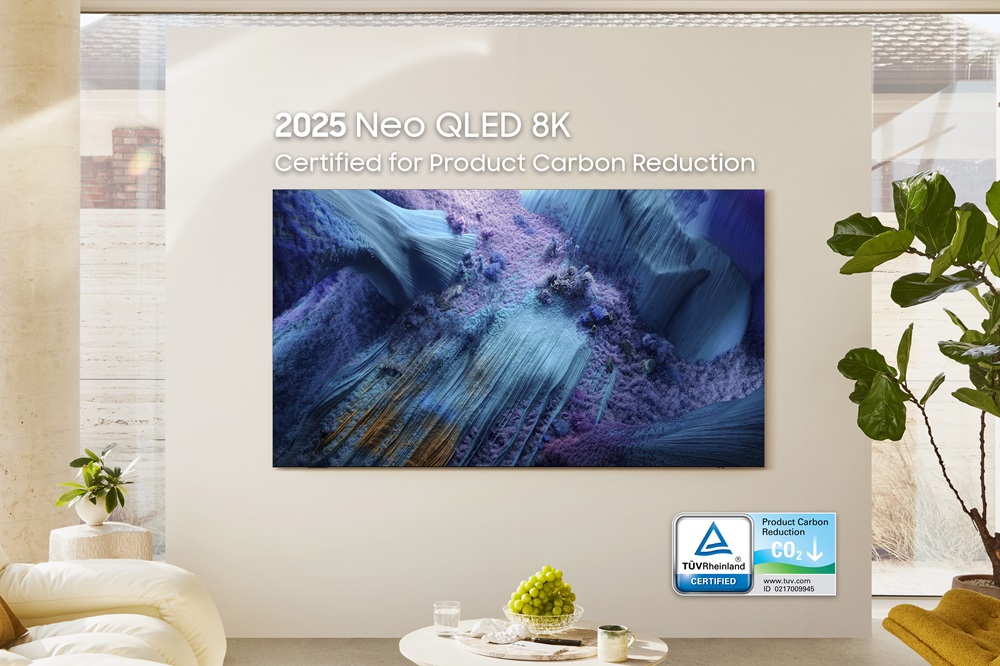

About Samsung Neo QLED
Neo QLED is Samsung's Mini LED television line. It sits above the plain QLED sets and alongside the OLED range, and the thing that defines it is the backlight. Instead of a modest number of large LEDs, a Neo QLED panel is lit by thousands of much smaller ones, which Samsung calls Quantum Mini LED, grouped into many independently controlled dimming zones behind a quantum dot layer. The practical result is a television that gets very bright and holds that brightness across a large area of the screen, which is the one thing OLED still finds hardest. The line spans 4K and 8K tiers and a wide spread of sizes, so what you are choosing between is not one set but a hierarchy.
Key specifications
Display
| Backlight | Quantum Mini LED with multi-zone local dimming |
|---|---|
| Colour layer | Quantum dot |
| Resolution tiers | 4K and 8K |
Picture
| HDR formats | HDR10 and HDR10+. Dolby Vision is not supported. |
|---|
Software
| Smart platform | Tizen |
|---|
Where Neo QLED sits in Samsung's range
Samsung splits its televisions into a few families. The entry sets use conventional LED backlights. Above them sit the QLED models, which add a quantum dot layer for colour. Neo QLED keeps that quantum dot layer and replaces the backlight with Quantum Mini LED. Above and alongside it Samsung sells its OLED sets, and at the top a small number of 8K models that are themselves Neo QLED. Within the line the model numbers do the work. A QN70 or QN80 class set is the affordable end, a QN90 class set is the 4K flagship, and the QN800 and QN900 classes are the 8K tier. All of them run Tizen, Samsung's own smart platform, so the software experience does not change as you move up.
What the Mini LED backlight actually buys you
Two things. Brightness comes first. Because the LEDs are small and there are a great many of them, the panel can be driven hard without the blooming a handful of large zones would produce. That matters most in a room with windows, where an OLED has to fight ambient light with a panel that cannot go as bright. Second is contrast control. Local dimming across many zones lets the dark parts of a picture stay dark while a highlight in the same frame stays bright. It is not the per-pixel control an OLED has, and on a high-contrast test such as white text on a black background you can still see a faint halo around the bright element. What you get in exchange is a picture that holds up at midday in a room you have not blacked out.
Choosing between the tiers
The gap between the cheaper and the dearer Neo QLED sets is real, and it is not only screen size. Reviewers and retailers describing the 2025 range put the QN70F and QN80F on Samsung's NQ4 AI Gen2 processor at up to 144Hz, and the QN90F on a newer generation of that processor at up to 165Hz. The QN90F also carries the anti-reflective coating Samsung otherwise keeps for its flagship OLED, and that is the single feature most worth paying up for if the set is going somewhere bright. Size availability differs as well. The flagship tier is the one that stretches down to 43 inches and up to 98, while the middle tiers concentrate on the common living room sizes between 55 and 85.
Neo QLED against OLED
The comparison usually comes down to the room rather than the specification sheet. In a bright room Neo QLED wins, and the flagship tier with the matte coating wins comfortably; Tom's Guide singled out that coating as handling reflections better than competing Mini LED sets. In a dark room an OLED gives you black that is actually black and colour volume Neo QLED does not match. Reviewers comparing the QN90F with LG's similarly priced C-series OLED found the OLED ahead on colour in film. Viewing angle is the other long-standing split, though the better Neo QLED panels have narrowed it. One format difference is worth knowing before you commit: Samsung does not support Dolby Vision on any of its televisions, Neo QLED included. It supports HDR10 and HDR10+ instead.
The 8K tier
Samsung's 8K televisions are Neo QLED televisions. They are the most expensive sets the company makes, and the argument for them rests on upscaling rather than on native content, because there is still very little 8K material to watch. If you sit close to a very large screen there is something in it. For most rooms and most viewing distances the money goes further on a larger or better-specified 4K set from the same family, which is why the 4K flagship rather than the 8K flagship is the set most buyers should be comparing.
Who should buy something else
If you watch mostly at night with the lights off and care more about black level and colour than about peak brightness, buy an OLED. If Dolby Vision matters to you, because of a disc collection or a streaming habit built around it, buy from a manufacturer that supports it, because no Samsung television does. If your budget lands at the very bottom of the Neo QLED range, look hard at whether a well-reviewed Mini LED set from Hisense or TCL gives you more dimming zones for the same money, since at that end the Samsung name is doing more work than the backlight is. And if the set is going in a dim bedroom to show broadcast television, the ordinary QLED range does that job for less.
Reviews
No reviews yet
Nobody has reviewed Samsung Neo QLED here yet.
