About Samsung Crystal UHD
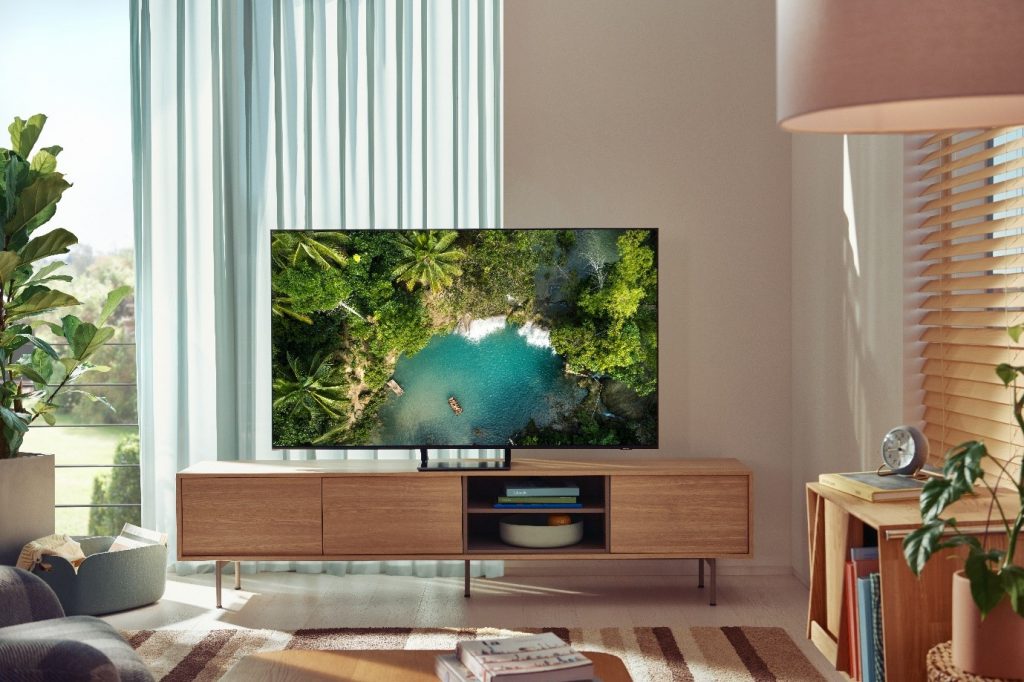
Crystal UHD is the name Samsung puts on the entry point of its television range. It sits below QLED, Neo QLED and the OLED sets, and the shorthand for the difference is straightforward: a Crystal UHD panel is a conventional LED-backlit LCD without the quantum dot layer that gives the QLED tiers their brighter, more saturated colour. Everything above the picture hardware is shared with the rest of the range, so a Crystal UHD set runs the same Tizen software, the same app catalogue and the same Samsung Gaming Hub as a set costing several times more. The line spans many models and several model years, so it is best treated as a tier rather than as a single product.
Key specifications
Display
| Resolution | 4K UHD, 3840 x 2160 |
|---|---|
| Panel and backlight | LED-backlit LCD, no quantum dot layer |
| HDR formats | HDR10+ and HLG. No Dolby Vision |
Processing
| Processor | Crystal Processor 4K |
|---|
Software
| Smart platform | Tizen, with Samsung Gaming Hub |
|---|
Where Crystal UHD sits in Samsung's range
Samsung's ladder runs Crystal UHD at the bottom, then QLED, then Neo QLED with mini LED backlighting, then the OLED sets at the top. Tech Advisor describes the Crystal models as workhorse models that do not cost the earth, ideal for general watching and streaming, and notes that they lack the brightness or backlight technology to present HDR material at its most dynamic. That is a fair summary of the trade. Crystal UHD sets carry HDR10+ and HLG and do not support Dolby Vision, which is true across Samsung televisions generally rather than a Crystal UHD limitation in particular. Screen sizes have typically run from 43 inches up to 85 inches depending on the series and the year. Samsung renames the range annually, so a shopper meets series codes such as DU7200 or U8000H on the box rather than the words Crystal UHD.
What the Crystal name actually describes
Samsung attributes the picture to the Crystal Processor 4K, which it says handles colour, manages contrast and HDR, and upscales lower resolution sources to 4K. Samsung Newsroom adds Dynamic Crystal Colour, described as colour mapping technology intended to widen the range of tones the set can show. What the name does not describe is a distinct panel technology. A Crystal UHD screen is an LED-lit LCD, and the processing is the part being sold. It is worth reading the marketing on that basis. The chip does real work on upscaling and motion handling, and it cannot add backlight zones or peak brightness that the panel underneath does not have.
Who this line is for
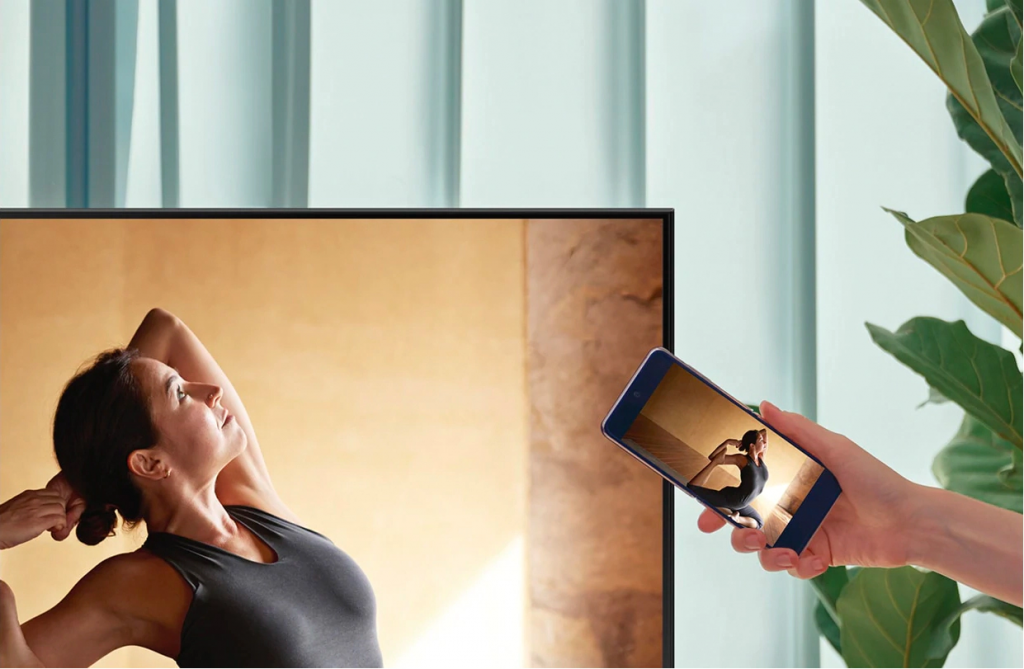
This is a television for a room where the light is under control and the budget is the deciding factor. A second set in a bedroom, a screen for a rental property, a television for a spare room or a home office, or a first 4K set for somebody moving up from 1080p. If most of what plays on it is streaming in the evening, the weaknesses are hard to notice. Buyers who specifically want Samsung software, because they already own a Galaxy phone or a Samsung soundbar, get the full Tizen experience here without paying for the panel tiers above it.
What to weigh against the nearest rivals
The real competition at this price is not another Samsung. Tom's Guide measured a DU7200 at roughly 270 to 300 nits in its most accurate mode and found virtually no appreciable difference between SDR and HDR brightness, and it reported that the absence of local dimming leaves dark scenes with a grey-blue cast. Its recommendation was to spend 150 to 200 dollars more on a set such as the TCL QM7 or the Hisense U7N if picture quality is the priority. That trade is genuine. Rival budget brands often fit local dimming and higher brightness at similar money, while Samsung holds the advantage on software polish and build. Input lag was measured at 9.8 milliseconds, so latency is not the weak point here. Panel refresh rate is, and it varies from model to model within the line.
Who should buy something else
Anyone watching in a bright room should look elsewhere. A set that peaks near 300 nits will be washed out by daylight, and no picture mode setting fixes that. Anyone who cares about films in a darkened room should also step up a tier, because without local dimming the black levels stay grey. Console owners who want 120Hz gaming over HDMI 2.1 need to check the specific series rather than trusting the tier name, because some Crystal UHD models ship with 60Hz panels and HDMI 2.0 ports only. Buyers who want Dolby Vision will not find it on any Samsung television. And anyone shopping purely on picture quality per pound at this price should compare TCL and Hisense before committing to the badge.
What to check before you order
Because Crystal UHD is a tier rather than one product, the specification that matters belongs to the series code, not to the tier name. Check the refresh rate, since the line has contained both 60Hz panels and models marketed at 120Hz. Check the HDMI version and the number of ports. Check whether the model is edge-lit or direct-lit, because that drives the uniformity of dark scenes. Check the size as well as the series, since the same code can perform differently at 43 inches and at 85 inches. Prices move a great deal across a model year and between retailers, so any figure quoted for this line is a snapshot of one model at one moment rather than the price of the range.
Where to buy
Links go to the seller, not through us. We take no commission and these are not affiliate links, so the order below says nothing about who pays what. Prices and stock change constantly, so check on the day.
Reviews
No reviews yet
Nobody has reviewed Samsung Crystal UHD here yet.