About JBL
JBL is the largest and best known name Harman carries, and since Samsung Electronics bought Harman in 2017 it has been the loudest consumer brand in Samsung's portfolio that does not say Samsung on the box. The company was founded in 1946 by James Bullough Lansing, and the initials are his. It now spans two businesses that rarely meet: a very large consumer range of portable Bluetooth speakers, headphones, earbuds, soundbars and car audio, and JBL Professional, which builds the loudspeakers in cinemas, arenas and touring rigs. Because the name covers everything from a speaker that clips to a rucksack to a cinema array, no single description of build quality, price or sound applies across it. What follows is where each part of the range sits, what the house sound is tuned for, and where a different brand is the better answer.
Where JBL sits inside Harman and Samsung
Sidney Harman acquired JBL in 1969 through the Jervis Corporation, which later became Harman International, and Samsung Electronics acquired Harman in 2017. JBL is therefore a Samsung subsidiary, but it is run as its own consumer brand and sells through ordinary retail rather than through Samsung stores. That is worth knowing for two reasons. First, JBL products are not tied to Galaxy phones and work the same on any Bluetooth source. Second, JBL sits alongside AKG, Harman Kardon and Mark Levinson under the same owner, and those brands divide the range between them: Harman Kardon takes the design-led home audio position, AKG takes the studio position, and JBL takes the volume, the durability and the outdoors.
How the portable speaker range is tiered
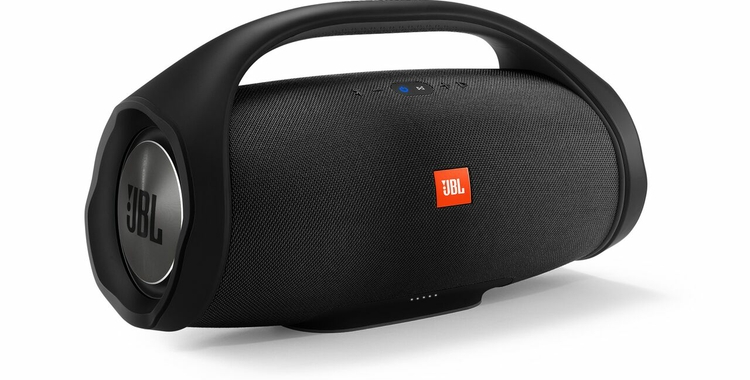
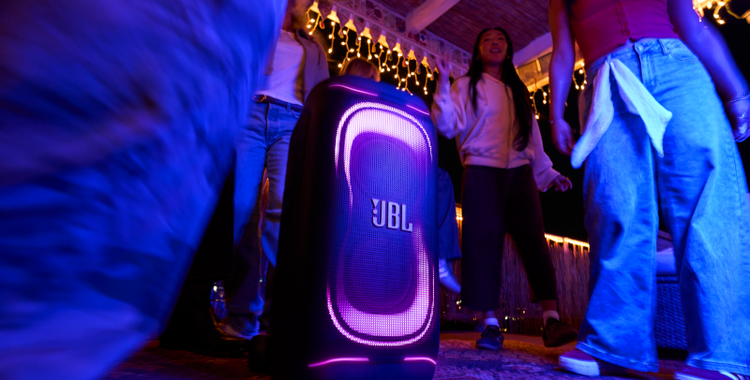
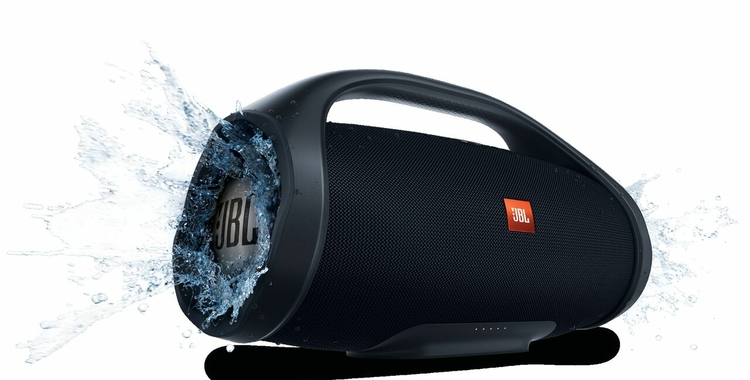
The portable speakers are the reason most people know the name, and they are tiered almost entirely by size. Go and Clip are the pocket models, bought for a shower, a bike or a bag rather than for a room. Flip is the cylinder that fits in a hand and is the usual answer for travel. Charge is the all-rounder, larger, louder and longer-lasting, and it doubles as a power bank. Xtreme is the two-handed model meant to fill a garden or a large room. Boombox and PartyBox sit above that and stop being portable in any useful sense. Reviewers who compare the range directly tend to land on Charge as the best single choice and Flip as the best compact one, with the previous generation of each worth buying when discounted. The important point for a buyer is that the tiers differ in output and battery far more than they differ in tuning, so choosing between them is a question about the size of the space and how far it has to be carried, not about sound quality.
The professional and cinema side most buyers never see
JBL Professional is a separate business and a serious one. The 4320 became a standard studio monitor, and by the late 1970s more recording studios were using JBL monitors than all other brands put together. JBL loudspeakers formed the basis of the THX loudspeaker standard, which is how the brand became a default in cinemas, and the company has long supplied touring sound for festivals and arena acts. None of this is sold in the same place as a Flip, and none of it shares components with one. A buyer who has read that JBL is the standard in cinemas and expects that pedigree to arrive in a portable Bluetooth speaker has drawn a connection the company itself does not make.
What the JBL house sound is tuned for
Across the consumer range the tuning is deliberately forward: emphasised low end, a lifted treble and dynamics that read as lively at moderate volume and in noisy places. That is the correct choice for the situations these speakers are actually used in, which are gardens, beaches, kitchens and building sites rather than a treated listening room. It is not a neutral tuning and it is not trying to be. On the compact models the physics sets a hard limit, and a speaker the size of a bar of soap will not produce low bass however it is tuned, which is a size constraint rather than a fault. Anyone whose test of a speaker is how accurately it reproduces a recording, rather than how well it holds up outdoors, is applying the wrong test to this range.
What to weigh against Bose, Sonos and Ultimate Ears
Against Bose, the argument is usually price and ruggedness against refinement: JBL tends to give more output and more waterproofing for the money, Bose tends to sound more composed at the top of the volume range. Against Sonos, the question is whether the speaker needs to leave the house. Sonos is built around a multiroom system with the app at the centre, and a JBL portable is built around a battery and a carrying strap; buying a JBL as the first speaker in a whole-home system means fighting the design. Against Ultimate Ears, the Boom and Wonderboom models compete directly with Flip and Clip on durability, and the honest answer is that the two ranges trade places every generation. Against Anker, Tribit and the cheaper end, JBL charges a premium for a service network and for build that survives longer, which is worth it to some buyers and not to others.
Who should buy something else
Anyone who wants accurate, neutral reproduction for critical listening should not start here. The consumer tuning is built for noisy rooms, and passive bookshelf speakers with a separate amplifier will do that job better at the same money. Anyone building a whole-home audio system room by room should look at Sonos or a wired system instead, because the JBL portables are designed to leave the house rather than to stay in it. Anyone who needs the smallest possible speaker with real bass is being sold a contradiction by every brand, JBL included, and should either accept the size or accept the compromise. And anyone shopping for cinema or touring loudspeakers should be talking to JBL Professional dealers rather than reading consumer pages, because the two catalogues share a badge and very little else.
Reviews
No reviews yet
Nobody has reviewed JBL here yet.