About Harman Kardon
Harman Kardon is the design-led home audio brand inside Harman, the group Samsung Electronics bought in 2017. It was founded in 1953 in Westbury, New York by Sidney Harman and Bernard Kardon, and the company name is simply the two surnames. The early reputation was built on making hi-fi usable: the Festival D-1000 of 1954 put an FM tuner, a preamplifier and a power amplifier into one chassis, which is the arrangement every receiver has used since. The modern range is much narrower than the history suggests. It is now a set of wireless speakers, soundbars and headphones sold on the strength of how they look in a room, plus a large business supplying branded audio systems to carmakers. Anyone comparing it with JBL, which sits under the same owner, is really choosing between a speaker meant to be seen and a speaker meant to be carried.
Where Harman Kardon sits among Harman's other brands
Harman owns a lot of audio names and gives each one a job. JBL takes volume, durability and the outdoors. AKG takes the studio. Mark Levinson takes the top of the home market. Harman Kardon takes the middle of the living room, and its selling point is industrial design rather than specification. That division explains most of the product decisions. A Harman Kardon speaker is likely to be a glass or fabric object you leave on a sideboard, where the JBL equivalent is a rubberised cylinder with a strap. Neither is a better speaker in the abstract, and they frequently share engineering, but they are answers to different questions. The ownership history is unusually eventful: Sidney Harman sold the company to Beatrice Foods in 1976, bought it back in 1980, and the group was acquired by Samsung Electronics in 2017. Harman has kept buying since, adding Denon, Marantz and Bowers and Wilkins to the group in 2025.
What the current range actually covers
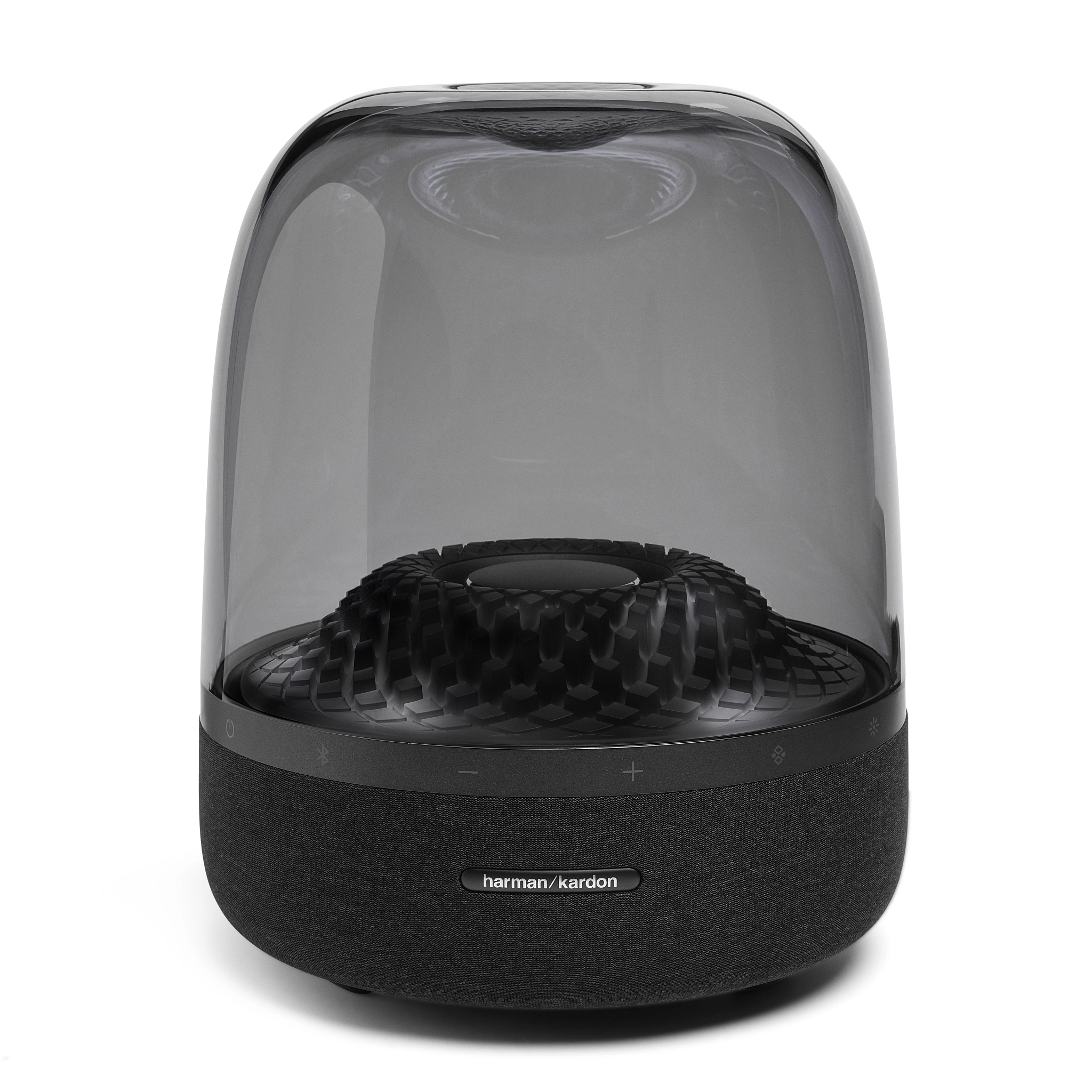
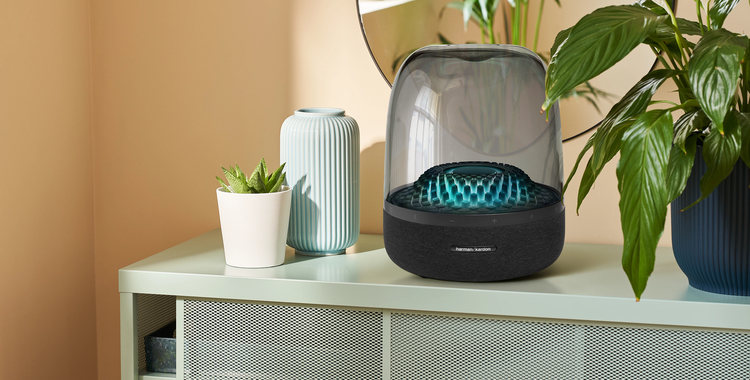
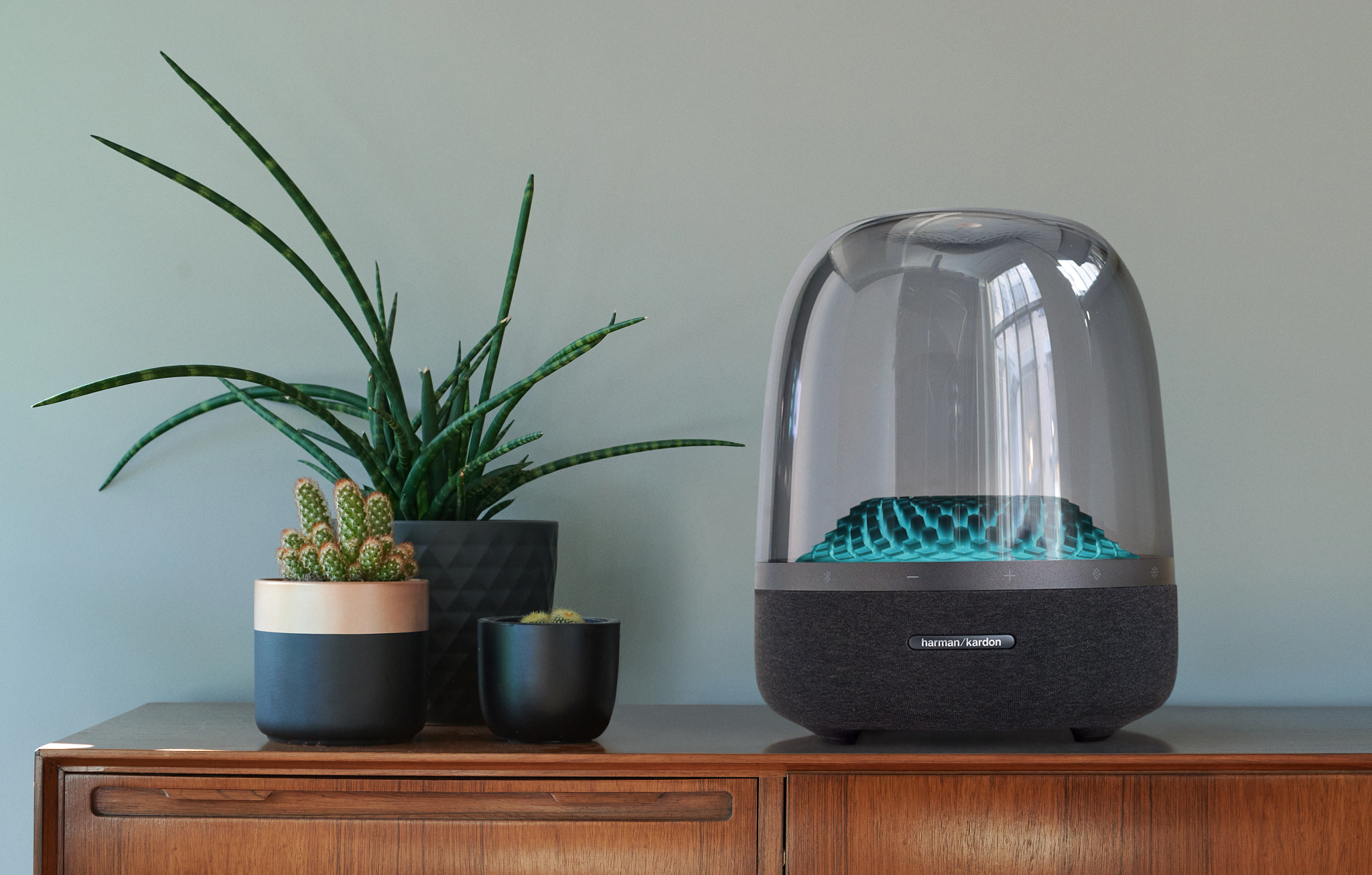
The current catalogue is smaller than the brand's history implies. Onyx Studio is the portable stereo Bluetooth speaker and the model most people mean when they name the brand. Aura Studio is the domed home speaker with the lighting effect, which is the clearest statement of the design-first position in the range. Go and Play is the larger portable with the exposed handle. Enchant covers the newer home audio pieces, including a compact wireless speaker and an all in one soundbar with Dolby Atmos. There are also headphones, marine audio and the automotive systems. What is not here is a deep separates catalogue: the receivers and amplifiers that made the name are largely gone from the consumer range, and a buyer looking for a modern equivalent of the D-1000 is looking at other brands.
What you are paying for, and what you are not
The honest summary from reviewers is that the sound is usually better than the price suggests and the connectivity is usually worse. Testers of the Onyx Studio 9 found it produced far more bass than its size implied and read as balanced across the range, and rated it good value against much more expensive rivals. The same testers noted it is Bluetooth only, with no wifi, no AirPlay and no Spotify Connect, that it is not weather resistant even though earlier Onyx models were, and that it has no quick release charging base, so moving it means unplugging a cable by hand. That combination is the pattern across the range. The speaker sounds good and looks good in a room, and the software and system features are behind what a comparably priced Sonos or Bose product offers. Whether that is the right trade depends entirely on whether the speaker is meant to move around a house on a network or sit in one place.
The car audio badge and what it does not tell you
Harman supplies audio systems to a long list of carmakers including BMW, Mercedes-Benz, Audi, Volkswagen, Ford, Hyundai and Kia, and Harman Kardon is one of the badges those systems carry. A buyer who has heard a Harman Kardon system in a car and gone looking for the same thing at home should know that the car system was engineered for one specific cabin, with amplifier and speaker placement fixed by the vehicle maker, and shares a trademark rather than a design with anything on a shelf. The car badge is a reasonable signal that the manufacturer paid for a tuned system rather than a stock one. It is not a prediction about how a home speaker will sound.
What to weigh against Sonos, Bose and JBL
Against Sonos, the trade is price and looks against the system. Sonos costs more and sounds no better for the money, but it is built around a network, an app and multiroom playback, and it keeps working as a system when a second and third speaker arrive. A Harman Kardon speaker that only speaks Bluetooth cannot join that. Against Bose, the comparison is closer and mostly about taste in tuning and in industrial design, with Bose generally stronger on voice assistants and on the app. Against JBL, the sibling brand, the question is where the speaker lives. If it will go outside, get wet or be carried by a strap, buy the JBL. If it will sit in a room and be looked at, this is the range that was designed for that.
Who should buy something else
Anyone building a multiroom system should look at Sonos, or at any range with wifi streaming across the whole lineup, because Bluetooth only models cannot be grouped and will strand the buyer at one speaker. Anyone who wants a speaker for a garden, a beach or a building site should buy the JBL equivalent, which is designed for it and costs less. Anyone who wants accurate monitoring for mixing or critical listening is in the wrong part of Harman entirely and should be reading about AKG or JBL studio monitors. Anyone who wants the separates business the name was built on, a receiver and speakers bought individually and kept for twenty years, will not find a current equivalent here. And anyone choosing purely on measured performance per pound should compare carefully, because a good part of the price of this range is the finish and the shape rather than the drivers.
Reviews
No reviews yet
Nobody has reviewed Harman Kardon here yet.