About Azure Operator Nexus
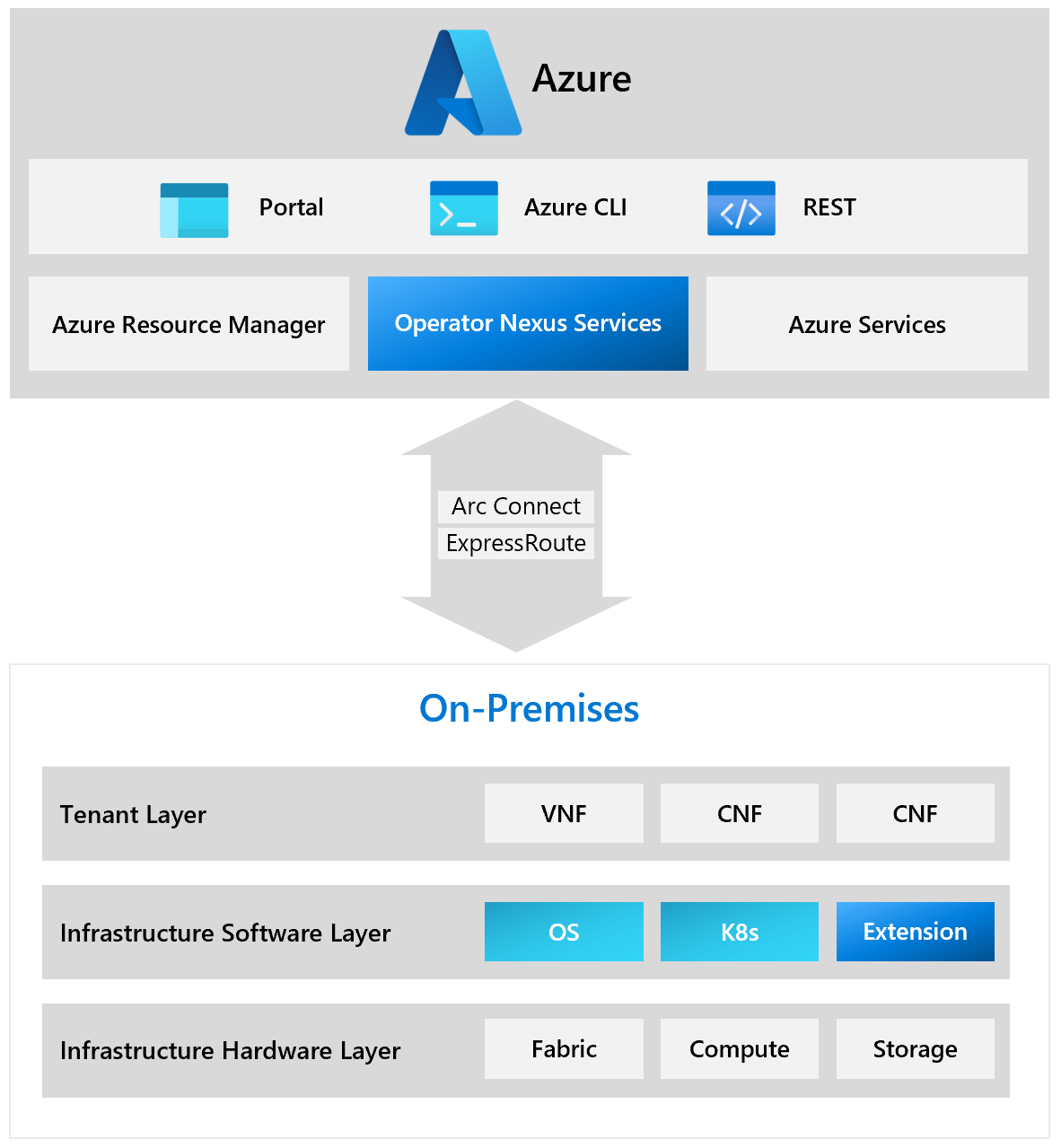
Azure Operator Nexus is Microsoft's carrier-grade hybrid cloud platform for telecommunications operators that need to run network-intensive and mission-critical mobile workloads on operator-owned infrastructure while managing the environment through Azure. It combines certified on-premises compute, network fabric, storage, Nexus Kubernetes, observability, governance and Azure control-plane integration. The service is specialized for virtualized and containerized network functions, so it should be evaluated as telecom infrastructure rather than as a general application hosting platform.
What is included
Positioning
| Primary audience | Telecommunications operators running network-intensive and mission-critical mobile workloads |
|---|
Architecture
| Deployment model | Certified operator-owned on-premises infrastructure managed through Azure |
|---|
Workloads
| Network functions | Supports containerized network functions and virtualized network functions |
|---|
Compute
| NFVI capabilities | CPU pinning, NUMA alignment, huge pages, SR-IOV, DPDK-oriented networking and Layer 2 networking |
|---|
Containers
| Kubernetes | Nexus Kubernetes for on-premises operator network-function workloads |
|---|
Networking
| Network Fabric limit | Up to 10 Network Fabric resources per Network Fabric Controller |
|---|---|
| Layer 2 isolation domains | Up to 3,500 per Nexus instance |
| Layer 3 isolation domains | Up to 200 per Nexus instance |
| Route policies | Up to 400 per Nexus instance |
Network Cloud
| Nexus clusters | Up to 10 Nexus Cluster instances per Cluster Manager within the same region |
|---|
Azure capacity
| Network Fabric Controller vCPUs | 228 vCPUs documented for zone-redundant operation and upgrades |
|---|---|
| Cluster Manager vCPUs | 32 vCPUs steady state; up to 64 during upgrade |
Security
| Microsoft security integrations | Defender for Cloud, Defender for Endpoint and Defender for Containers |
|---|
Governance
| Azure controls | Azure Resource Manager, Azure RBAC and Azure Policy |
|---|
Pricing
| Public list price | Not published by Microsoft; customers are directed to an account representative |
|---|
What is Azure Operator Nexus used for?
Azure Operator Nexus is designed for telecommunications operators modernizing mobile and near-edge network infrastructure. Microsoft positions it for mission-critical mobile network applications, including virtualized network functions and containerized network functions from Microsoft and partners. The platform automates lifecycle management for the infrastructure as well as tenant workloads.
It is not simply an Azure region installed in an operator datacenter. Microsoft defines the required hardware components, topology and connectivity. The operator purchases and deploys the hardware in its own near-edge datacenter, then connects that environment to Azure. The management plane runs in Azure while the control plane and user plane are deployed on operator premises or, in some scenarios, in Azure.
How does Azure Operator Nexus manage compute, Kubernetes and network functions?
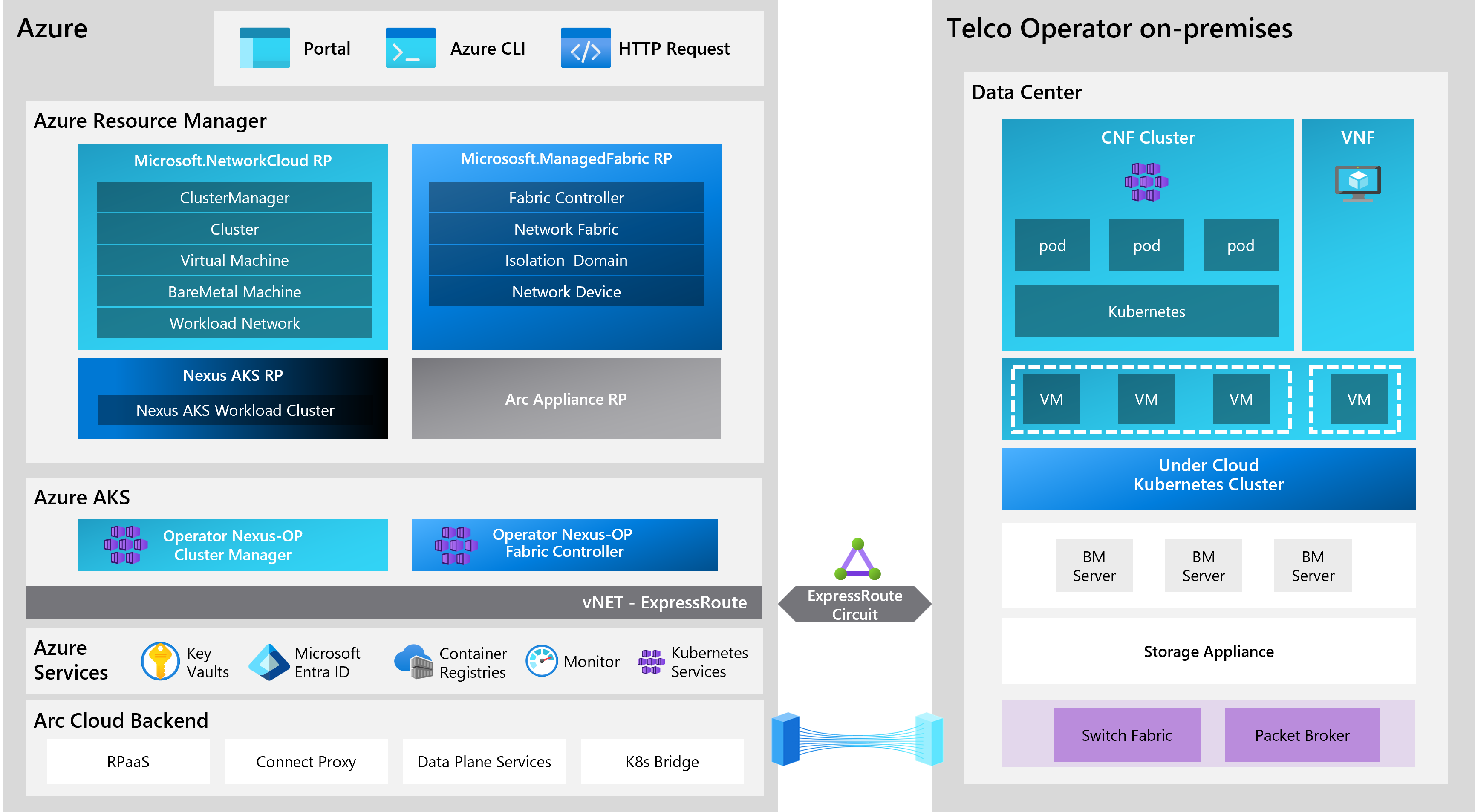
Operator Nexus models bare-metal machines, clusters and network devices as Azure resources. Operators can use Azure Resource Manager, the Azure portal, CLI, SDKs and APIs to provision and manage the environment. The cluster manager handles lifecycle tasks for Nexus clusters built from the certified bare-metal estate.
For containerized network functions, Nexus Kubernetes provides an Operator Nexus version of Azure Kubernetes Service for on-premises workloads. For virtualized network functions, Microsoft documents NFVI capabilities such as CPU pinning, NUMA alignment, huge pages, SR-IOV, DPDK-oriented networking and Layer 2 networking. These capabilities target high-performance telecom workloads that need predictable latency and throughput.
How does network fabric automation work?
Azure Operator Nexus includes Network Fabric capabilities for carrier-grade networking. Microsoft documents zero-touch provisioning, workflow-driven APIs, tenant network configuration, route policies, observability and packet-broker functions. This allows compute and network provisioning to be coordinated instead of being operated as separate infrastructure silos.
The Network Packet Broker can replicate and filter packet streams for monitoring or security destinations. This is useful for network performance monitoring and intrusion-detection scenarios where operators need visibility into traffic without building separate packet-mirroring systems.
What current limits and quotas should buyers plan for?
Microsoft's current limits documentation, updated June 19, 2026, adds several concrete planning boundaries. A Network Fabric Controller can support up to 10 Network Fabric resources. Each Nexus instance supports up to 3,500 Layer 2 isolation domains, 200 Layer 3 isolation domains and 400 route policies, with isolation-domain MTU from 1500 to 9200.
For Network Cloud, Microsoft documents a one-to-one mapping between Cluster Manager and Network Fabric Controller and up to 10 Nexus Cluster instances per Cluster Manager within the same region. The same reference lists up to 3,500 Layer 2 networks, 200 Layer 3 networks and 3,500 trunked networks per Nexus instance. Microsoft strongly recommends a dedicated Azure subscription for Operator Nexus rather than mixing it with unrelated Azure workloads because the service depends on substantial Azure quotas across virtual machines, AKS, networking, identities, Key Vault, storage, load balancers and monitoring.
What Azure capacity is required for the management controllers?
The current limits reference shows that the Azure-hosted management components require meaningful regional capacity. For the Network Fabric Controller deployment, Microsoft documents 228 vCPUs for zone-redundant operation and upgrade support using Standard D8s v3 capacity. For the Cluster Manager side, the documented steady-state requirement is 32 vCPUs, which can rise to 64 during upgrade. Microsoft notes that these vCPU and family requirements can change.
This matters during procurement because Operator Nexus is not only an on-premises hardware purchase. Teams must also reserve enough Azure regional quota for the management services, confirm availability-zone capacity and validate dependent Azure services before deployment.
How does Azure Operator Nexus integrate with Azure services?
The management layer is built on Azure Resource Manager and resource providers. Microsoft documents integrations with Azure Monitor, Log Analytics, Azure Container Registry, Azure Kubernetes Service, Azure Policy, Azure role-based access control and ExpressRoute. Infrastructure and tenant telemetry can be streamed to Azure Monitor and Log Analytics for troubleshooting, dashboards and alerting.
Because the platform extends Azure management to operator premises, organizations can apply familiar governance and policy controls across infrastructure that physically remains in their own datacenter. Connectivity, identity, policy boundaries and observability architecture still require careful design because the management experience depends on Azure services.
What security model does Azure Operator Nexus use?
Microsoft describes the security model around security by default and assume breach principles. Current documentation highlights Microsoft Defender for Cloud for overall cloud security posture, Defender for Endpoint for bare-metal host operating system protection and Defender for Containers for Kubernetes workload protection.
The platform also supports Azure Policy and role-based access control for governance. Security remains a shared responsibility. Operators still need to secure network functions, manage identities and access, protect connectivity, monitor workloads and follow their own compliance requirements.
What hardware and deployment requirements should buyers expect?
Operator Nexus uses a curated and certified bill of materials made from commercially available servers, network switches and storage arrays. Buyers cannot install it on arbitrary existing hardware. Operators or their system integrators must prepare the site, procure supported equipment and follow Microsoft's topology and deployment prerequisites.
The service that manages each on-premises instance is hosted in a supported Azure region. Microsoft recommends checking current availability for the Microsoft.NetworkCloud and Microsoft.ManagedNetworkFabric resource providers before deployment because supported regions and API versions can change. ExpressRoute is part of the documented connectivity architecture between Azure and operator locations.
How is Azure Operator Nexus priced?
Pricing was checked on August 31, 2026. Microsoft's current product page explicitly states that Azure Operator Nexus pricing will not be published and directs customers to their account representative. BrandLigo therefore does not present a fixed monthly, hourly or per-node price.
The total cost should be evaluated as a telecom infrastructure program. Buyers need to account for certified hardware, datacenter capacity, Azure management resources, ExpressRoute or other connectivity, implementation, operations, support and any partner network-function licensing. Procurement is therefore closer to a carrier network transformation project than a self-service cloud subscription.
What are the main operational limitations?
Azure Operator Nexus is highly specialized. It is intended for telecom operators and carrier-grade network functions, so it can be unnecessarily complex for general application teams. The certified hardware model reduces the freedom to reuse arbitrary server and network estates, and the Azure-hosted management layer creates dependencies on regional Azure capacity and connectivity.
Operators also need telecom-specific skills for Network Fabric, bare metal lifecycle, VNFs, CNFs, performance tuning and network-function certification. A strong Azure background is useful but does not replace those operational capabilities.
How does Azure Operator Nexus compare with Azure Arc and regular AKS?
Azure Arc is a broad hybrid and multicloud management layer for existing servers, Kubernetes clusters and other resources. Operator Nexus is much more prescriptive and telecom-specific. It combines certified hardware, bare-metal lifecycle management, Network Fabric automation, specialized NFVI features and Nexus Kubernetes for operator network workloads.
Regular Azure Kubernetes Service is a better fit when workloads can run in Azure regions and do not need the Operator Nexus on-premises telecom architecture. Azure Arc-enabled Kubernetes can be more flexible when an organization already has Kubernetes infrastructure it wants to govern from Azure without adopting the full Nexus hardware and fabric stack.
Who should choose something else?
Choose another Azure service if the workload does not need carrier-grade telecom infrastructure. General application teams should usually evaluate Azure Virtual Machines, Azure Kubernetes Service, Azure Container Apps or Azure App Service depending on how much infrastructure control they need.
Organizations that mainly want consistent governance across existing on-premises servers or Kubernetes clusters should compare Azure Arc first. Telecom operators should also compare Operator Nexus with their current network-cloud platform when they already have mature automation, hardware standards and certified network functions that would be costly to replace.
Reviews
No reviews yet
Nobody has reviewed Azure Operator Nexus here yet.