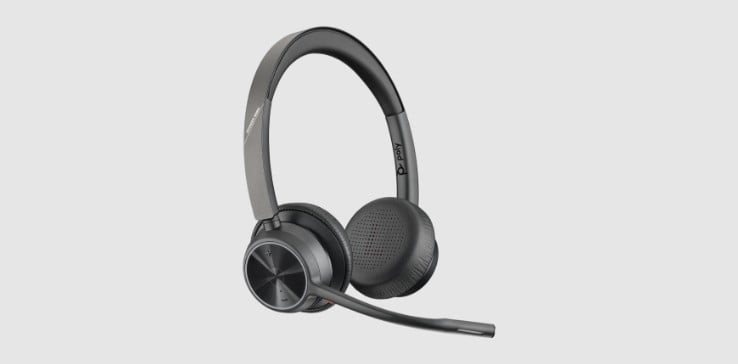
About Poly Voyager
Poly Voyager is the wireless headset family HP sells under the Poly name, and it is built around a goal most consumer headphones do not share: making the person wearing it intelligible to whoever is on the other end of the call. That priority shapes everything. Microphone arrays get the engineering attention that drivers get elsewhere, boom arms survive on models where fashion would remove them, and the noise cancellation is quoted in two directions, for the wearer and for the caller. The range spans three quite different shapes, from a single earpiece hooked over one ear to a padded stereo set with ten microphones in it, so the useful question is not whether to buy Voyager but which shape of Voyager your working day actually needs.
What the Poly Voyager range covers
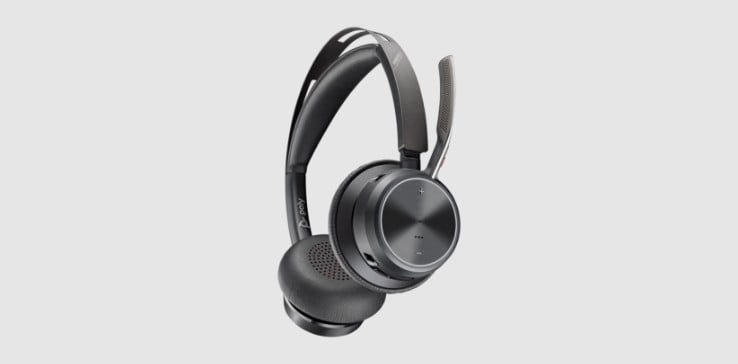
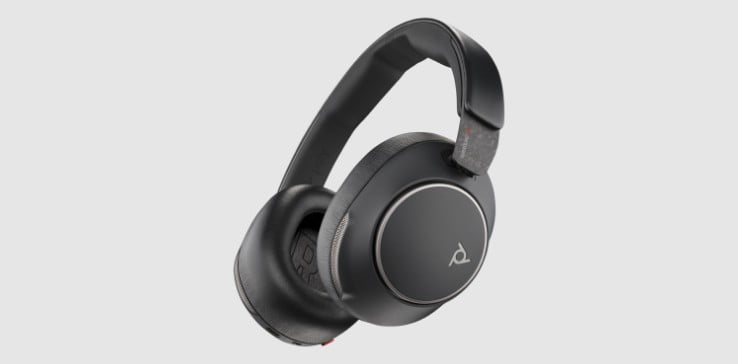
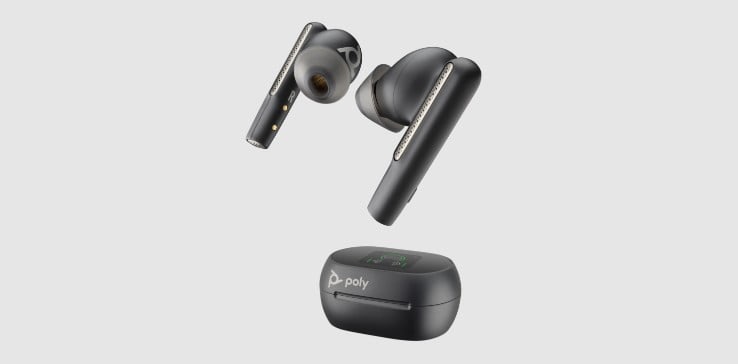
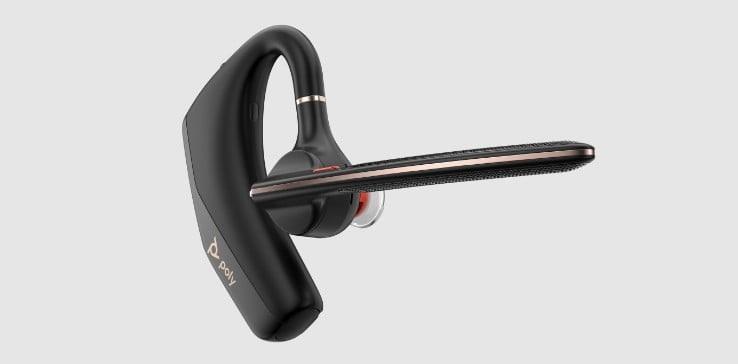
Three form factors. The mono ear-loop models hang a single earpiece and a boom over one ear and leave the other ear open, which is what field and warehouse staff want. HP currently lists the Voyager Legend 50 and the cheaper Legend 30 here, and an independent guide to the family describes the Legend 50 as a rebuild from scratch rather than a refresh, positioned to replace the older Voyager 5200 that still appears in the catalogue. The earbud models are the Voyager Free 60 series and the simpler Voyager Free 20. The stereo over-head models are the largest group: the Voyager 4300 UC series, the Voyager Focus 2, the newer Focus 6 series, and above them the Voyager Surround 80 and 85, which drop the boom arm entirely and rely on a ten-microphone array with adaptive noise cancellation instead. That boomless flagship is the one aimed at people who want a headset that does not look like a headset.
Why a call headset is not a music headset
The distinction matters more than the marketing suggests, and it cuts both ways. A business headset spends its microphone budget on rejecting the room, so a boom arm sitting close to the mouth beats a stylish array every time, and Poly quotes wearer-facing noise cancellation separately from the caller-facing kind. What it does not spend is much on drivers or tuning. An independent measured review of the Voyager Free 60 series found the microphones fine in a quiet room and noticeably worse in street noise, judged the active noise cancellation short of the best consumer earbuds, called the music tuning underwhelming with a bass preset that muddies vocals, and concluded that the price was hard to justify for someone buying earbuds primarily to listen to things. That is a fair verdict on a call-first product, and it is exactly why buying one of these as your main music earbuds tends to disappoint.
Choosing a Voyager by where you work
Take it by working pattern rather than by tier. If you spend the day moving around a site or driving, the mono ear-loop shape is the only one that leaves an ear free for the world, and the Legend 50 is the current version of it. If you are a hybrid worker who takes calls in an open office, the over-head stereo models are the sensible middle, with the Voyager 4300 UC series aimed squarely at that. If your problem is a genuinely noisy office and holding concentration in it, the Focus line adds stronger wearer-facing noise cancellation with selectable levels. If you travel and want one set of buds that does calls acceptably and packs small, the Free 60 series. And if you want something that works for calls and does not announce itself in a client meeting, the boomless Surround models are what the range offers, at the top of it.
What to weigh against Jabra Evolve2
Jabra Evolve2 is the direct rival at almost every point in the range, and a published head-to-head between the Voyager Focus 2 and the Evolve2 75 lands close. On microphones the tester rated them near identical with a small edge to Jabra in background noise. On noise cancellation Jabra won on control rather than raw performance, offering app-based adjustment against three fixed Poly settings. On comfort the tester preferred the Poly and called it the most comfortable headset he had worn. Battery split the difference, with Jabra ahead on talk time and Poly ahead on listening time. Stated wireless range favoured Poly by a wide margin, though the same tester cautioned that real-world range runs at roughly half the published figure for either. He picked the Jabra overall while telling comfort-driven buyers to take the Poly, which is about as honest as these comparisons get.
Who should buy something else
If the headset is for music first and calls second, buy consumer earbuds or headphones and accept a weaker microphone. Reviewers testing the Free 60 series against that use case recommended mainstream consumer buds instead. If you run a contact centre where headsets are worn for full shifts and shared between staff, wired or DECT models are cheaper to replace, have no charging schedule to manage and no pairing to support. If a specific unified communications platform is the deciding factor, check certification against that platform for the exact model rather than for the family, because it varies within the range. If you have small ears, note that the same measured review flagged fit and comfort problems with the Free 60 series specifically. And if a budget quote has pointed you at the Voyager 5200, look at the current Legend models first: independent guides now treat the 5200 as a legacy option on older connectivity and shorter battery life rather than something to buy new.
Reviews
No reviews yet
Nobody has reviewed Poly Voyager here yet.