About Poly phones
Poly phones are the voice hardware side of HP's Poly range: desk phones for people with an assigned seat, DECT handsets for people who move around a building, and the tabletop conference units that have sat in the middle of meeting-room tables since the SoundStation arrived in 1992. The line reaches HP through a long chain of ownership. Polycom was founded in 1990 by Brian L Hinman and Jeffrey Rodman. Plantronics bought it for roughly $2 billion in 2018, the merged company renamed itself Poly in 2019, and HP announced its own acquisition on 28 March 2022, closing that August at a total transaction value of $3.3 billion including assumed debt. Current units carry HP Poly branding, but the installed base a buyer inherits will be labelled Polycom, Plantronics or Poly depending on when it was bought.
The families and what separates them
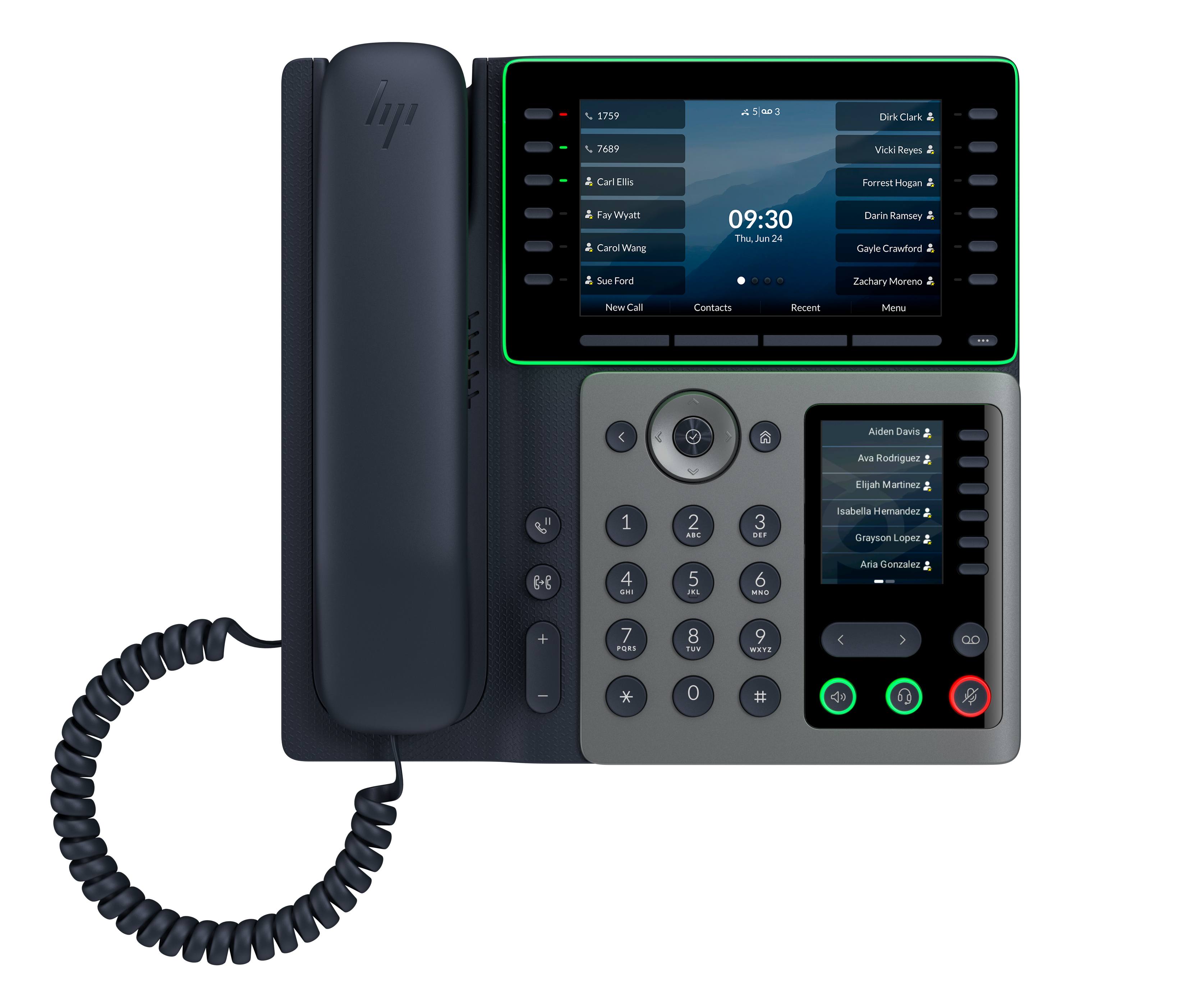
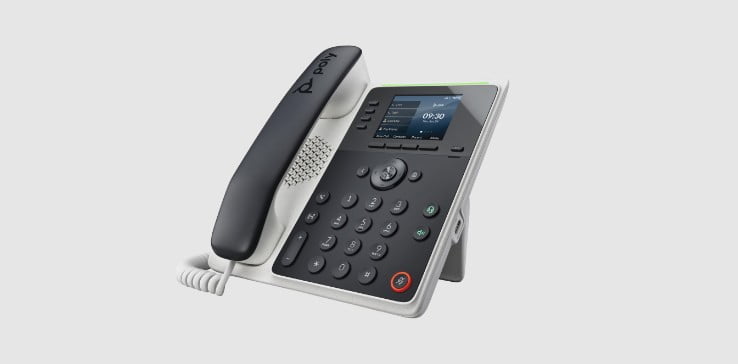
The newest desk phone family is Poly Edge V, which HP announced on 13 April 2026 and expects to ship that September. HP lists it as an open SIP range running from the V200, V250 and V250 Plus at up to sixteen lines, through the V400 and V450 at up to thirty-two and the V650 at up to forty-four, to the V800 and V850 at up to sixty. HP quotes a starting price of $159 and cites NoiseBlockAI noise reduction, a trusted security module, a programmable one-touch emergency alert key, USB-C for headsets, and a chassis using 35 per cent recycled plastics, with Wi-Fi and Bluetooth on selected models. Anyone specifying phones for delivery before that date is choosing among the families below rather than this one.
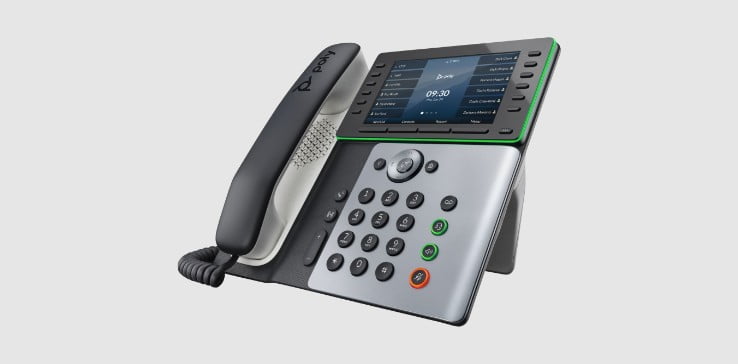
The rest of the desk phones divide by budget and by how much screen a job needs. Poly Edge B is the basic tier: a monochrome display and a small number of line keys, for a phone that needs to make and take calls and nothing else. Poly Edge E is the established volume line, with colour displays, more line keys, and sidecar expansion on the higher models for people who watch a lot of extensions. Poly VVX is the older mid-range and enterprise family, still sold, and still the one most likely to be already screwed to a wall in an existing deployment. Poly CCX is the touchscreen family, with the CCX 700 carrying an integrated camera.
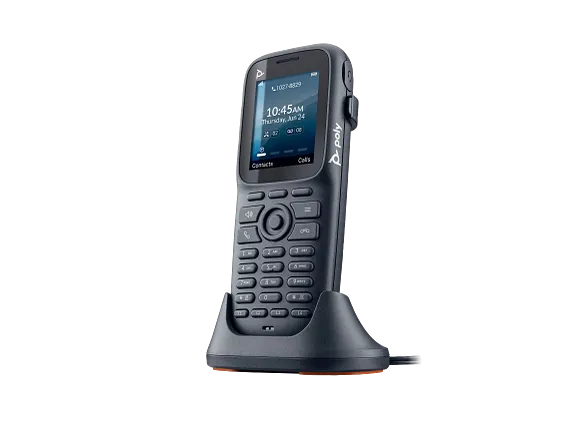
Away from the desk, Poly Rove is the DECT system, with encrypted wireless and ruggedised handsets rated for dust, water and being dropped, which is why it turns up in warehouses and hospitals rather than offices. HP names the Rove 20, 30 and 40 handsets alongside base stations and the R8 repeater. Poly Sync is the USB and Bluetooth speakerphone range, which is a different thing from a conference phone: it borrows the audio from a laptop rather than holding a line of its own.
Open SIP or platform-native, the decision that matters most
The single question that shapes which Poly phone fits is whether the phone should hold its own connection to a telephone system or act as a terminal for a meetings platform.
Edge V, Edge B, Edge E, VVX and Trio are open SIP devices. They register against a PBX or a hosted voice provider, and they will outlive a change of platform because SIP is a standard rather than a vendor feature. That is the safer purchase for an organisation that has changed voice providers before and expects to again.
CCX is built around Microsoft Teams, with Teams and SIP editions sold separately. A Teams-native phone is a better experience where Teams is the phone system, because the directory, presence and meeting joins are the phone's own. It is also a phone whose usefulness is tied to a platform roadmap somebody else controls. Anyone buying a large fleet of platform-native handsets should confirm the current certification and support position with HP and with the platform vendor before ordering, rather than assuming a model listed as certified today stays certified for the life of the hardware.
The conference phones
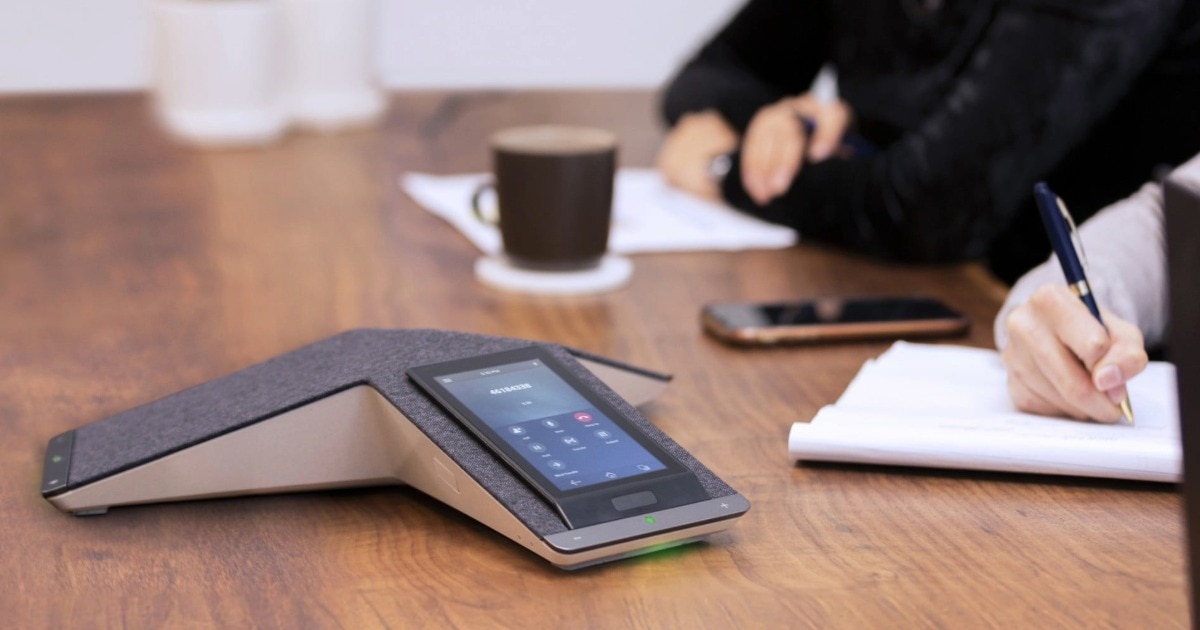
Poly Trio is the current tabletop conference line and the direct descendant of the SoundStation, which became the leading brand in its market during the 1990s. Trio units use a three-microphone cardioid array, accept expansion microphones for larger rooms, and are sold in SIP, Teams and Zoom-certified editions.
The practical reason these still sell against a laptop and a good speakerphone is the room itself. A tabletop unit with expansion microphones covers a long table where a single device at one end cannot, and it keeps working when the person who owns the laptop leaves. Older SoundStation IP and analogue units are still widely deployed but are legacy rather than current, and a buyer replacing them should price the expansion microphones as part of the job, not as an accessory.
What to weigh against the alternatives
The nearest rival by volume is Yealink, which sells across the same open SIP and Teams-certified territory and generally undercuts HP on price for comparable line counts. The case for Poly is the audio engineering and the long installed base: an organisation with a room full of Polycom units, a provisioning server already configured for them, and staff who know the interface has real switching costs that a cheaper handset does not erase.
The larger question is whether a desk phone is the right purchase at all. For a knowledge worker who is already on a laptop all day, a certified headset or a Poly Sync speakerphone paired with a softphone does the same job for less money and less provisioning. Desk phones earn their place where the person is not at a computer, where a physical handset is a regulatory or operational requirement, or where a shared phone serves a location rather than a person: reception desks, wards, shop floors, hotel rooms, lifts and lobbies.
Who should buy something else
An organisation whose staff all work from laptops and phones should buy headsets and speakerphones instead of desk phones, and should not let a legacy handset count set the budget.
A buyer who wants one number in the catalogue for every configuration will be frustrated here. This is a line, not a model: display size, line keys, wireless, camera and platform edition all vary by unit, and the specification that matters has to be read off the individual model page.
Anyone standardising on a meetings platform other than the one a given model is certified for should buy the open SIP edition rather than the platform edition, even where the platform edition is on offer, because the SIP unit survives a change of provider and the platform-native one may not.
And an organisation buying purely on unit price for a straightforward SIP deployment should compare against Yealink and similar before committing, since the Poly premium buys audio quality and continuity with an existing estate rather than a feature the cheaper handsets lack.
Reviews
No reviews yet
Nobody has reviewed Poly phones here yet.