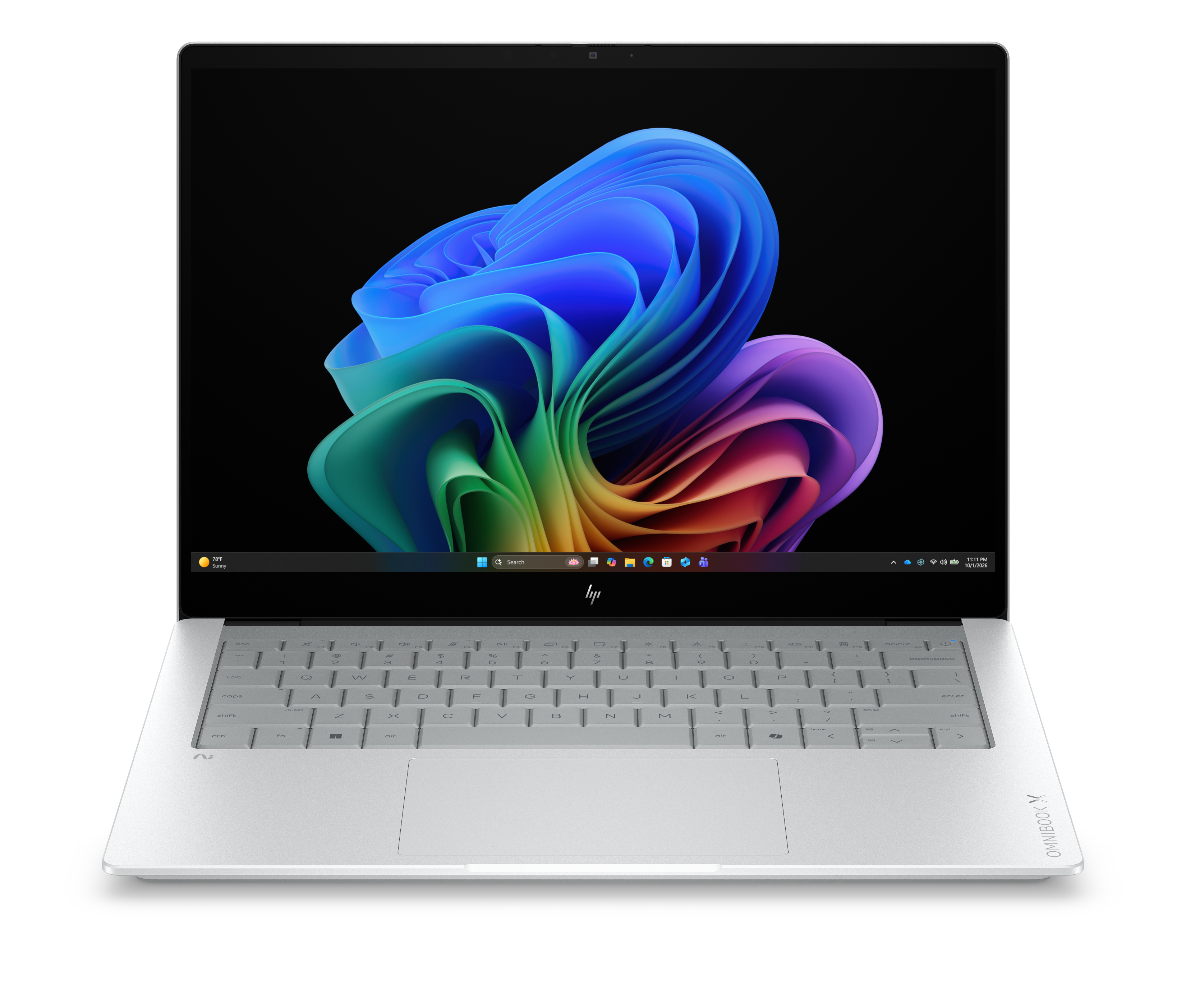
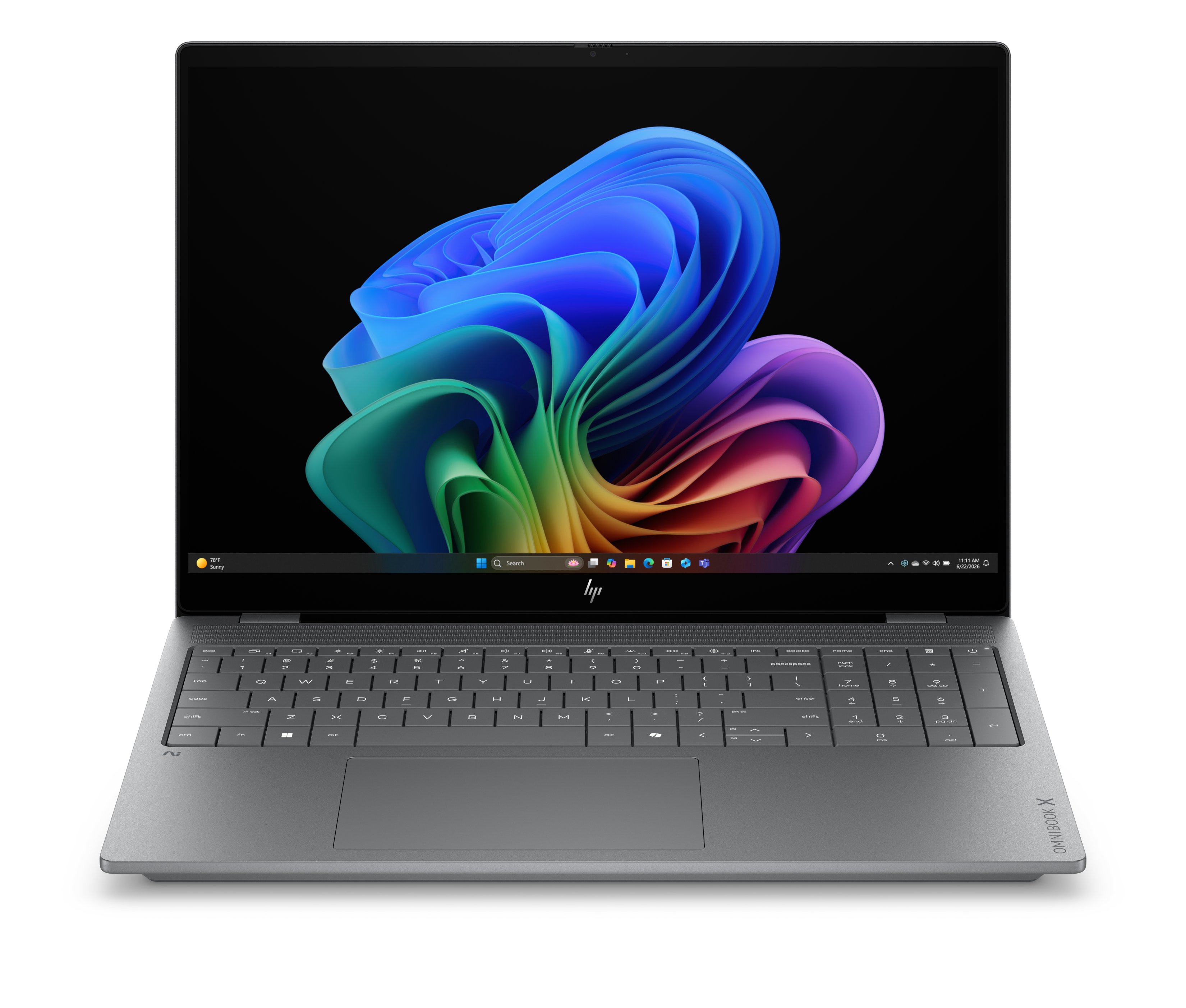
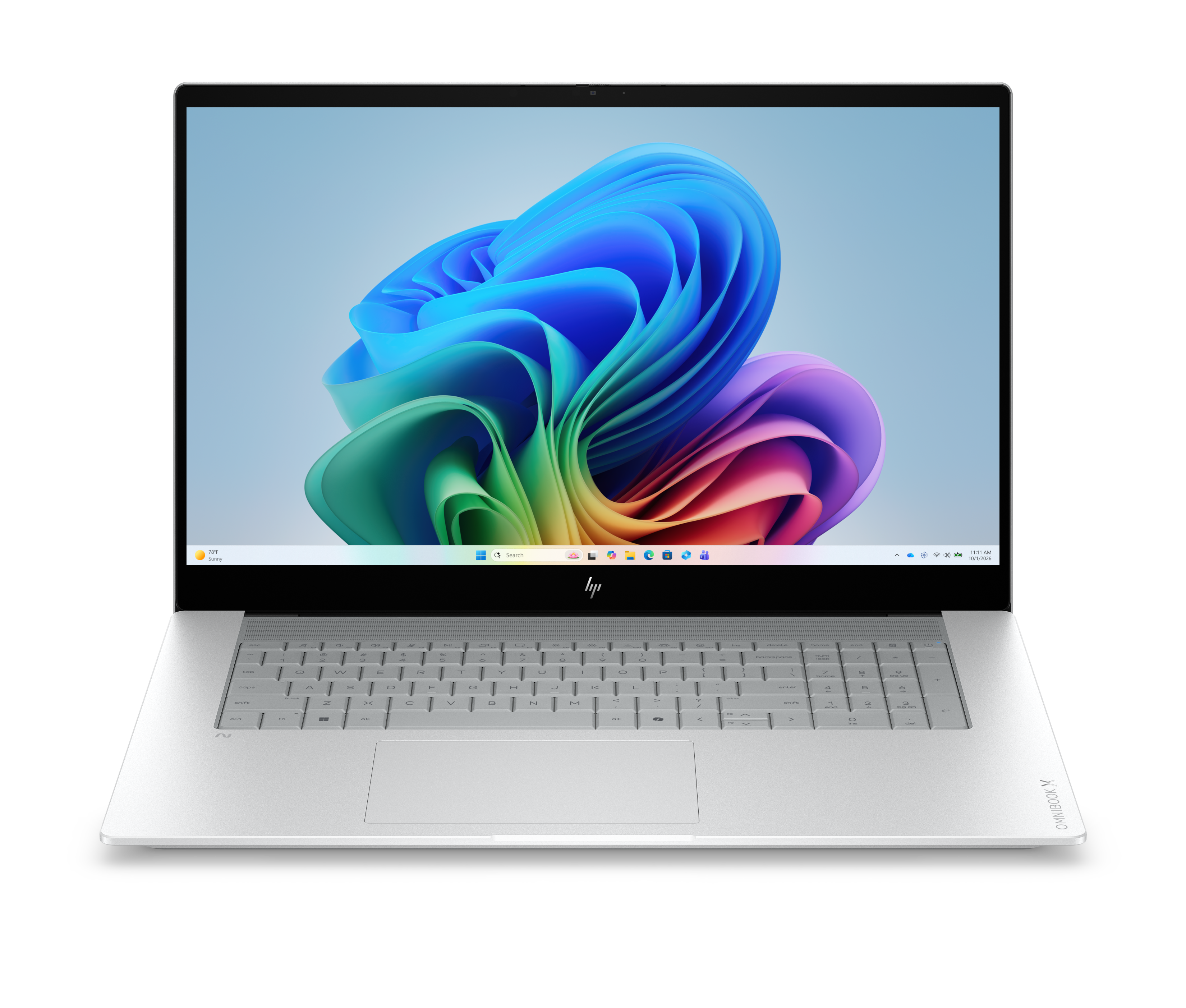
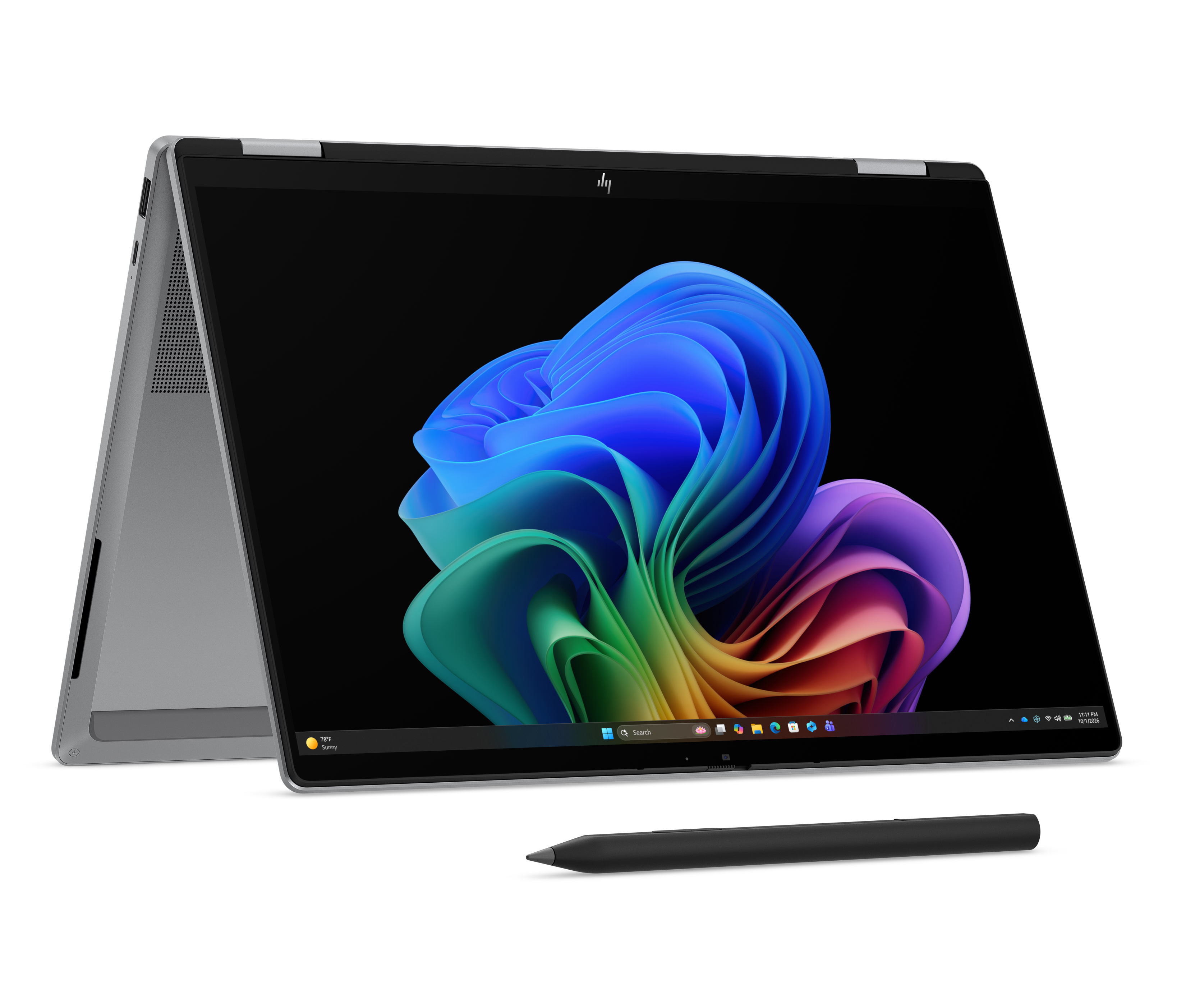
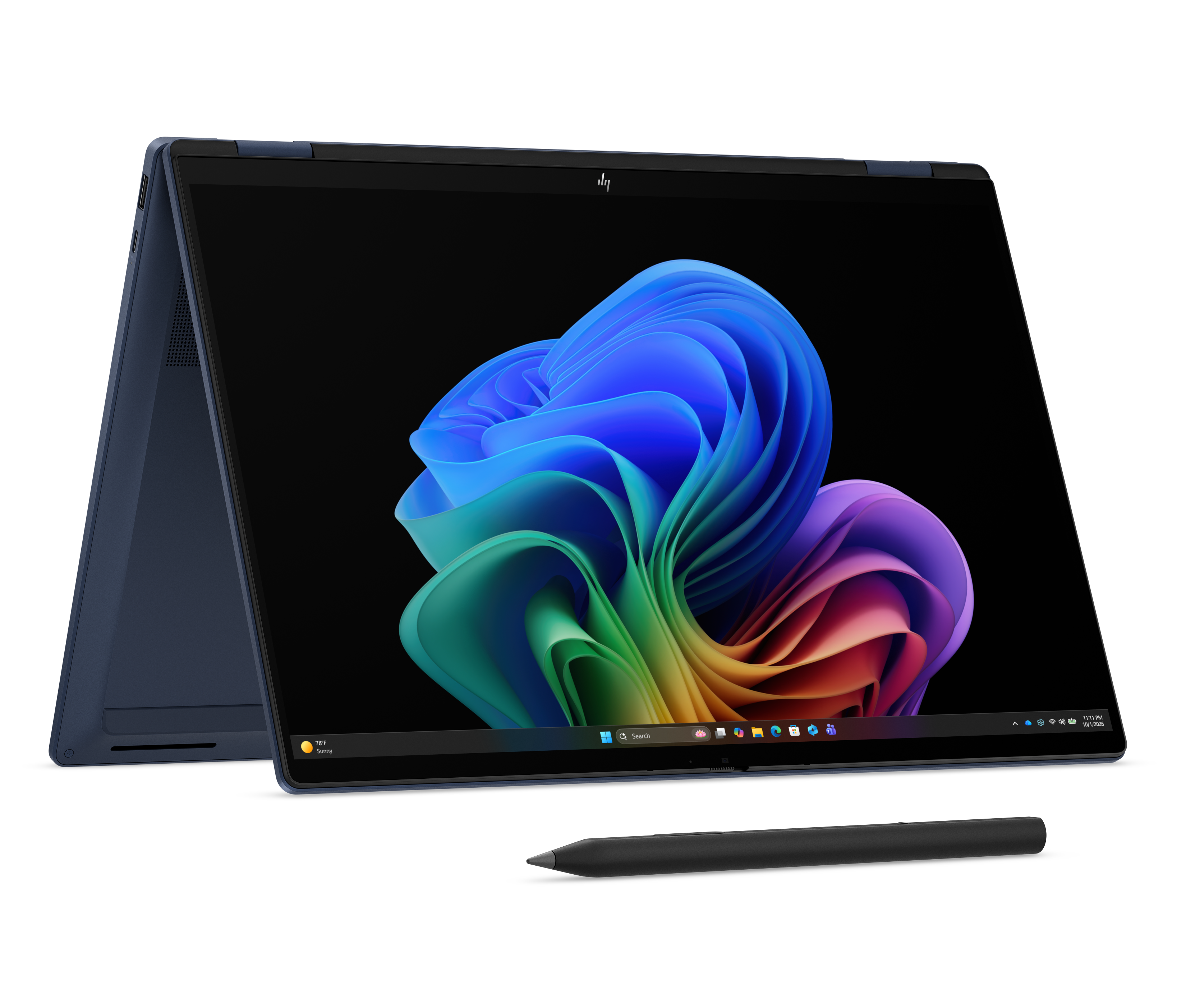
About HP OmniBook X
HP OmniBook X is the upper consumer tier of the OmniBook range, the naming HP adopted in 2024 when it folded its older consumer laptop badges into one family. The X sits above the OmniBook 3, 5 and 7 and alongside the OmniBook Ultra, and HP has described it as the successor to the ENVY line. The first model, the OmniBook X 14 announced in June 2024, was one of the launch Copilot+ PCs built on Qualcomm Snapdragon X Elite silicon. The line has widened well beyond that single machine since, so there is no one screen size, processor or price that describes an OmniBook X. What holds it together is the position it occupies: a thin consumer laptop bought for battery life and quiet running rather than for graphics power.
Where the OmniBook X sits in HP's range
HP arranges OmniBook by number and letter rather than by generation. The OmniBook 3 is the entry point, the 5 is the mainstream volume model, and the 7 is the mid tier where optional discrete graphics appear. The Ultra is the design-led premium tier, with OLED panels and convertible hinges. The X is the AI-first consumer flagship, and HP has pitched it at freelancers and mobile workers rather than at fleet buyers.
The commercial equivalent is EliteBook, and the price gap between the two families was visible from the start: HP launched the OmniBook X 14 at 1,199.99 US dollars against 1,699.99 for the EliteBook Ultra. If you need managed security, long service lifecycles and a fixed configuration you can buy again in eighteen months, EliteBook is the family to look at, not this one.
Who the line is for
This is a laptop bought by people who work away from a desk for long stretches. Office and browser work, writing, video calls and light photo editing are what it is built around, and the whole design leans on staying cool, quiet and unplugged rather than on peak throughput.
Battery life is the strongest single argument for the line. HP claimed 26 hours for the launch model. Independent testing did not reach that figure, but it landed high: ITPro measured close to 20 hours in its own test and reported that this beat an Apple MacBook Air run under the same conditions. Lon Seidman's review reached a similar conclusion in plainer terms, finding that a full working day without a charger was straightforward. If you have been carrying a power brick everywhere, that is the change you would notice first.
How the line has widened since 2024
Treat the 2024 reviews as a description of one model, not of the range. HP's own press imagery now shows OmniBook X in 14, 16 and 17 inch sizes, plus an OmniBook X Flip convertible in 14 and 16 inch, and published reviews of the OmniBook X Flip 14 cover an AMD Ryzen AI processor rather than a Qualcomm one.
That matters more than any other difference inside the line. Two machines carrying the same OmniBook X badge can differ on whether your software runs natively or through Windows emulation, which changes compatibility, performance and in some cases whether an application runs at all. Check the processor before you check the screen, the memory or the price. On this line it is the specification that decides what the laptop can do.
What to weigh against the nearest rivals
Against a Microsoft Surface Laptop or an Apple MacBook Air at a comparable configuration, ITPro judged the OmniBook X the better value at the price it tested, on the strength of battery life and build. The weaknesses it found were narrow but real. Screen brightness measured 290 cd/m2 on the 14 inch review unit, which is dim next to rivals and shows up in bright rooms and outdoors. Port count is thin at two USB-C and one USB-A, so a dock is a likely second purchase, and Lon Seidman reported that Thunderbolt behaviour was not consistent across the devices he tried.
Inside HP's own range the trades are easier to name. Against an OmniBook 7 with discrete graphics you give up 3D performance to get battery life. Against the Ultra you give up the OLED panel and the convertible hinge to pay less.
Who should buy something else
Anyone whose working software list includes tools without native Arm builds should either choose one of the non-Qualcomm OmniBook X models or look at another line entirely. The gaps reviewers hit were not theoretical: ITPro reported that Adobe Illustrator and InDesign were not supported natively at the time of its review, and Lon Seidman found several games would not run at all, that a Linux install failed, and that emulation coped with simple applications but not demanding ones.
Gamers, CAD users and anyone doing sustained 3D or rendering work are better served by an OmniBook 7 with discrete graphics or by HP's OMEN range. Buyers managing a fleet who need HP Wolf Security controls and a stable configuration should be looking at EliteBook or ProBook. Anyone who works outdoors or beside a window should confirm the measured brightness of the exact model rather than trusting the family name.
Reviews
No reviews yet
Nobody has reviewed HP OmniBook X here yet.