About V-NAND flash memory
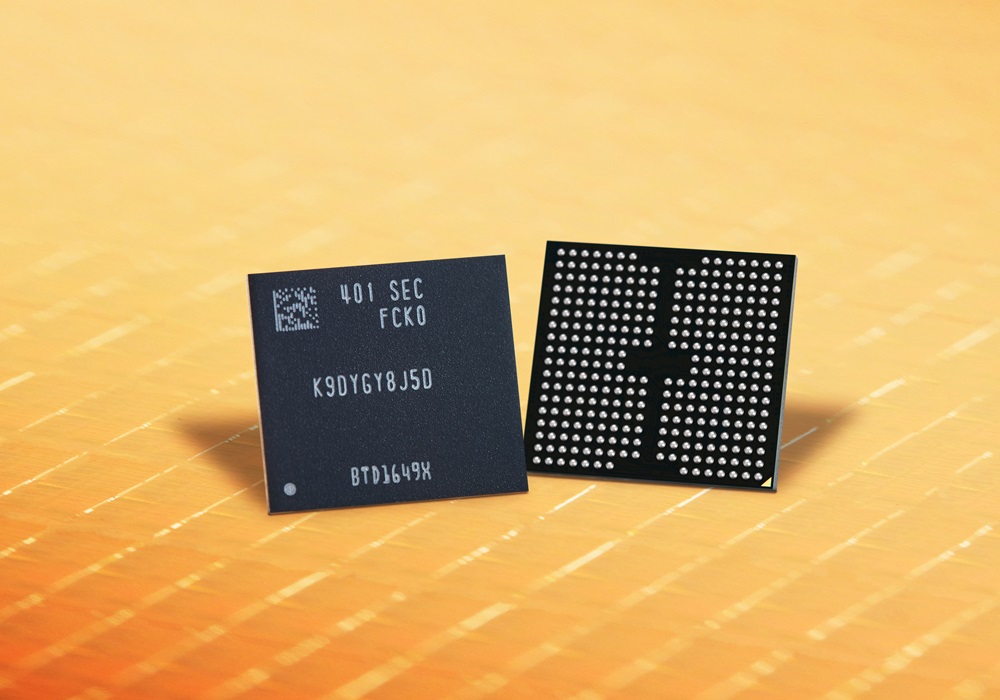
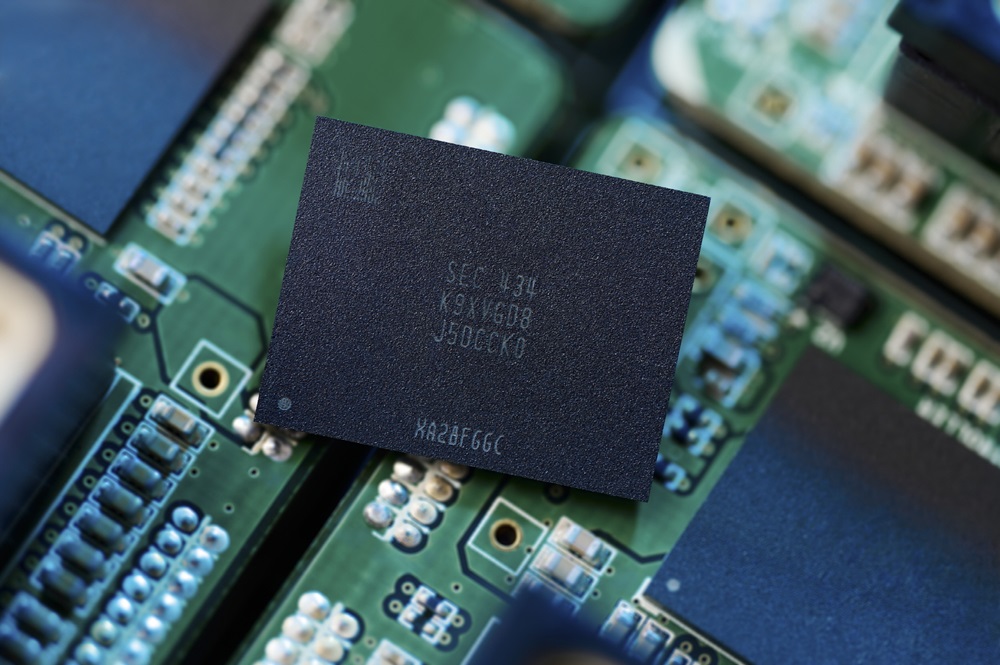
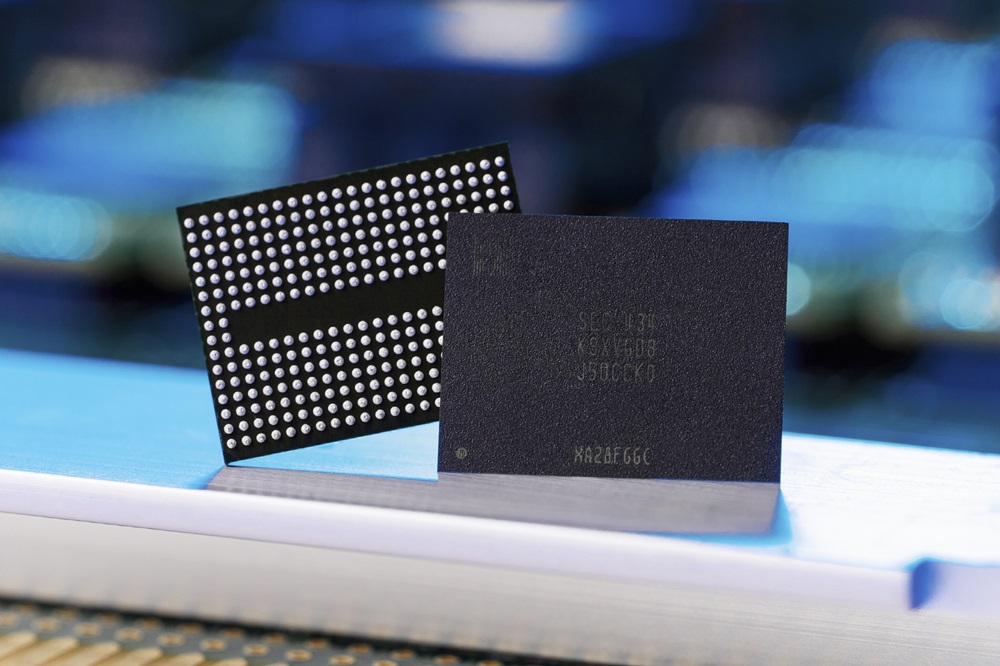
V-NAND is Samsung's non-volatile flash memory line: the silicon that ends up inside consumer and data centre SSDs, inside the UFS parts soldered into phones, and inside embedded storage in cars and industrial equipment. It is a separate business from Samsung's DRAM line, with different fabs, different economics and a different set of competitors. The name describes the construction. Flash cells were once laid out across a flat die and made denser by shrinking them, and when shrinking stopped paying, the industry began stacking cells vertically instead. Samsung introduced the first V-NAND at the 2013 Flash Memory Summit, and every generation since has been counted in stacked layers rather than nanometres. The useful question for a buyer is never what the headline number says, but which part of the range a design actually needs.
What the layer count actually buys you
Samsung does not publish a layer count for most V-NAND generations. Trade coverage supplies one: Electronics Weekly and KED Global both reported the ninth generation as a 286 layer part. Samsung's own announcements talk instead about bit density, interface speed and power. For the ninth generation TLC part, whose mass production Samsung announced on 23 April 2024, the stated gains were roughly 50 percent higher bit density than the previous generation, a Toggle 5.1 interface running at up to 3.2 Gbps against 2.4 Gbps before, and about 10 percent lower power.
Samsung frames it that way because layers are an input, not an output. What a buyer pays for is bits per square millimetre, since that is what sets cost per gigabyte, and the two do not track each other reliably. Samsung announced V10 BV-NAND at the 2026 Flash Memory Summit on 5 August 2026, a structure of more than 400 layers built with wafer bonding and a three stack process, claiming about 58 percent higher memory density than V9. Tom's Hardware reported in July 2026 that Kioxia and SanDisk were sampling BiCS10 at 332 active layers and more than 29 Gb per square millimetre, against roughly 28 Gb per square millimetre for Samsung's V10 class part. Fewer layers, more density. Layer count on its own settles nothing.
Read off a retail SSD box, the number is close to meaningless. A finished drive's behaviour is set by its controller, whether it carries a DRAM buffer, how the firmware manages its SLC write cache and how well it sheds heat. Two drives built on identical flash can behave nothing alike once that cache fills.
TLC and QLC matter far more than the generation number
Every V-NAND generation ships in more than one cell configuration. TLC stores three bits per cell, QLC stores four. The extra bit adds capacity, but it also forces the controller to distinguish many more voltage states inside the same cell, so retention margin shrinks, writes slow down and rated endurance falls.
Samsung's own figures make the trade concrete. The BM1743, a QLC V-NAND data centre SSD, is rated at 0.26 drive writes per day, improved from 0.18 on the generation before it. That is well under one full overwrite of the drive per day across its warranted life. For read heavy work, an AI training corpus, a media library, a warm tier, that is a sensible way to buy capacity. For a write heavy transactional database or a logging tier it is the wrong part, and no layer count changes that.
QLC is improving. When Samsung announced ninth generation QLC on 12 September 2024, it claimed around 86 percent higher bit density than the previous QLC generation, roughly 20 percent better data retention, double the write performance and 60 percent faster input and output. That is progress relative to earlier QLC, not parity with TLC. The practical order of checks is cell type first, rated endurance second, sustained write behaviour third, and generation number last.
Where Samsung sits in the NAND market
Samsung leads NAND, but by a smaller margin than it holds in some other memory categories, and the trackers do not agree on the size of the lead. TrendForce data reported by EE Times Asia put Samsung at 31.6 percent revenue share in the first quarter of 2026 on 13.51 billion US dollars of NAND revenue, up from 28 percent the previous quarter. The same set had SK hynix group at 17.6 percent, and Kioxia, Micron and SanDisk each at 13.9 percent. Counterpoint Research, measuring the same quarter, puts Samsung nearer 29 percent. Treat any single figure as an estimate and note which house produced it.
What drove those numbers matters more than the ranking. Counterpoint records the NAND market growing around 90 percent quarter on quarter in the first quarter of 2026 and attributes the jump principally to contract price rises, not to a comparable jump in bits shipped.
What to weigh against Kioxia, SanDisk, SK hynix and Micron
NAND has more credible suppliers than DRAM does, which is good news for a buyer. Kioxia and SanDisk share fab output and have been leading on areal density with BiCS10. SK hynix owns Solidigm, giving it a mature high capacity QLC data centre line with its own customer base. Micron competes across client, mobile and data centre. None is a fringe option.
So the comparison is rarely about who has the best flash on paper. It is about cost per gigabyte at your volume, qualification timelines against your design freeze, whether you can hold a second source, and what allocation looks like when supply is tight. Samsung's argument is scale and being early to each node. The arguments against it are the ordinary ones for any largest supplier: less leverage in negotiation, and the fact that Samsung also consumes its own V-NAND in its SSD and handset businesses.
Who is better served somewhere else
Anyone buying a handful of SSDs for a workstation or a gaming machine should stop reading about V-NAND. You are not buying flash, you are buying a finished drive, and its warranty, its terabytes written rating and independent testing of its sustained write speed will tell you more than any part of this page.
Write heavy workloads should not be on QLC. A 0.26 drive writes per day rating is honest about what QLC is good at, and a poor fit for anything that rewrites its working set daily. Buy TLC, from Samsung or from anyone else.
Teams that need a guaranteed second source should not build a single vendor NAND strategy at all, whoever the vendor is. Kioxia with SanDisk, and SK hynix with Solidigm, mean qualified alternates are genuinely available, and qualifying two suppliers is usually cheaper than being short in an allocation year.
Workloads needing very long retention, very high write endurance or wide industrial temperature ranges are usually better served by pseudo SLC configurations and by suppliers specialising in industrial and automotive grade parts.
And if you arrived looking for HBM, DDR5, LPDDR or GDDR, that is Samsung's DRAM business, a different line with a different competitive set.
Reviews
No reviews yet
Nobody has reviewed V-NAND flash memory here yet.