About ISOCELL
ISOCELL is two things under one name, and it helps to separate them. It is Samsung's brand for the CMOS image sensors it sells to other manufacturers, and it is the name of the pixel technology those sensors are built on: a physical barrier placed between neighbouring pixels so that light landing on one does not bleed into the next. That barrier is what let Samsung keep shrinking pixels without the colour crosstalk that shrinking normally causes, and it is why a 200 megapixel sensor can fit behind a phone camera at all.
The line splits by where the sensor ends up. Mobile sensors go into phones from Xiaomi, Oppo, Vivo, Lenovo and Samsung's own handsets. Automotive sensors, sold as ISOCELL Auto, go into front, surround and rear view cameras, where the requirements are almost the opposite of a phone's: fewer pixels, far more dynamic range, and the ability to keep working from minus 40 to 150 degrees Celsius. Reading a specification from one half of the line tells you nothing useful about the other.
How to read Samsung's ISOCELL naming
The two letters before the number are the most useful thing on the part number, because they tell you the class of sensor rather than its generation.
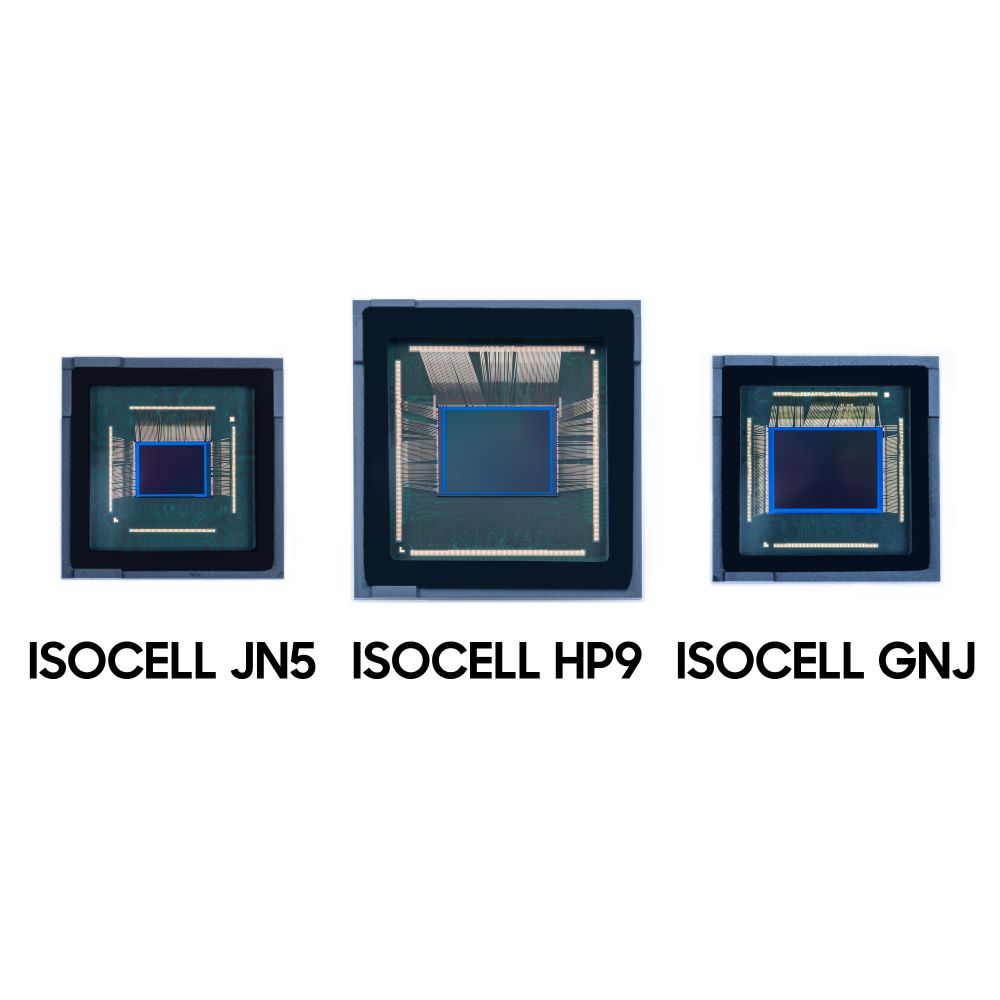
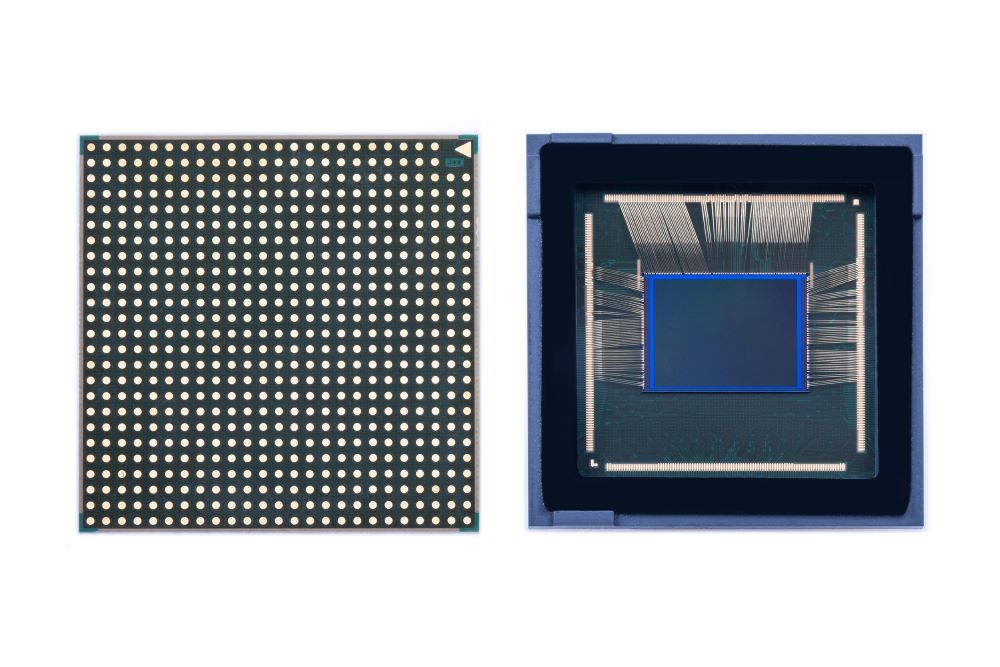
HP parts are the 200 megapixel sensors. The ISOCELL HP9 is 200MP at 0.56 micrometre pixels in a 1/1.4 inch optical format, and Samsung has since described the HP5 as the first 200MP mobile sensor with 0.5 micrometre pixels.
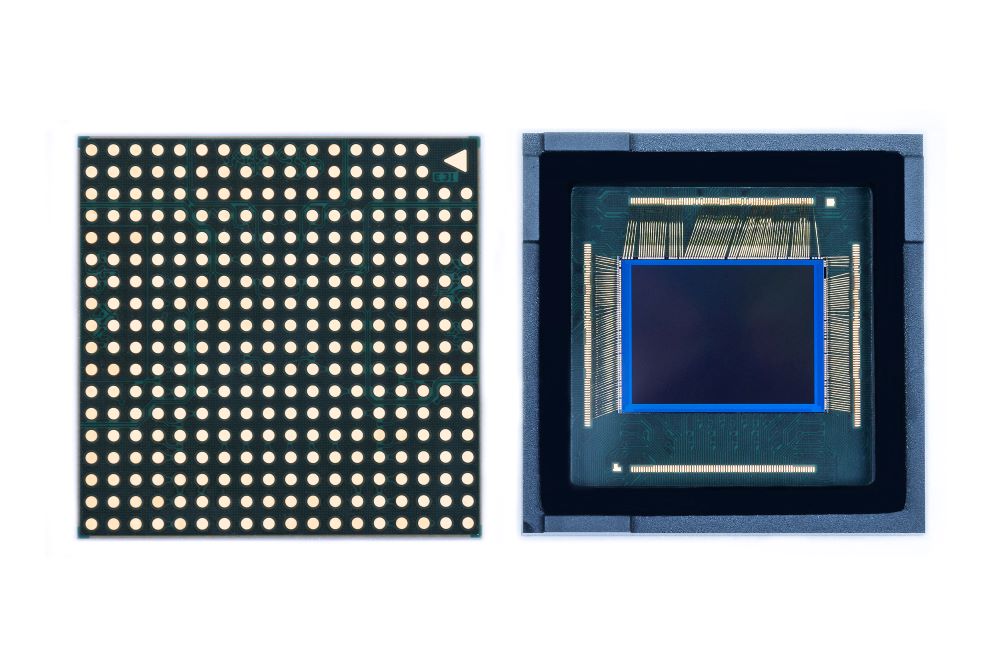
GN parts are 50 megapixel sensors with large pixels, aimed at light gathering rather than pixel count. The ISOCELL GNJ is 50MP at 1.0 micrometre in a 1/1.57 inch format.
JN parts are 50 megapixel sensors with small pixels, aimed at the secondary cameras where physical space is tight. The ISOCELL JN5 is 50MP at 0.64 micrometre in a 1/2.76 inch format.
Auto parts are the automotive sensors, and they are counted differently again: Samsung describes the ISOCELL Auto 4AC as 1.2 million 2.0 micrometre pixels in a 1/3.7 inch format with 120 dB of dynamic range.
So a bigger number in the name is not a better sensor. A GN with one micrometre pixels will usually beat an HP in poor light, and Samsung sells both to the same customers for different positions in the same camera array.
The technologies that actually change the picture
Pixel binning is the one that matters most in phones. Samsung sells it as Tetra2pixel and Nonapixel, which combine groups of adjacent pixels into one larger effective pixel when there is not enough light. This is why a 200MP sensor does not normally produce 200MP images: in most conditions it is behaving as a much lower resolution sensor with much larger pixels, and the full resolution is reserved for bright scenes.
Autofocus is the second. Samsung uses Dual Pixel and Super QPD, which dedicate part of the sensor itself to phase detection so the camera can focus without hunting.
On the automotive side the important technology is CornerPixel, which exists to solve a problem phones do not have. Traffic lights and modern car lights pulse rather than shine continuously, and a camera sampling at the wrong moment records them as flickering or absent, which is a genuine safety problem for a driver assistance system. CornerPixel places two photodiodes of different sizes in one pixel, a 3.0 micrometre one for low light and a 1.0 micrometre one in the corner for bright conditions, capturing simultaneously at different exposures. Extending the smaller diode's exposure is what suppresses the flicker.
Samsung's newer nanoprism structure, introduced on the ISOCELL JNP, lets neighbouring pixels share light of different wavelengths. Samsung claims a 25 percent improvement in light sensitivity over the JN5 it replaces.
Where ISOCELL sits against Sony
Second, and not close. Industry figures put Sony at 51.6 percent of the image sensor market in 2024, with Samsung at 15.4 percent and China's OmniVision at 11.9 percent, up from 10.9 percent the year before. The market itself was around 20.8 billion dollars in 2024 with projections near 26.5 billion by 2029.
The gap is not mainly technical. Sony's position rests on a long relationship with Apple and on its practice of designing custom sensors for premium devices, which is a commercial and engineering commitment more than a pixel advantage. Samsung's route around it has been to win the Chinese flagship makers: it began volume supply of the nanoprism JNP to Xiaomi for the Civi 5 Pro, and it sells across Oppo, Vivo and Lenovo.
The pressure from below is worth noting too. OmniVision is growing share faster than Samsung in percentage terms, which squeezes the middle of the market where Samsung sells most of its volume.
Who specifies ISOCELL and why
Phone makers choose a sensor two to three years before the phone ships, and the decision rarely turns on the headline megapixel figure. It turns on whether the sensor's optical format fits the camera bump the designers will accept, whether the image signal processor pipeline is already tuned for it, whether the supplier will commit volume, and what it costs against the Sony part in the same slot.
Car makers choose on a different axis entirely. AEC-Q100 Grade 2 qualification, the minus 40 to 150 degree operating range, LED flicker behaviour and how long the part will remain in production matter far more than resolution, because a vehicle platform runs for a decade and a recall is not a software update.
For anyone using this page to understand a phone they own rather than to specify a part, the practical version is simpler: the sensor brand tells you less than the lens, the aperture and the maker's image processing do. A good ISOCELL sensor in a poorly tuned camera loses to a modest Sony sensor in a well tuned one.
Who should look somewhere else
Look to Sony if you are building a premium flagship and want a custom sensor designed around your camera rather than selected from a catalogue. That is Sony's core strength and Samsung has not displaced it.
Look to OmniVision or onsemi if cost per unit at moderate resolution is the deciding factor, particularly in the mid range and in industrial or security cameras where Samsung's catalogue is thinner.
Look elsewhere entirely if you need a large format sensor. ISOCELL is built around small optical formats for phones and vehicles, and anything approaching a camera sensor in the one inch and larger class is a different market that Samsung does not seriously contest.
And if you are a consumer choosing a phone, do not choose it on the sensor. Two handsets with the same ISOCELL part routinely produce noticeably different photographs, because the processing behind the sensor does more of the work than the sensor does. The part number is a poor proxy for the picture.
Reviews
No reviews yet
Nobody has reviewed ISOCELL here yet.