About Samsung soundbars
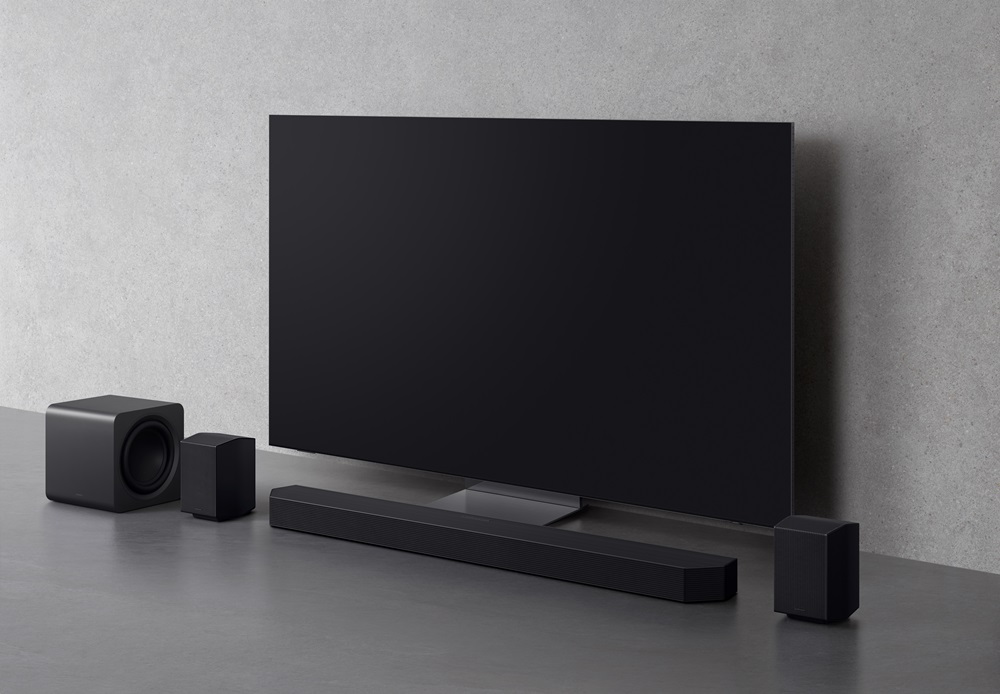
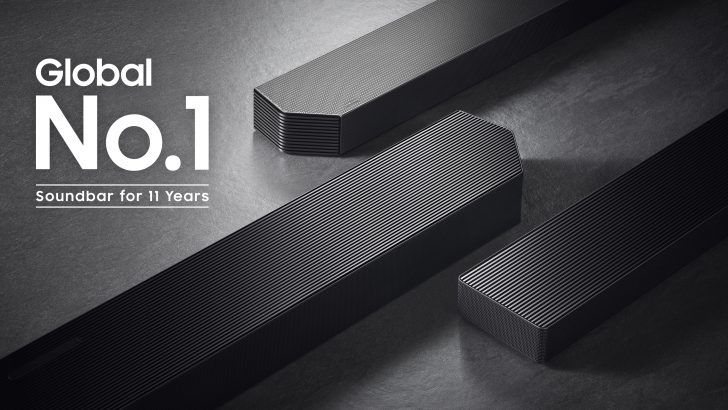
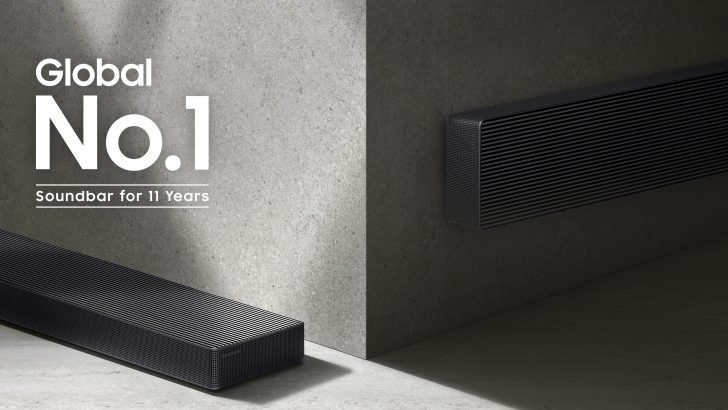
Samsung's soundbars run from a 119 dollar two-channel bar to an 11.1.4 system with a wireless subwoofer and two rear speakers in the box, and the whole range is built around one idea that separates it from most rivals: on a Samsung television, the bar is meant to play alongside the set's own speakers rather than switch them off. That feature is called Q-Symphony, and it is both the most useful thing about the range and the reason to think hard before buying. The catalogue is arranged with Q-Series at the top, S-Series and Ultra Slim in the middle and B-Series at the bottom, plus the Music Frame and Sound Tower sitting outside the usual bar-and-subwoofer shape. Because this catalogue records a line rather than a model year, there is no single channel count, price or feature set to quote here. What follows is how the range is arranged, what Q-Symphony actually requires, and where Samsung stands against Sonos, Sony and Bose.
What a Samsung soundbar adds over the television's own speakers
Flat televisions have almost no room for speaker drivers, so the sound fires downwards or backwards and dialogue is the first casualty. A soundbar fixes that by putting forward-firing drivers at ear height, and anything with a subwoofer adds the low end a television physically cannot produce.
Samsung's own framing goes a step further. Rather than treating the television speakers as something to replace, Q-Symphony runs both at once, using the set's drivers, which are spread across a much wider and taller area, alongside the bar. Samsung describes it as combining and enhancing sound by playing from the soundbar and the television speakers at the same time.
The higher Q-Series models add room measurement (SpaceFit Sound Pro Plus) and dialogue processing (Active Voice Amplifier Pro), and the flagships decode both Dolby Atmos and DTS:X. The cheap B-Series bars do none of that: they are there to be louder and clearer than a television, and that is all.
How the range is laid out
Samsung's 2025 lineup gives a clear picture of the tiers, and the shape repeats year to year even though the model letters change.
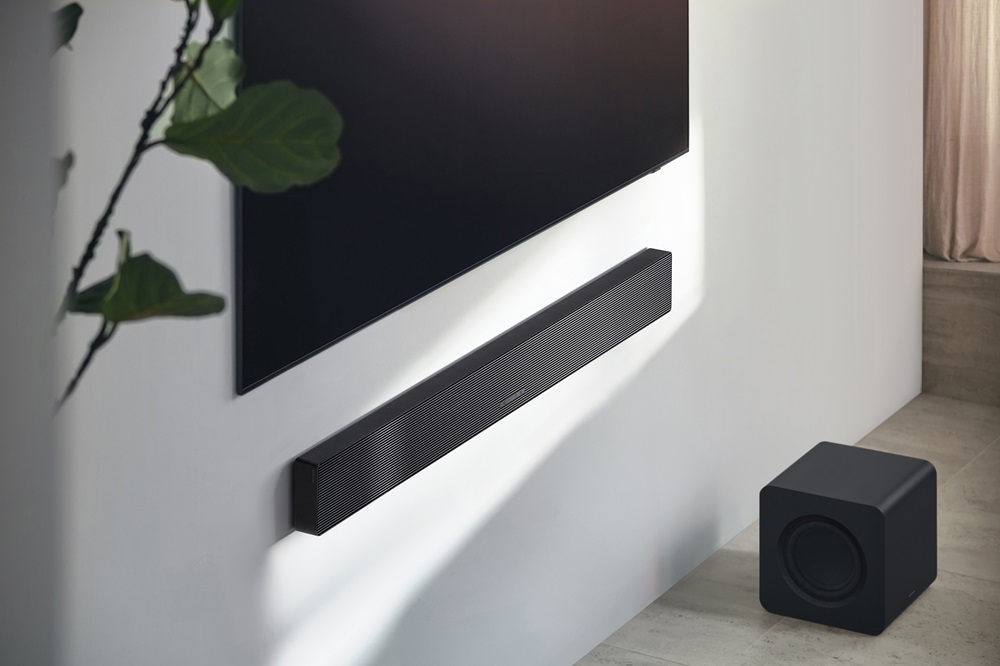
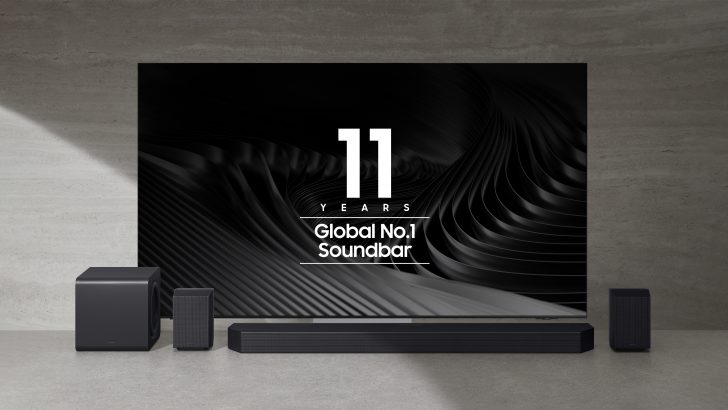
At the top, the HW-Q990F is an 11.1.4 system at 1,999 US dollars, with the subwoofer and both rear speakers included. Below it the HW-Q900F is 7.1.2 at 1,399 dollars, the HW-Q800F is 5.1.2 at 999 dollars, the HW-QS700F is 3.1.2 at 699 dollars with a gyro sensor so it can be wall-mounted or laid flat, and the HW-Q600F is 3.1.2 at 599 dollars. The B-Series then runs from the 5.1 HW-B750F at 449 dollars down to the 2.1 HW-B400F at 119 dollars.
The practical read is that moving from B-Series to Q-Series buys you Atmos height channels and the processing features, while moving up within the Q-Series mostly buys you more physical speakers. Reviewers rate the flagship highly: What Hi-Fi gave the HW-Q990F five stars for sound and five for features, and RTINGS names it their best Samsung soundbar.
Q-Symphony, and how much of the range only pays off with a Samsung TV
This is the part worth being honest about. Q-Symphony is a Samsung-only feature in both directions. It needs a compatible Samsung soundbar and a compatible Samsung television, connected by HDMI or optical, and Samsung's own compatibility pages list it model by model and year by year rather than as a blanket promise. Samsung's 2025 soundbar announcement states that Q-Symphony requires a compatible 2020 to 2025 Samsung television, and that the AI audio features require a compatible 2023 to 2025 Samsung AI television. T3's explainer is unambiguous that it does not work with non-Samsung sets, and notes that connecting by optical rather than HDMI caps you at Dolby 5.1.
So if you own an LG, Sony, TCL or Hisense television, a slice of what Samsung advertises simply will not switch on. The bar still works, and works well, but you are paying for a feature list you cannot use.
Two further caveats. Q-Symphony is not essential even when you can have it: reviewing the HW-Q990H, TechRadar said the bar still sounds fantastic without it. And it does not always flatter the sound. What Hi-Fi called Q-Symphony on the HW-Q990F a bit hit or miss because of the tonal mismatch between the television's small drivers and the soundbar's.
The honest summary is that Q-Symphony is a real benefit for people already committed to a Samsung television, and a reason to shop elsewhere for everyone else, because it locks the audio decision to one brand and to a window of model years.
Samsung against Sonos, Sony and Bose
The comparison that comes up most is the Samsung flagship against the Sonos Arc Ultra, and What Hi-Fi called that contest a draw on sound. Their reading was that the Samsung gives detailed, full-bodied cinematic sound with strong surround effects, while the Sonos is richer, rounder and smoother with music. The packaging difference matters more than the sound difference: the Samsung ships as a complete system with subwoofer and rears, while the Sonos is one bar that costs less on its own and more once you add the extras. What Hi-Fi steered gamers towards the Samsung for its two HDMI 2.1 passthrough ports.
Against Sony, What Hi-Fi's HW-Q990F review pointed at the Theatre Bar 9 as the choice for a cleaner, more revealing sound with optional add-ons. Bose competes largely on simplicity and dialogue clarity rather than channel count.
The pattern is consistent: Samsung usually wins on what is in the box, on surround scale for the money and on gaming features; Sonos usually wins on music, setup and multiroom; Sony usually wins on refinement. Samsung is also the only one of the four that gives you extra function specifically for staying inside its own television range.
Who should buy something else
Buy a Sonos instead if you do not own a Samsung television, or if music is at least half of what the system will play. Q-Symphony is dead weight on an LG or Sony set, and reviewers consistently prefer Sonos for music. Sonos is also the better answer if you want the same system to play in other rooms.
Buy a Sony or Bose instead if refinement or simplicity matters more than channel count. A Samsung flagship is four boxes, two mains leads and a rear-speaker placement problem. If that is not welcome in the room, a good single bar from a rival will be more pleasant to live with.
Buy separates and an AV receiver instead if you want the system to grow. Soundbars are closed systems, and the rears bundled with a Samsung flagship only pair with that flagship.
And try your television's own settings before buying anything. In a small room with a decent set, switching off the dynamic sound modes and turning on dialogue enhancement gets you part of the way. The entry-level B-Series bars are a real improvement over thin television sound, but if what you want is Atmos height effects and a subwoofer you can feel, the cheap end of this range gives you neither.
Reviews
No reviews yet
Nobody has reviewed Samsung soundbars here yet.