
About HP Latex
HP Latex is HP's family of large-format printers built around water-based latex ink rather than solvent or UV-cured chemistry. HP describes the ink as three parts: a liquid vehicle that is about 65 percent water, pigment particles, and latex polymer particles. Heat and airflow drive off the water, and the polymer particles fuse into a film over the print. The practical consequence is the one the whole range is sold on. Prints come off the machine dry and can be trimmed, laminated, mounted or hung straight away, with no outgassing wait and no solvent smell in the workshop. That single property decides whether the technology suits a shop more than any speed or resolution figure does.
Key specifications
Ink
| Ink type | Water-based HP Latex ink |
|---|---|
| Ink composition | Liquid vehicle (about 65 percent water, wetting agent, humectant), pigment particles, latex polymer particles |
| Curing | Heat and airflow drying, then latex particle coalescence; prints emerge dry |
Environment
| Ventilation | No special ventilation required (HP) |
|---|---|
| Hazardous air pollutants | None detected when tested per EPA Method 311 (HP) |
How latex ink differs from solvent and UV
HP splits the process into application, drying and curing. The liquid vehicle carries pigment and polymer to the media, heat and airflow evaporate the water, then the latex particles coalesce into a protective layer. HP states the formulation avoids the reactive monomer chemistry used in UV inks, that no hazardous air pollutants were detected when tested to EPA Method 311, and that no special ventilation is required. Odour testing to VDI Guideline 3882 rates the inks as weak in intensity, with the caveat HP itself prints: some media can affect the odour of the finished print. On scratch resistance HP puts latex level with hard-solvent inks on self-adhesive vinyl and PVC banner. The cost of all this is heat. Water has to be evaporated, so a latex printer applies thermal energy that a modern UV-LED machine does not, and that is the root of most of its limitations.
What the HP Latex range covers
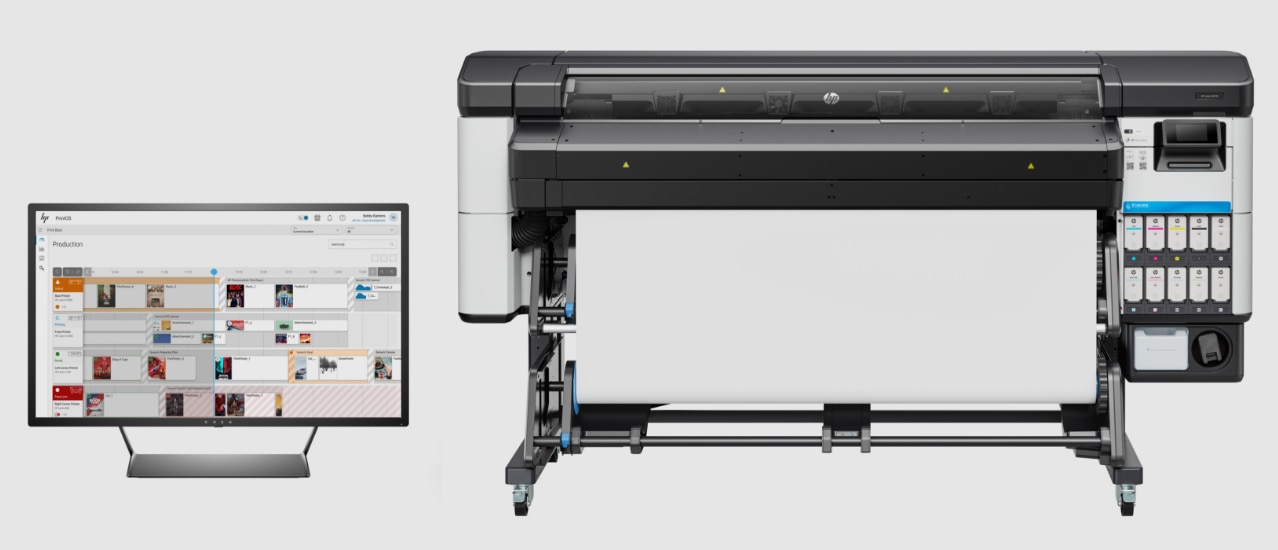
This is a line rather than a single machine, so widths, speeds and ink sets differ from model to model and any figure quoted here belongs to a specific series, not to latex printing as such. The production series covers the 630, 730 and 830 at 64 inches, aimed at signage and decorative work. The industrial series covers the FS50, FS60 and FS70 W at 126 inches for high-volume large-format output. The R series takes both rigid and flexible media, which roll-to-roll latex printers cannot do: the R530, R1000 and R1000 Plus at 64 inches and the R2000 Plus at 98 inches, handling boards up to two inches thick. Print and cut variants pair a printer with a cutter in one workflow. White ink appears on several models, managed by an automatic recirculation system that stores the printheads in an offline chamber so the ink does not settle and none is spent on servicing between jobs.
Who HP Latex is for
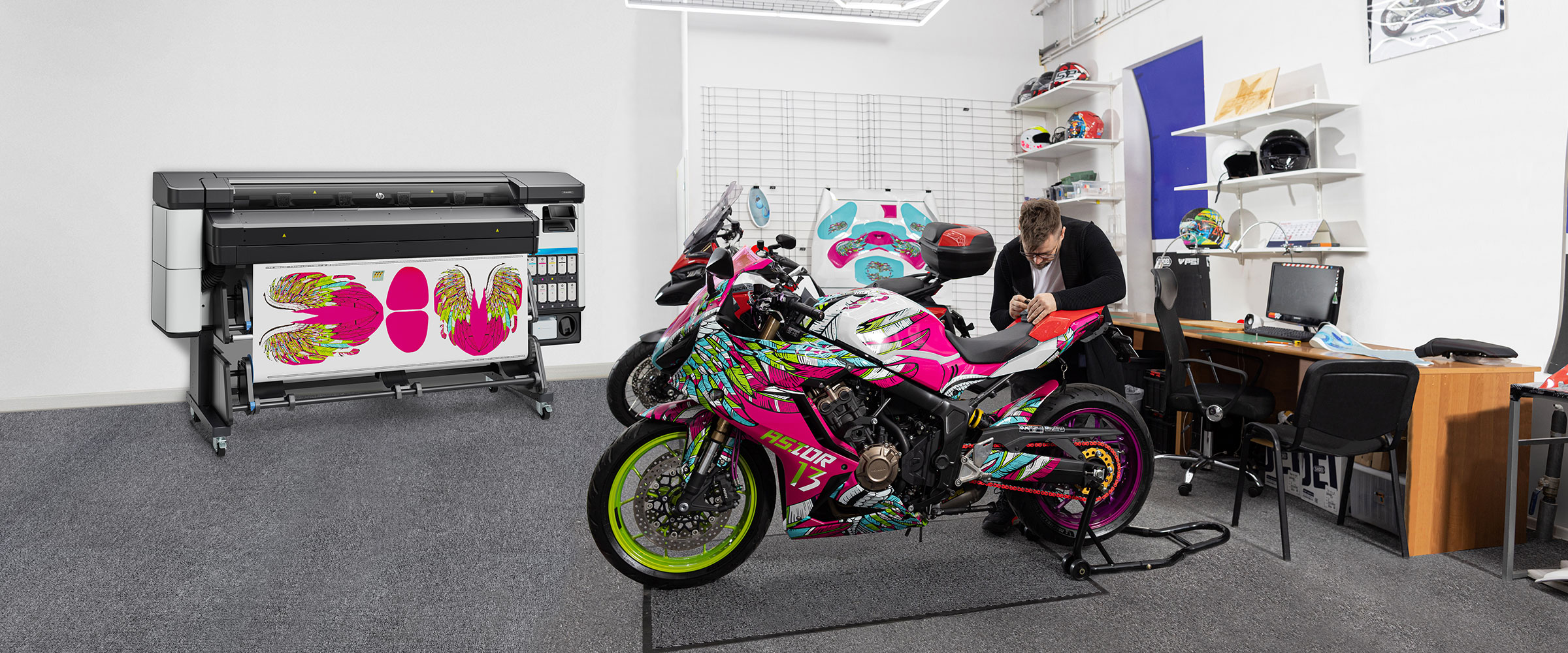
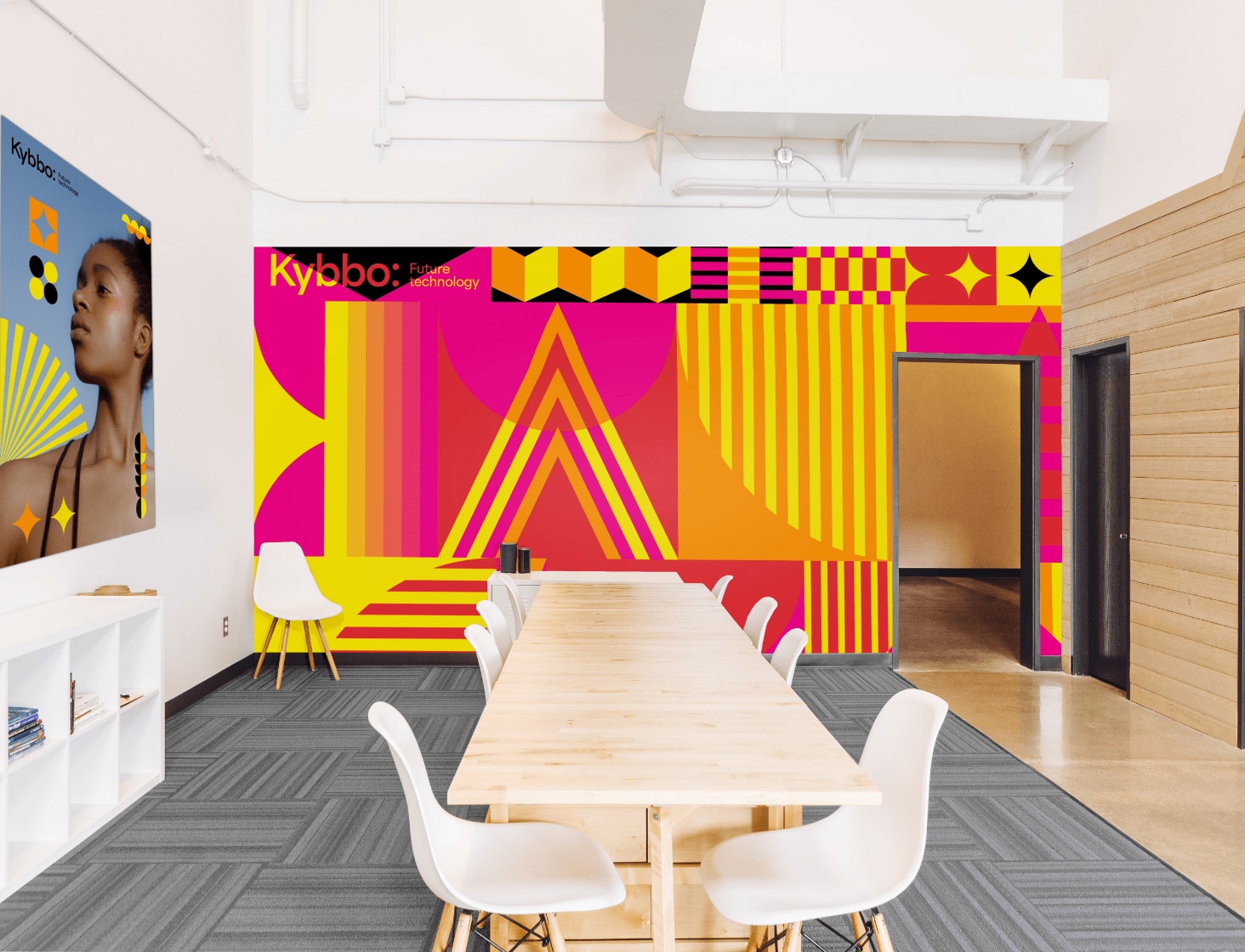
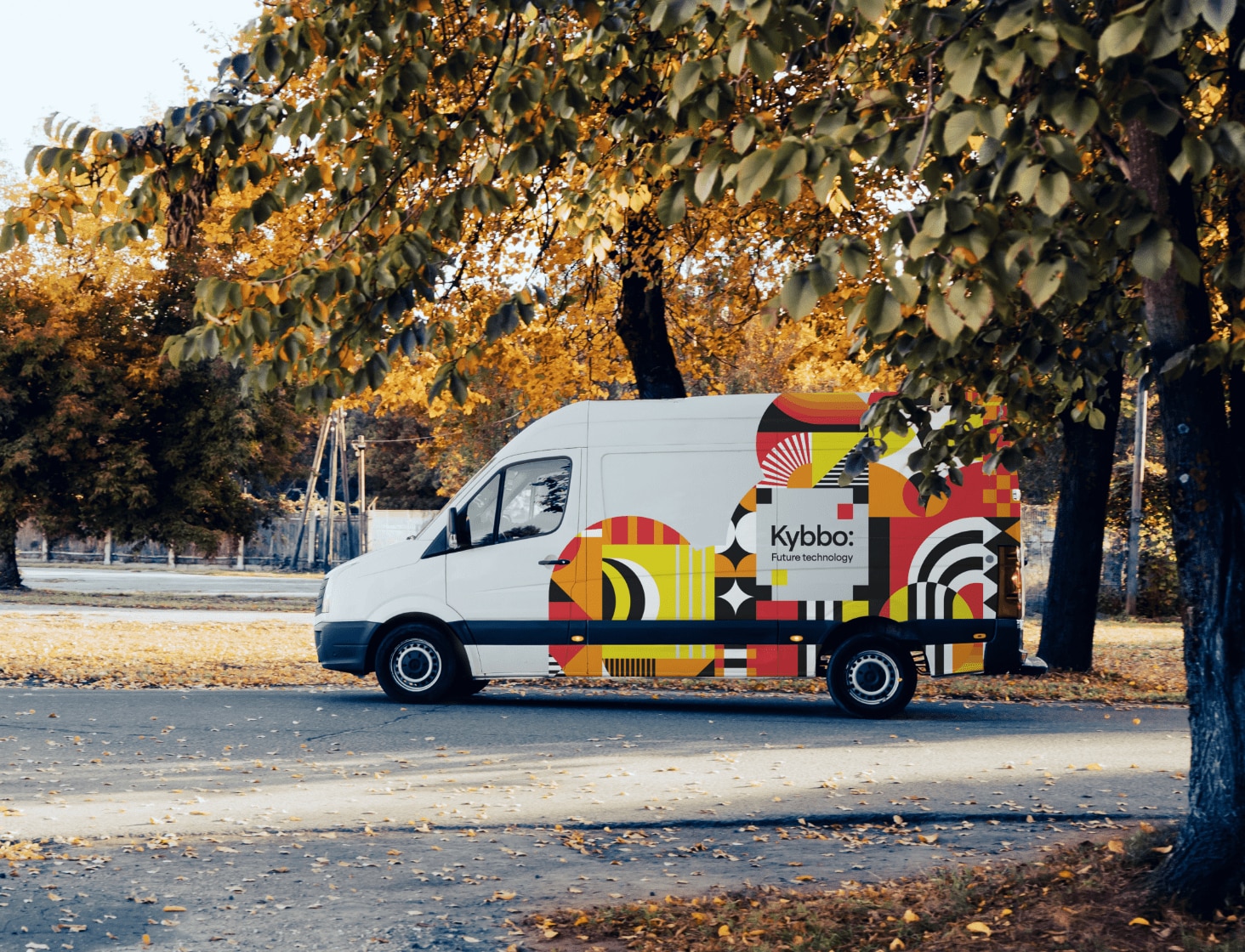
Sign and display shops, interior decoration and wall coverings, vehicle wraps, exhibition graphics and short-run retail work. It suits a shop that finishes what it prints the same day, because there is no waiting for prints to gas off before lamination. It also suits printing inside occupied buildings, in schools, healthcare sites and retail units, where ventilation is not an option and the odour question is not academic. The cured ink film is elastic and moves with the substrate, so wraps, roll-up banners and anything that gets rolled, folded and set up repeatedly survives handling better than a brittle film would. Independent testing of the entry-level 630 W by Papergraphics noted a spindle-free front-loading media path that speeds up job changes, and installation on a standard 13-amp supply, both of which matter more in a small shop than a headline speed figure.
What to weigh against UV printing
UV-LED is the nearest rival and the honest comparison is a split decision. UV cures instantly and cold, so it does not deform heat-sensitive thin films, and it bonds directly to rigid acrylic, PVC and aluminium with no vinyl layer in between. Published throughput for UV flatbeds runs well above roll-to-roll latex. Latex answers with an elastic rather than brittle ink film, better behaviour on flexible media, no reactive monomers in the room, and a white that does not yellow the way UV white can, a point the Papergraphics testers singled out. The rough rule that falls out of it: if most of your work is flat rigid board, buy UV. If most of it is vinyl, fabric, banner and wall covering, buy latex. Shops with a real mix of both usually end up owning one of each rather than compromising on one.
Who should buy something else
If your work is mainly rigid substrate printing, a UV flatbed will do it faster and without an adhesive vinyl step. If you run heat-sensitive thin films or thin low-cost PVC where deformation under drying heat is a real risk, latex is the wrong tool and no model in the range fixes it. If square metres per hour is the number your business is priced on, latex roll-to-roll is not where the highest figures are. If you only produce occasional posters and indoor graphics at desk width, an aqueous large-format printer costs less to buy and to run. And within the range itself, think twice about the entry 630 if colour management at volume is central to your work: the Papergraphics review found it lacks the spectrophotometer fitted to the 700 and 800 W machines, leaving profiling dependent on an external device or on a media supplier's profiling service.
Reviews
No reviews yet
Nobody has reviewed HP Latex here yet.