About Apple Pay
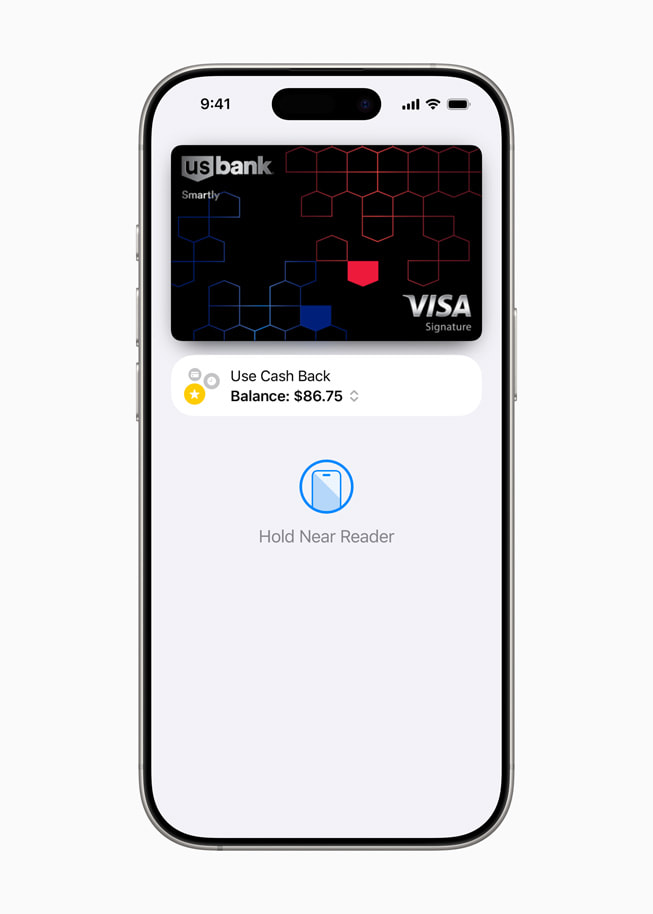
Apple Pay is the payment layer built into Wallet on iPhone, Apple Watch, iPad, Mac and Apple Vision Pro. You add a credit or debit card once, then pay by holding the device near a contactless terminal, tapping a button in an app, or choosing it at a checkout on the web. The point of it is not speed, though it is quick. The point is that the merchant never receives your card number. Apple substitutes a device specific number and a one time transaction code, and states that your actual card number is not shared by Apple with merchants or stored on Apple servers. Every payment is authorised by Face ID, Touch ID or a passcode. Apple charges the cardholder nothing, in stores, in apps or online.
How does Apple Pay work in a shop, in an app and on the web?
Setup runs through the Wallet app: add a card by holding an eligible physical card against the back of the iPhone, or type the details in. The card issuer approves the addition, and what lands on the device is a token rather than the card itself.
In a shop, you double click the side button, authenticate, and hold the phone or watch to the terminal. It works wherever contactless is taken, which Apple describes as vending machines, grocery stores, taxis and transit gates as much as tills. Apple puts acceptance at more than 85 percent of US retailers.
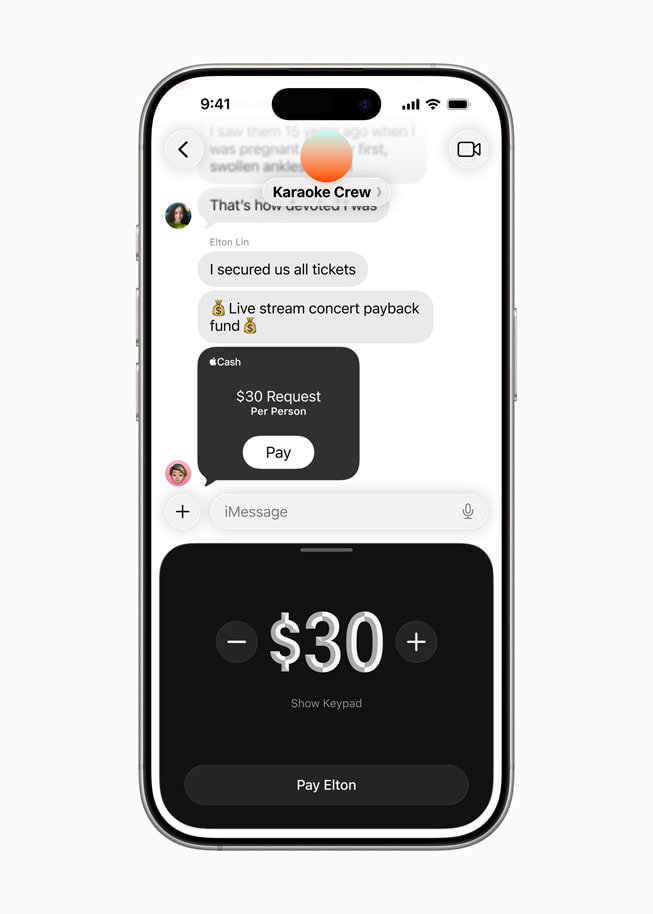
In apps and in Safari, there is an Apple Pay button and the transaction completes with a look or a fingerprint, with no card details typed and no account created at the merchant. On browsers other than Safari, the desktop checkout shows a code you scan with the iPhone camera and finish on the phone. Apple Cash sits alongside it for person to person transfers in Messages, and the balance can be spent anywhere Apple Pay is taken. Some card issuers also offer instalment plans or the option to pay with rewards at the point of purchase; those come from the issuer, not from Apple.
What does Apple Pay cost, and who actually pays for it?
Nothing, if you are the person holding the phone. Apple states plainly that it does not charge fees when you pay with Apple Pay in stores, online or in apps, and merchants pay their usual card processing costs rather than a surcharge for this particular method.
The money comes from the card issuers. Banks pay Apple a share of interchange on Apple Pay transactions, which is invisible at the till and significant in aggregate: analysis by Oliver Wyman put the European figure at roughly 300 million to 500 million euros a year. That arrangement is the reason banks have spent a decade unhappy about it, and the reason the regulatory story below matters more than it sounds.
How widely is it accepted, and how does it compare with Google Wallet?
Apple Pay is the largest mobile wallet in the markets where iPhone is strong, and the gap is wide. Third party compilations published in 2026, drawing on Statista, PYMNTS and Worldpay figures, put Apple Pay at somewhere near 780 million users globally against roughly 200 to 250 million for Google Wallet, with more than half of US in store mobile wallet transactions going through Apple against about 17 percent through Google. The same sources put Apple Pay in more than 90 countries with about 11,000 supporting banks, and Google Wallet in 86.
Treat all of those as estimates. Apple does not publish user numbers for Apple Pay, and the firms that produce these figures use different definitions of a user and a transaction. The direction is not in dispute; the decimal places are.
What changed when the EU opened the NFC chip?
For most of its life, Apple Pay was the only thing allowed to use the tap to pay radio in an iPhone. That exclusivity was the subject of a European Commission competition case, and in August 2024 Apple committed to opening the chip to third party developers through host card emulation, the same mechanism Android has always used.
In practice this means a bank or a rival wallet can now build its own tap to pay app in the European Economic Area rather than routing customers through Wallet. Analysts expect the effect on Apple's share to be modest in the short run, because default position and habit are powerful and most people never change a payment method that works. What it changes is leverage: banks now have an alternative to negotiate against, which is a different thing from customers actually leaving. Outside the EEA, the exclusivity mostly still stands.
How much privacy does it really buy you?
More than a plastic card, and less than the marketing implies. The genuine gain is that the merchant never holds your card number, so a breach at a shop you visited once cannot expose it, and a merchant cannot build a profile keyed to that number across visits. Apple also states that it does not keep transaction information that can be tied back to you when you pay with a credit or debit card.
What does not change is everything else. Your bank still sees every purchase, in the same detail as before. The merchant still knows what you bought and can still link it to a loyalty account, an email address or a delivery address you hand over. And the privacy statement covers cards from other issuers; Apple Cash and Apple Card are Apple products with their own terms, and are worth reading separately rather than assuming the same promise carries across.
Who should use something else?
If you carry an Android phone, this is not available to you and Google Wallet is the direct equivalent, with slightly narrower acceptance and a similar security model. Households split across both platforms will find neither wallet covers everyone, which is an argument for keeping physical cards in play rather than for choosing a side.
If you live outside the roughly 90 supported countries, or bank with an institution that has not signed up, the feature will simply not appear in Wallet, and no amount of setting up will make it. Check your own bank rather than the country list.
If you want a wallet that pushes rewards, offers and loyalty programmes at you, this is a deliberately quiet product and other apps do more. And if you are a small merchant deciding what to accept, the decision is about accepting contactless in general rather than about Apple specifically. Terminals that take contactless take this, and there is no separate integration to buy.
Reviews
No reviews yet
Nobody has reviewed Apple Pay here yet.