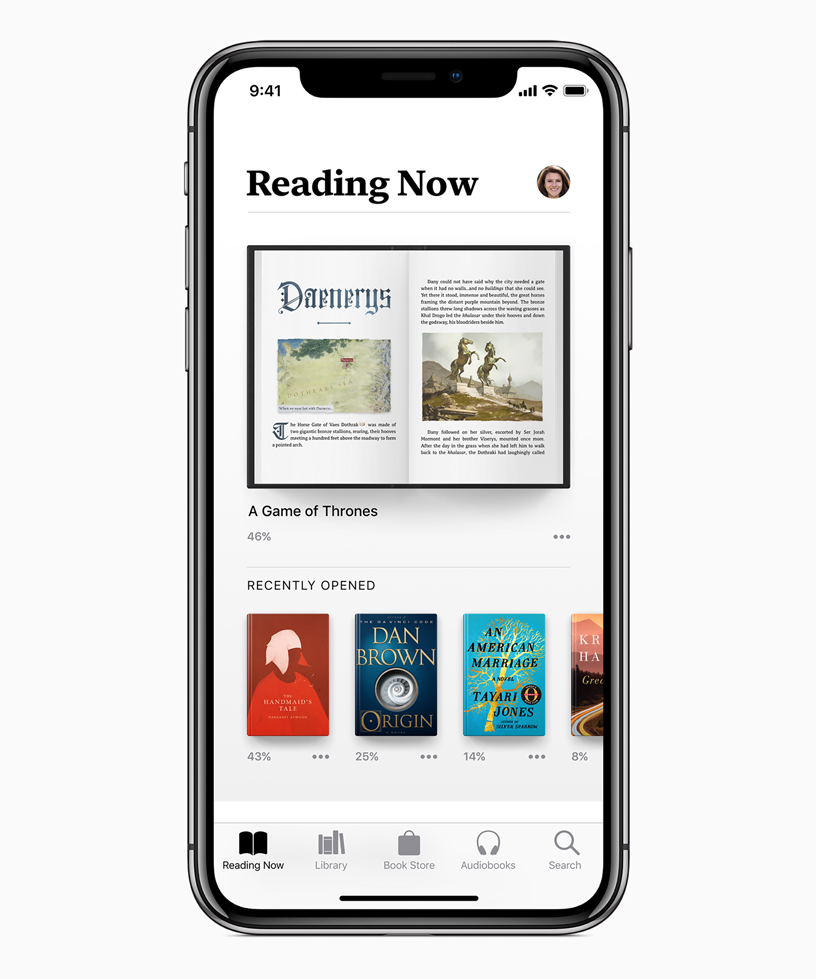
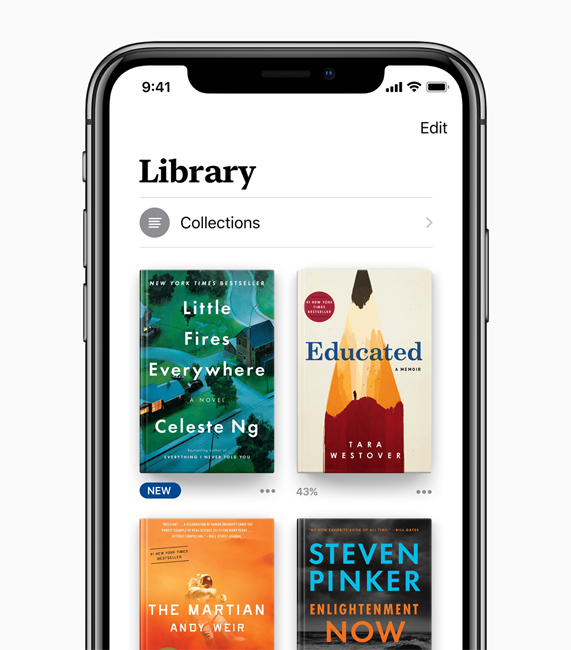
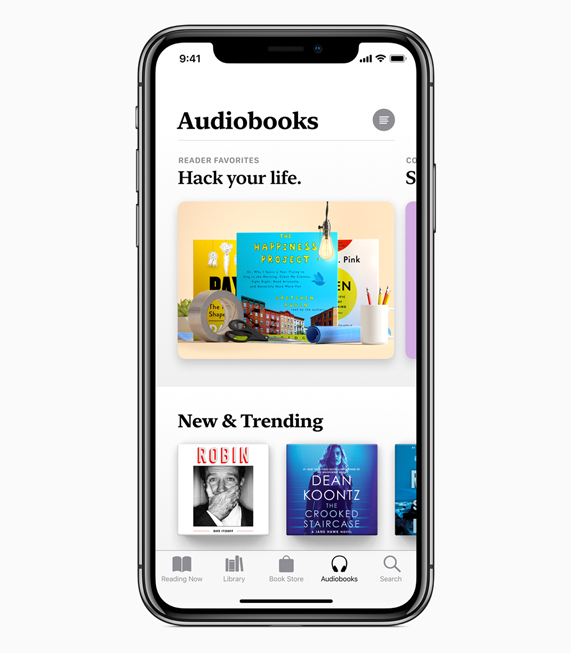
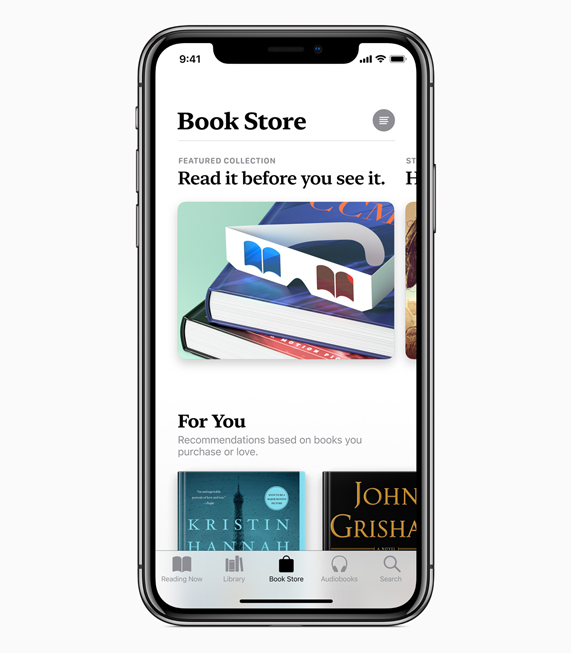
About Apple Books
Apple Books is Apple's reading application and its bookstore in one, preinstalled on iPhone, iPad and Mac rather than downloaded. It does two jobs that most of its rivals keep separate: it sells ebooks and audiobooks one title at a time, and it reads or plays whatever is in your library, including EPUB and PDF files you brought in from elsewhere. Apple describes it as the single place to find, buy and start audiobooks and ebooks, and states that the app itself is free, that titles are priced individually, and that thousands of free ebooks and audiobooks are available.
Within Apple's services range it belongs with the free, purchase-driven apps such as the App Store rather than with the monthly subscriptions such as Apple Music, Apple TV or Apple Arcade. Within the wider reading market it is the default option for people who are already inside Apple's ecosystem, and that position is both the reason to use it and the reason a lot of readers should not.
What does Apple Books actually do?
Two things. The store sells ebooks and audiobooks individually, with a For You collection that Apple describes as a curated list of audiobooks, ebooks, authors and a Weekly Top 5 built from what is already in your library. The reader handles the books you own, whether you bought them from Apple or added your own EPUB and PDF files.
Around those sit a small set of features that matter more in daily use than they sound on paper. Reading Goals tracks daily reading time, streaks and an annual book count. iCloud keeps your position in a book in step across devices, so an audiobook paused in the car resumes on a phone. Family Sharing extends purchases to up to five other family members, which quietly changes the economics for a household that reads the same books.
Apple lists the app as running on iPhone, iPad, Mac, Apple Watch, CarPlay and Apple Vision Pro.
Who is Apple Books for?
Three groups get real value from it.
People whose devices are all Apple. The app is already there, purchases carry across every one of them, and nothing needs configuring. That convenience is worth more than most feature comparisons suggest.
Readers who buy rather than rent. There is no subscription to keep paying, and a purchased title stays in the library. For someone who reads a handful of books a year, that is cheaper than any unlimited plan.
People with an existing pile of EPUB and PDF files. Apple Books will open them alongside purchased titles and lets you highlight, bookmark and annotate them, so a collection of technical PDFs and library-free EPUBs lives in the same place as the store purchases.
How does it compare with the Kindle app?
Kindle is the comparison that matters, and it wins on reach. Independent reviewers make the same two points. The Kindle app runs on iOS, Android and Windows and is distributed through the Apple App Store, Google Play and the Samsung Galaxy Store, while Apple Books stays inside Apple's own devices. Send to Kindle also accepts a wider set of file types, including Word documents, HTML, RTF and plain text, where Apple Books is essentially EPUB, PDF and audiobooks.
Kindle also offers something Apple does not: Kindle Unlimited, a monthly subscription for readers who get through enough books that per-title pricing stops making sense. Reviewers note that individual titles can cost more on Apple's store than elsewhere, so it is worth checking a specific book rather than assuming parity.
What Apple Books gives back is integration and the audiobook side being in the same app as the ebooks, rather than split across two apps and two accounts.
What is digital narration?
Apple Books produces audiobooks from ebook files using synthesized narration, a service Apple offers free to authors and publishers. It is aimed at indie authors and small publishers who cannot fund a studio recording, and Apple is explicit that authors keep their audiobook rights and can still commission a human-narrated version.
The practical effect for a reader is that a number of smaller titles have an audio edition on Apple Books that has no equivalent elsewhere. The practical caveat is that a synthesized reading is not a performance, and for fiction in particular many listeners will notice.
Who should use something else?
Anyone with an Android phone or a Windows PC in daily rotation. Apple Books does not run on either, and a library that only opens on half your devices is a poor purchase.
Borrowers. If most of your reading comes from a public library, Libby is the app that does that job, and Apple Books has no borrowing route at all.
Heavy readers. Past roughly a book a week, a subscription such as Kindle Unlimited costs less than buying each title, and Apple has no equivalent plan.
Anyone who wants e-ink. Apple sells no dedicated reading hardware, so reading on a backlit screen is the only option. Kindle and Kobo devices exist precisely for people who do not want that.
Anyone who wants a portable library. Purchased titles carry Apple's protection and are tied to an Apple Account. If you expect to leave the ecosystem later, buying a decade of books here makes that harder.
Reviews
No reviews yet
Nobody has reviewed Apple Books here yet.