About Galaxy Buds
Galaxy Buds is Samsung's family of wireless earbuds. The first pair shipped in March 2019 at $129.99, and the line has since settled into three tiers sold alongside each other: a Pro model at the top, a numbered standard model below it, and a Fan Edition that carries an older design at a lower price. The current pairs are the Galaxy Buds4 and Galaxy Buds4 Pro, announced at Galaxy Unpacked in February 2026, sold next to the Galaxy Buds3 FE, which Samsung introduced on 18 August 2025 for availability from 5 September. Because this page records the line rather than one model, there is no single price, driver size or battery figure to quote. What holds across all of it is the shape of the offer: earbuds that work as ordinary Bluetooth headphones on any phone, and gain a second layer of features only on a recent Samsung Galaxy handset.
How the tiers differ
The Pro is where the audio hardware goes. On the Buds4 Pro that means two drivers, an 11 mm woofer paired with a 5.5 mm tweeter, playback quoted at 24-bit / 96 kHz, an IP57 rating and wireless charging. The standard Buds4 uses a single 11 mm driver with the same 24-bit / 96 kHz figure, and goes without the ultra wideband voice pickup and Auracast support the Pro carries. The Galaxy Buds3 FE sits lowest, quoted by Samsung at 16-bit / 48 kHz, rated IP54, and charged over USB-C only.
Fit is the split most buyers notice first, and it is a difference in kind rather than a step up a ladder. The Buds4 Pro uses a canal type body with silicone tips. The standard Buds4 uses an open fit that rests in the ear without sealing it, which lets ambient sound in by design. Anyone who wants quiet on a train should be looking at the Pro or the FE, not at the cheaper of the two current flagships.
Battery runs against price. Samsung quotes the Buds4 Pro at six hours per charge with noise cancellation on and 26 hours including the case, the Buds4 at five hours and 24 hours, and the Buds3 FE at six hours, rising to eight and a half with cancellation off, for 24 hours total. Paying more buys drivers, materials and wireless charging. It does not buy a longer day.
What the software features actually require
Samsung sells this line on software as much as sound. The Buds4 generation runs Bluetooth 6.1, adds head gesture controls on the Pro for answering and rejecting calls, and carries a Galaxy AI interpreter mode covering 22 languages. Adaptive noise cancellation and adaptive EQ appear across the current models.
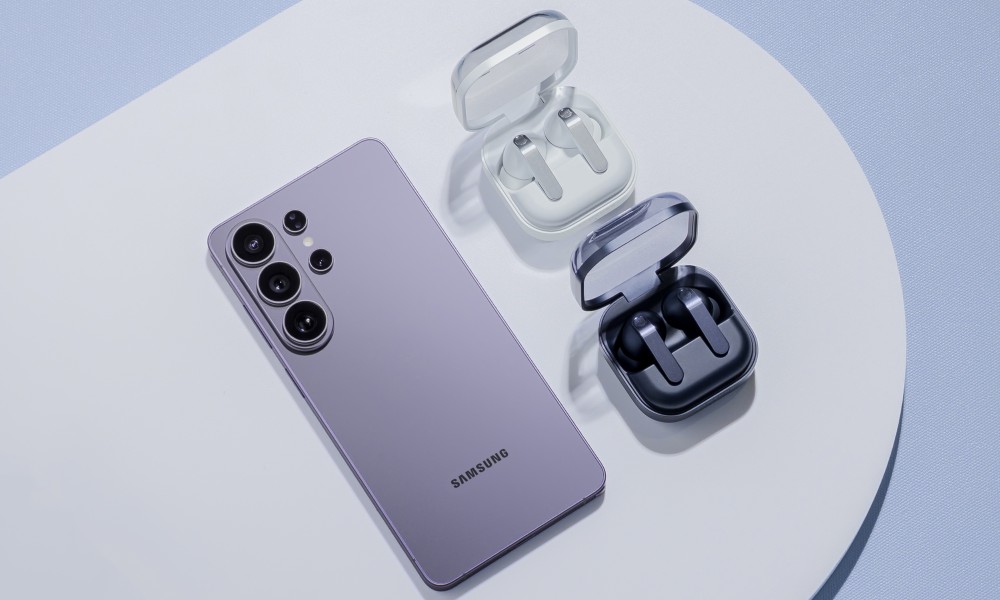
The part worth reading twice is what those features need underneath them. In its Buds4 Pro comparison, SoundGuys notes that the Samsung specific functions require a compatible Samsung device, a Galaxy S23 or newer running One UI 6.1.1 or later, and that iPhone users miss out on most of them. Samsung's own listing for the Buds3 FE describes it as working across Android and iOS over Bluetooth, which is the honest floor: audio and calls work anywhere, and the reason to choose Galaxy Buds over anything else largely does not.
That makes the buying question less about the earbuds than about the phone already in the pocket. On a recent Galaxy handset the line is an easy recommendation. On anything else it is competing purely on sound, fit and price, against a field that is crowded at every one of those prices.
What to weigh against the nearest rivals
The closest comparison is Apple's AirPods Pro, for the same structural reason: both are tuned to a phone maker's own platform and hold their best features back for it. A buyer choosing between them is usually choosing a phone they already own, not a pair of earbuds.
Against Sony's WF-1000XM series and the wider field, noise cancellation is a weaker deciding line than the price gap suggests. SoundGuys measured the $149 Buds3 FE attenuating roughly 86 percent of noise against roughly 84 percent for the $249 Buds4 Pro, so the money at the top of the range is not buying quiet. Tuning does separate them: the same review describes the Pro as darker with elevated bass and the FE as more balanced.
Durability and fit are the other honest axes. The Pro is rated IP57 against IP54 on the FE, and the FE anchors in the ear rather than relying on the tip seal alone, which matters more for running than any figure on a box.
Who should buy something else
iPhone owners should look elsewhere first. The interpreter mode, the Auracast handling and the tighter pairing behaviour are the reasons to pay Samsung's prices, and none of them arrive on iOS. AirPods do the equivalent job on that platform and cost about the same.
Anyone whose main use is a loud commute should skip the standard Buds4 entirely. An open fit cannot seal, and no amount of processing fixes that. The FE or the Pro is the right shape of product, and on measured attenuation the cheaper of the two is not the worse one.
Anyone buying for gym or running use who wants a guarantee against sweat and rain should note that IP54 covers splashes rather than immersion, and check the rating on the specific model rather than assuming the line shares one.
Finally, buyers on a non Samsung Android phone who want the strongest sound per pound should treat this line as one option among many rather than a default. Stripped of the Galaxy features, it competes on tuning alone, and the reviews that praise it are usually praising it inside Samsung's own ecosystem.
How the line reached its current shape
The original Galaxy Buds arrived in March 2019 at $129.99, followed by the Galaxy Buds Plus in February 2020 at $149.99 with better sound and battery. The Galaxy Buds Live of August 2020 took a bean shaped, open ear form that the line has never repeated in the same way. Noise cancellation and head tracking arrived with the Galaxy Buds Pro in January 2021, and a cheaper route to cancellation followed with the Galaxy Buds 2 that August. The Galaxy Buds 2 Pro of August 2022, at $229.99, brought 24-bit audio support.
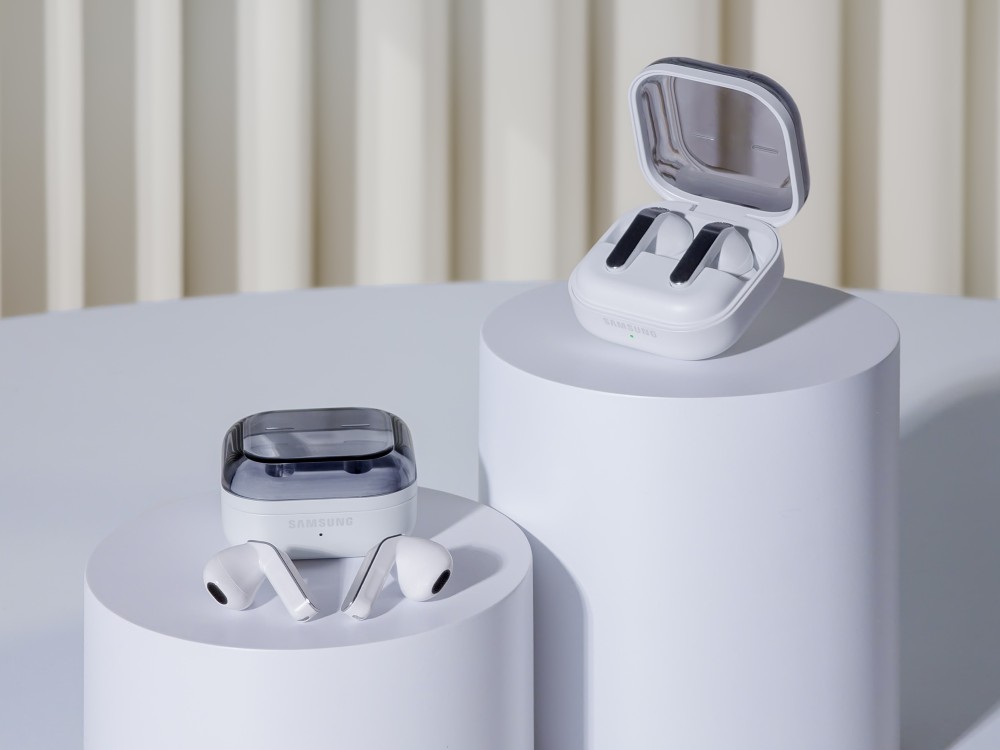
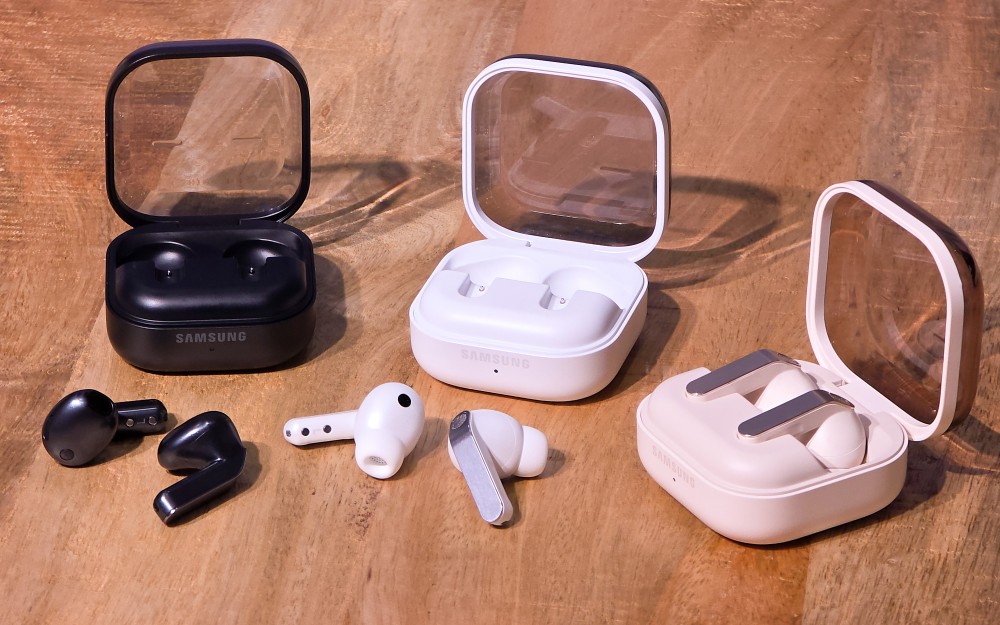
The stem design that defines the current look landed in July 2024 with the Galaxy Buds 3 at $179.99 and the Galaxy Buds 3 Pro at $249.99, the latter adding high resolution audio, ultra wideband calling and the first AI translation features. A budget Galaxy Buds Core followed in June 2025 and the Galaxy Buds3 FE in August 2025 at $149.99. The Buds4 pair of February 2026 refined the stem into a brushed metal blade with an engraved pinch control area, and moved the case to a flat clamshell with a transparent lid.
Read as a whole, the arc is from an ear filling bud to a stem, from a single model to three tiers on sale at once, and from audio hardware towards software that only fully works on Samsung's own phones.
Where to buy
Links go to the seller, not through us. We take no commission and these are not affiliate links, so the order below says nothing about who pays what. Prices and stock change constantly, so check on the day.
Reviews
No reviews yet
Nobody has reviewed Galaxy Buds here yet.