About Azure Dedicated Host
Azure Dedicated Host is an Azure compute service for organizations that need one or more physical servers dedicated to a single Azure subscription rather than sharing the underlying host with other customers. It is designed for workloads that need hardware-level isolation, more control over VM placement and maintenance timing, or licensing models that benefit from dedicated physical cores. Buyers should think of Dedicated Host as an infrastructure option beneath Azure virtual machines, not as a separate application platform: you still choose supported VM sizes, operating systems, disks, networking and software, while Microsoft allocates and manages the underlying physical host.
What is included
Isolation
| Host model | Physical Azure server dedicated to one Azure subscription |
|---|
Placement
| VM placement | Manual host placement or automatic placement within a host group |
|---|
Availability
| Failure domains | Supports availability zones and fault domains through host-group design |
|---|
Operations
| Maintenance control | Supports customer-scheduled maintenance for qualifying platform updates |
|---|
Billing
| Primary meter | Dedicated physical host while provisioned, regardless of VM utilization |
|---|
Licensing
| Azure Hybrid Benefit | Supported for eligible Windows Server and SQL Server licensing scenarios |
|---|
Capacity
| Default dedicated-host quota | 3,000 dedicated-host vCPUs per region, subject to subscription and VM-family quotas |
|---|
What is Azure Dedicated Host used for?
Azure Dedicated Host is most useful when shared cloud infrastructure does not meet a workload's isolation, compliance, maintenance or licensing requirements. Microsoft assigns the customer an entire physical server, and supported Azure VMs are placed on that host instead of on multitenant hardware. This can help organizations that need to document physical host isolation, control which workloads share the same server, or align software licensing with dedicated physical cores.
It is still Azure infrastructure. Storage, networking, VM images, guest operating systems and application architecture remain separate design choices. Dedicated Host does not convert Azure VMs into a fully managed application service, so teams still need the operational skills required for virtual machines.
How do host groups, hosts and virtual machines fit together?
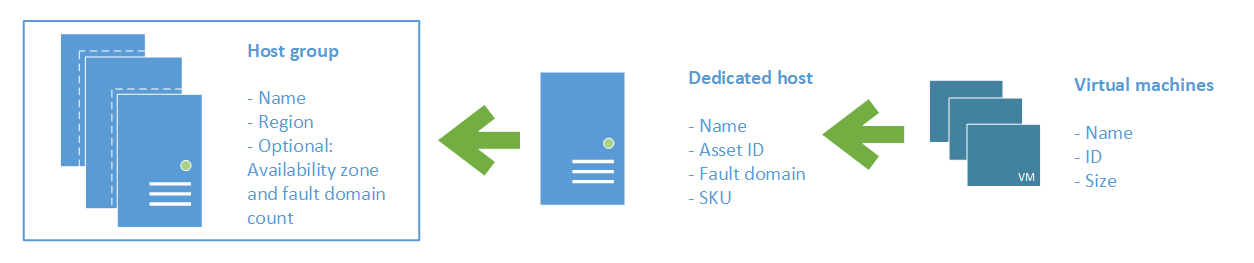
Microsoft organizes Dedicated Host deployments around host groups and hosts. A host group represents a collection of dedicated hosts in a region and can be associated with an availability zone and fault domains. A dedicated host is the physical server resource inside that group. Its SKU determines the supported VM size family and hardware generation.
A single host can run multiple supported VM sizes from the same compatible VM family when capacity allows. Teams can place VMs on a specific host or enable automatic placement at the host-group level so Azure chooses an available host. This makes capacity planning important because a VM deployment can fail when the selected dedicated host has insufficient remaining resources.
How does high availability work on Dedicated Host?
Dedicated hardware does not remove the need for redundancy. Microsoft recommends distributing important workloads across multiple hosts rather than treating one physical server as a highly available deployment. Host groups can use availability zones and fault domains to create failure boundaries, but the workload architecture must actually place VMs across those boundaries.
For zone-resilient designs, separate host groups are required for the availability zones being used, and VMs must align with the zone of their host group. Fault domains provide another layer of host placement separation. Buyers should budget for the extra dedicated capacity needed for redundancy because a single highly utilized host may be cost efficient but creates a large failure domain.
What maintenance control does Azure Dedicated Host provide?
One reason to choose Dedicated Host is greater control over platform maintenance. Microsoft documents Maintenance Control for supported dedicated-host scenarios, allowing customers to defer qualifying platform updates and apply them during a selected maintenance window within the documented maintenance period. This can help workloads that are sensitive to brief platform maintenance interruptions.
Maintenance control is not a promise that hardware will never fail. Microsoft monitors host health and can service-heal or replace unhealthy hardware. Teams should still design application redundancy, keep backups, monitor host health and understand the effects of host restart, resize or redeploy operations before using them in production.
How is Azure Dedicated Host priced?
Pricing was checked on August 28, 2026. Microsoft bills Dedicated Host at the host level from the time the physical host is provisioned, regardless of how many VMs are currently running on it. The host price varies by VM family, host type, hardware generation and region. Software licensing, storage and networking remain separate charges.
This billing model is very different from paying only for individual VM instances. A partially used host can be expensive because unused physical capacity is still reserved and billed. Microsoft currently offers savings options for eligible Dedicated Host configurations, including Azure savings plan for compute on selected host types and other commitment options shown on the current pricing page. Buyers should model expected host utilization rather than comparing only the price of one VM.
Can existing Windows Server and SQL Server licenses reduce cost?
Dedicated physical hardware can matter for Microsoft licensing. Microsoft documents Azure Hybrid Benefit and specific licensing scenarios for Windows Server and SQL Server on Dedicated Host, subject to license edition, acquisition date, Software Assurance or subscription rights and current product terms. Some eligible licensing arrangements can be allocated against the physical cores of the dedicated server.
Licensing should be validated with current Microsoft licensing terms rather than assumed from an older on-premises agreement. Dedicated Host can improve licensing economics for some estates, but it can also be more expensive than shared VMs when the organization does not have suitable license rights or cannot keep the host well utilized.
What capacity and quota constraints should buyers check?
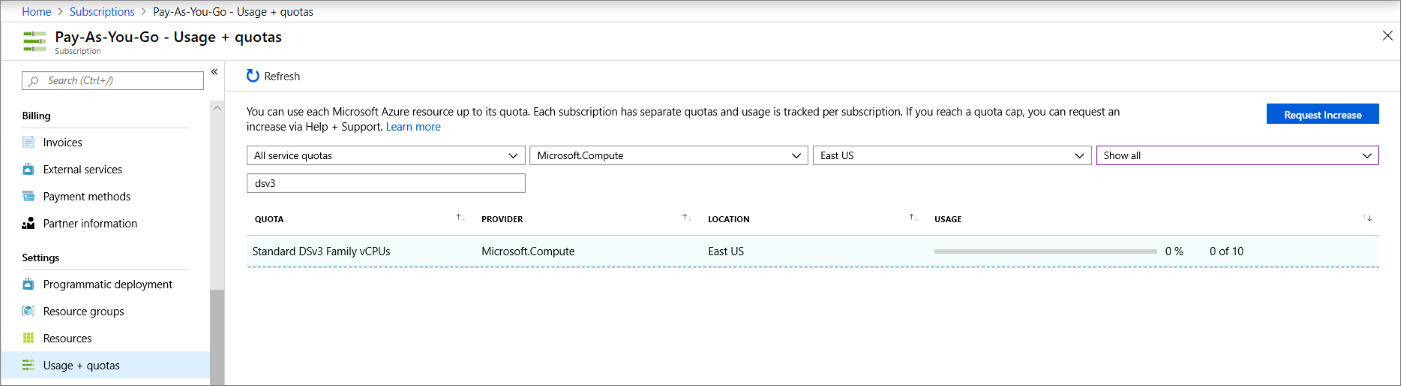
Dedicated Host capacity is tied to specific VM families, hardware types, regions and zones. Microsoft notes that supported host SKUs vary by location. The service also consumes dedicated-host vCPU quota and VM-family quota when the host is provisioned. The current Dedicated Host overview lists a default dedicated-host vCPU quota of 3,000 per region, while individual subscriptions and VM families can have lower practical limits.
A host cannot be freely converted to any hardware family after deployment. VM compatibility depends on the host SKU, and some features have placement restrictions. Teams planning migrations should verify the exact target VM series, Ultra Disk requirements, availability-zone support and quota before buying dedicated capacity.
How does Dedicated Host differ from normal Azure Virtual Machines?
Standard Azure Virtual Machines normally run on multitenant physical infrastructure, while Azure Dedicated Host reserves the physical server for one customer's subscription. The VM operating model remains similar, but Dedicated Host adds host-level placement, capacity and maintenance decisions that are not normally exposed to VM buyers.
Use ordinary Azure VMs when multitenant infrastructure meets security and compliance requirements and per-VM economics are more attractive. Use Dedicated Host when physical isolation, host-level maintenance control, workload placement or licensing requirements justify reserving and paying for the complete server.
What are the main limitations and tradeoffs?
Dedicated Host reduces multitenancy at the compute-host layer, but it does not isolate every Azure dependency. Microsoft notes that dedicated hosts still use Azure datacenter networking and underlying storage services. Customers also take on more capacity-planning responsibility because the chosen host has finite VM capacity and compatibility constraints.
Automatic VM placement has documented limitations for some VM families and operations. Dedicated Host also requires more planning for resilience, since redundancy can mean paying for multiple physical hosts. Region and zone availability vary, and some VM or disk features are not supported with every host configuration. These details should be checked before standardizing a large estate on the service.
Who should choose something else?
Choose standard Azure Virtual Machines when the main requirement is flexible IaaS compute and physical host isolation is not required. Shared VM infrastructure is usually simpler to scale and avoids paying for unused host capacity.
Choose Azure VMware Solution when the core requirement is preserving a VMware software-defined datacenter stack rather than merely obtaining dedicated Azure hardware. Choose AKS, App Service or Container Apps when the goal is reducing VM administration through a higher-level application platform. Dedicated Host is strongest when physical isolation, licensing or maintenance control is a documented requirement, not simply because dedicated hardware sounds more secure.
Reviews
No reviews yet
Nobody has reviewed Azure Dedicated Host here yet.