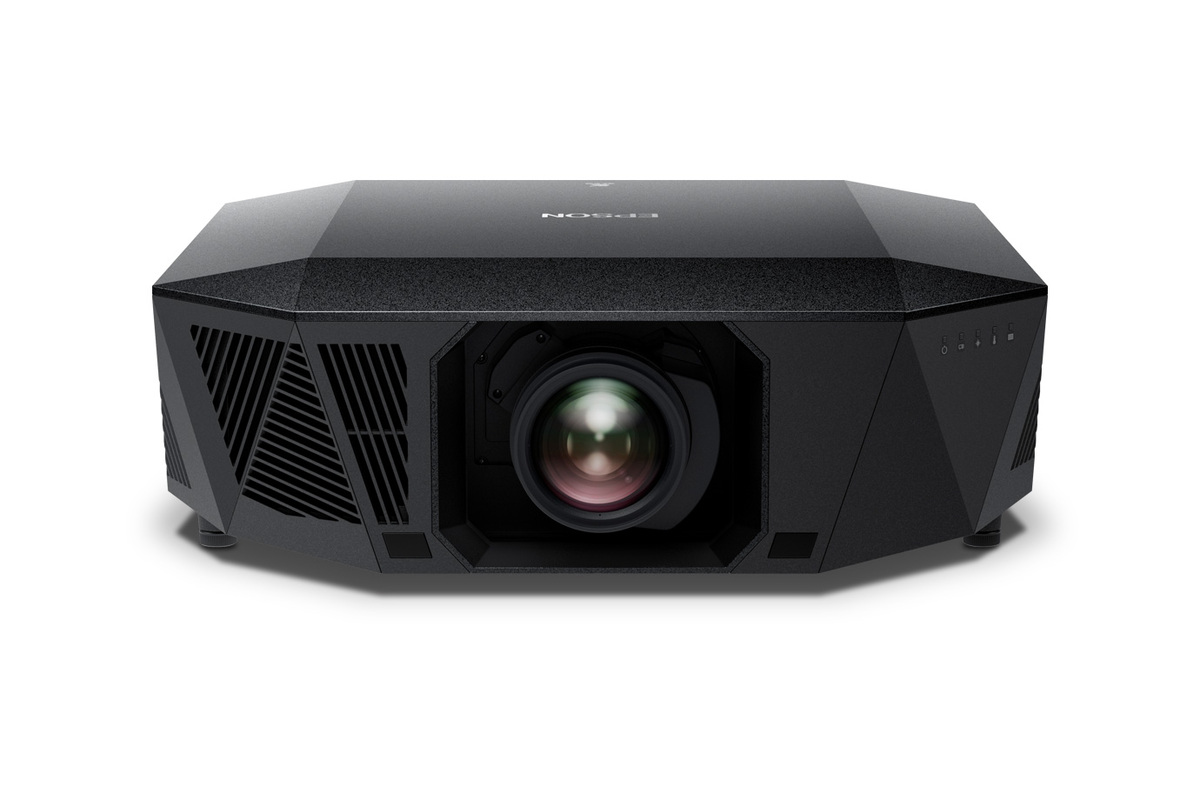
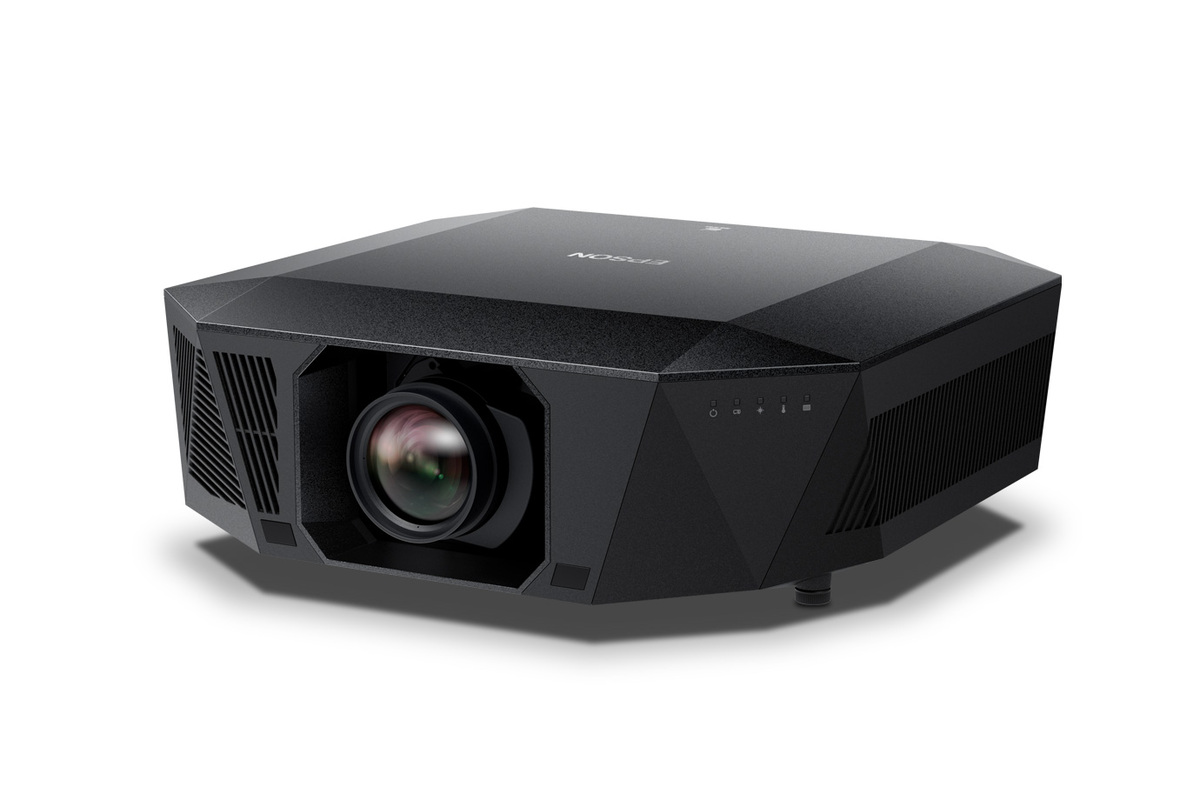
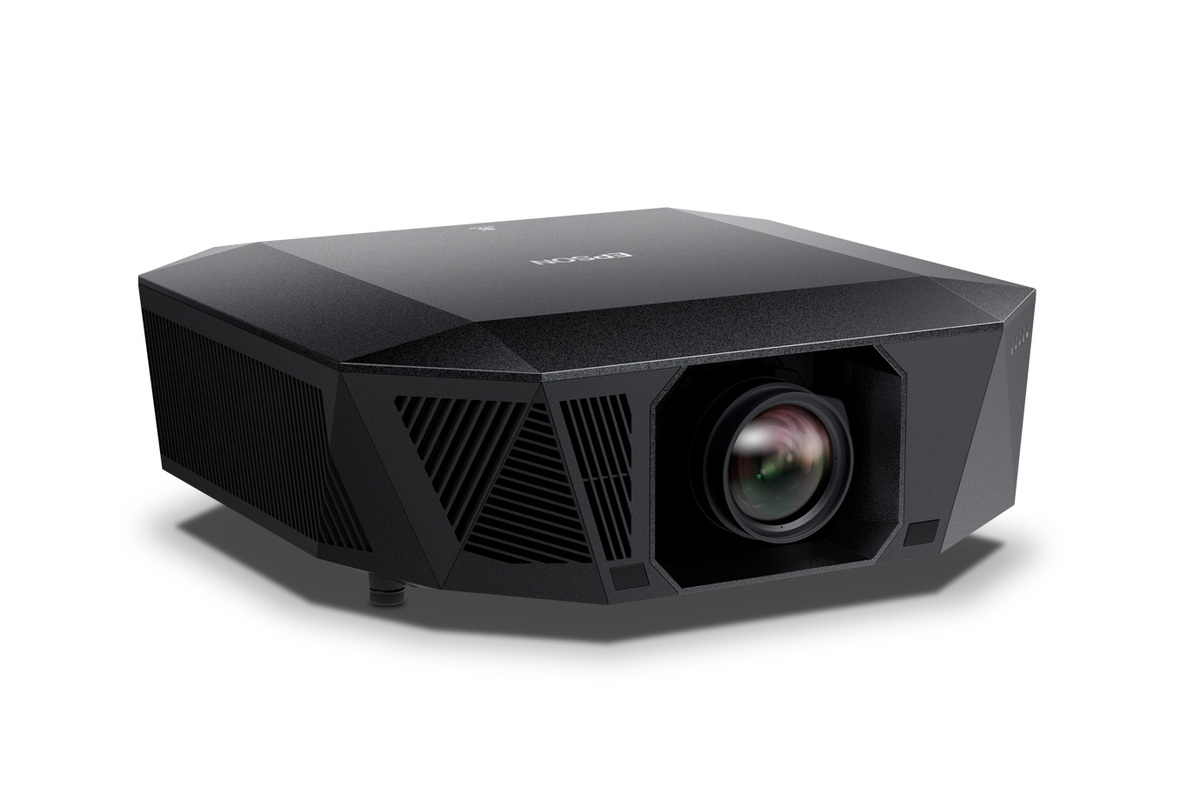
About QL3000
The Epson QL3000 is a premium 4K HDR laser projector built for people who want a genuinely large image without limiting the room to a dark, dedicated cinema. Epson rates it at up to 6,000 lumens of equal color and white brightness, giving custom installers more headroom for larger screens and rooms with controlled ambient light. It sits between the QB1000 and the brighter QL7000 in Epson's Q-Series.
The QL3000 is not a simple television replacement that you unpack and place on a cabinet. Epson sells it as a body-only projector without a lens. That makes it unusually flexible, but it also means the final cost and installation depend on the Epson Precision Lens selected for the room. For a planned home theater, media room or luxury multipurpose space, that flexibility is one of its biggest strengths.
Key specifications
Image
| Display technology | True 3-chip 3LCD |
|---|---|
| Resolution | 4K Display Technology, 8.29 million pixels on screen |
| Color brightness | Up to 6,000 lumens (IDMS rated) |
| White brightness | Up to 6,000 lumens (ISO rated) |
| HDR | HDR10 with Dynamic Tone Mapping |
| Maximum image size | Up to 300 inches |
Light source
| Light source | Solid-state laser |
|---|---|
| Rated light source life | Up to 20,000 hours |
Installation
| Lens | Body only; compatible Epson Precision Lens required and sold separately |
|---|
Gaming
| High frame rate | Supports 4K HDR gaming up to 120 Hz |
|---|
Connectivity
| HDMI | Dual HDMI 2.1, up to 40 Gbps |
|---|
Control
| Home automation | Control4 and Crestron integration supported |
|---|
What makes the QL3000 different?
The headline advantage is brightness. Epson specifies up to 6,000 lumens of both color brightness and white brightness, considerably more than the 3,300-lumen QB1000. The projector uses Epson's true 3-chip 3LCD architecture and proprietary 4K Display Technology to put 8.29 million pixels on screen.
HDR10 support is paired with dynamic tone mapping, which adjusts HDR presentation scene by scene. Epson's QZX Picture Processor handles color, contrast, frame interpolation and tone mapping in real time. The result is a projector aimed at premium viewing rather than simply producing the biggest possible picture.
How large a picture can it produce?
Epson rates the QL3000 for images up to 300 inches. That makes it suitable for spaces where even a very large television would feel restrictive. The actual screen size, throw distance and placement depend on the optional lens chosen for the installation.
This lens system is important. The QL3000 ships without a lens and supports a broad range of powered Epson Precision Lenses, including short-throw and long-throw choices. Buyers should treat lens selection as part of the projector purchase, not as an accessory decision to make later.
Is it suitable for gaming?
The QL3000 supports 4K HDR gaming at up to 120 Hz and includes Auto Low Latency Mode. Its dual HDMI 2.1 connections support the high-bandwidth signals expected from current premium consoles and gaming PCs.
That makes the QL3000 more versatile than a projector designed only around movies. A large media room can switch between films, live sport and high-frame-rate games without choosing a separate display for each use.
What should you budget beyond the projector?
Epson currently lists the QL3000 at a $16,999 MSRP in the United States. That price is for the projector body. A compatible Epson Precision Lens is required and is sold separately, so a realistic system budget must include the lens, screen, mounting, cabling and professional calibration or installation where appropriate.
The original August 2024 announcement listed a $14,999 suggested retail price. Epson's current product page is the better reference for today's MSRP, and buyers should confirm the final system quote with an authorized Epson reseller.
How does it compare with the QB1000 and QL7000?
The QB1000 is the more approachable Q-Series choice when 3,300 lumens are enough and an interchangeable-lens installation is unnecessary. It is better suited to conventional premium home theaters where the projector position is predictable.
The QL7000 is the step up for very large screens or environments that need substantially more light output. Epson rates it at up to 10,000 lumens. The QL3000 occupies the useful middle ground: much more brightness and installation flexibility than the QB1000, without the price and output of the QL7000.
What are the practical limitations?
The body-only design is both a strength and a complication. There is no included lens, so this is not a complete projection system at the advertised projector price. The correct lens has to be matched to screen dimensions, throw distance and mounting position.
It also does not replace a streaming platform or sound system by itself. A premium installation will normally pair it with external source devices, an AV system and a suitable projection screen. Buyers looking for a simple all-in-one living-room experience should consider a smart ultra-short-throw model instead.
Who should choose something else?
Choose the QB1000 if your room is primarily a controlled-light home theater and 3,300 lumens meets the screen-size requirement. It costs substantially less and avoids the QL3000's interchangeable-lens planning.
Choose the QL7000 when the installation calls for the Q-Series' maximum brightness, especially for exceptionally large screens or more demanding ambient-light conditions. Buyers who want the projector only inches from the wall should instead look at Epson's QS100, which uses an ultra-short-throw design and supports images up to 160 inches.
The QL3000 makes the most sense when a custom installation genuinely benefits from its 6,000-lumen output, 300-inch potential and lens flexibility. If those capabilities will not be used, a less complex Epson projector can deliver better value.
Reviews
No reviews yet
Nobody has reviewed QL3000 here yet.