About PowerLite L690E
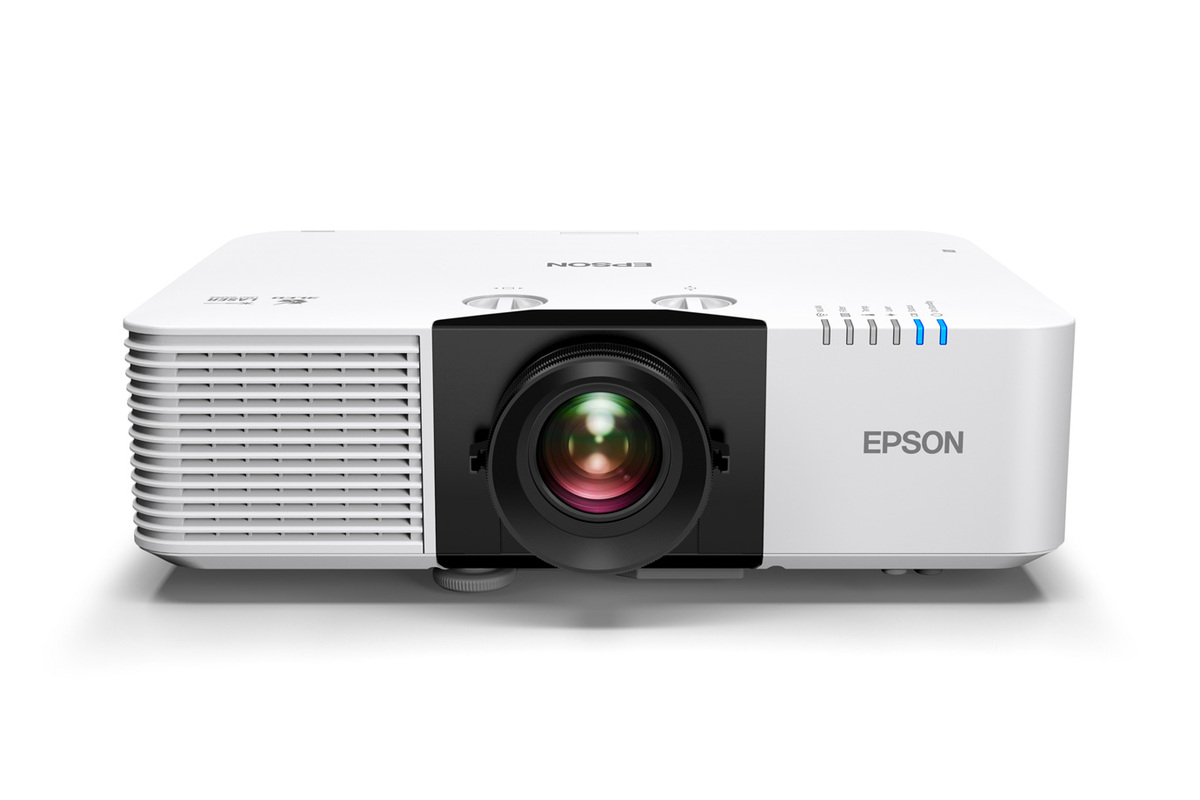
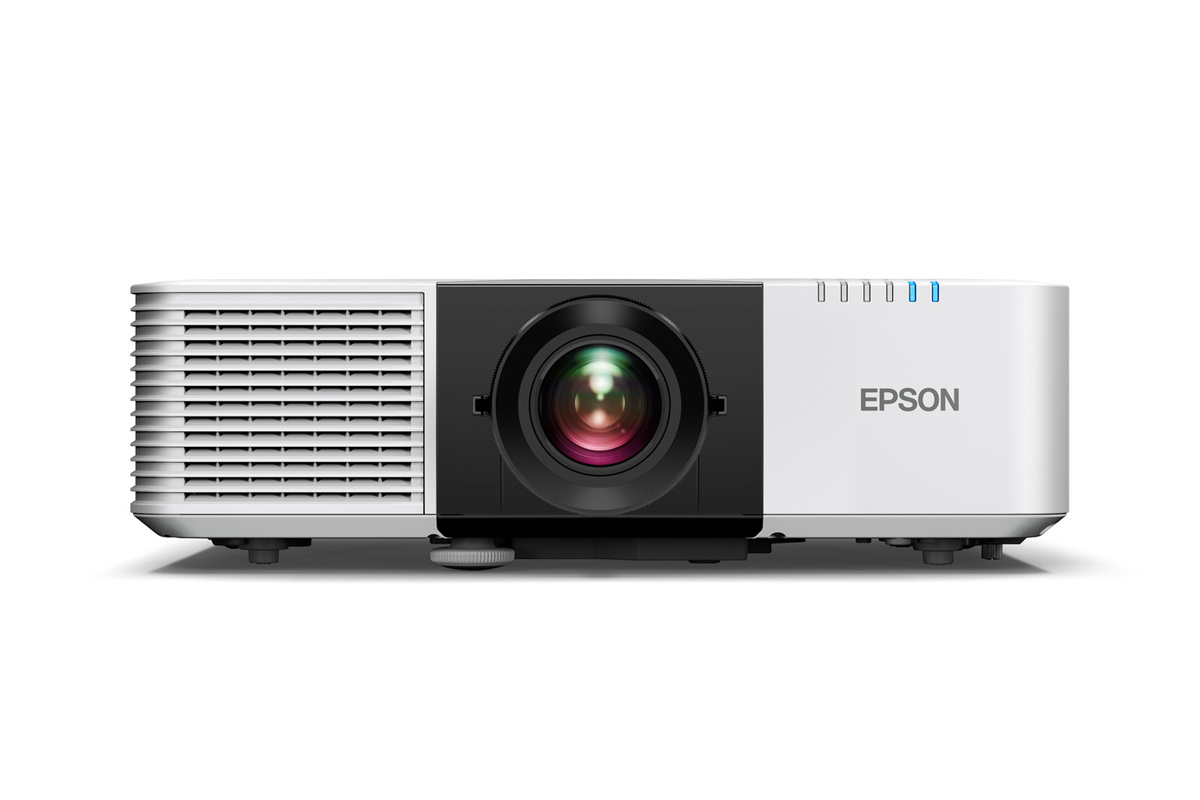
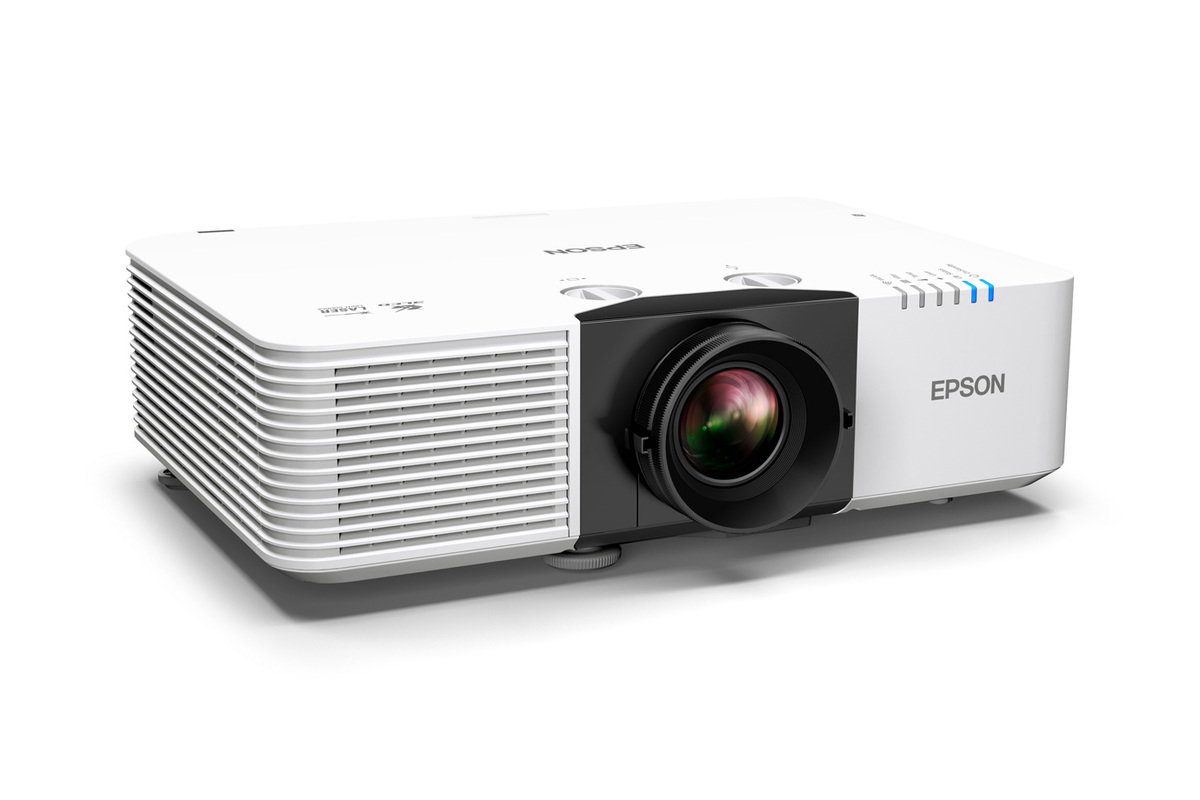
The Epson PowerLite L690E is a 6,500-lumen standard-throw laser projector built for classrooms, lecture halls, conference rooms and hybrid workspaces that need a large, bright image without stepping up to Epson's heavier interchangeable-lens platforms. Epson announced the model on February 4, 2025 as part of its expanded PowerLite L-Series and confirmed the lineup was available through authorized Epson resellers on June 11, 2025. The L690E combines 3-chip 3LCD imaging, WUXGA panels and Epson 4K Enhancement with a compact fixed-lens design. It is best understood as the detail-focused counterpart to the L690U: both are rated at 6,500 lumens, but the L690E adds 4K Enhancement for buyers who value sharper close-range presentation.
Key specifications
Imaging
| Display technology | 3-chip 3LCD |
|---|---|
| Color brightness | 6,500 lumens |
| White brightness | 6,500 lumens |
| Panel resolution | WUXGA 1920 x 1200 |
| Detail technology | 4K Enhancement |
Projection
| Throw type | Standard throw |
|---|---|
| Throw ratio | 1.35 - 2.20 |
| Optical zoom | 1.6x |
| Maximum display | Up to 500 inches diagonal in 16:10 |
| Ultra-wide formats | 16:6 and 21:9 |
Light source
| Type | Laser |
|---|---|
| Maintenance interval | Up to 30,000 hours in Extended Mode |
Connectivity
| Wireless | Wi-Fi 6/6E |
|---|---|
| Wireless sharing | Apple AirPlay 2, Miracast and Epson iProjection |
Installation
| Mounting | 360-degree mounting and universal VESA pattern |
|---|
Model
| Epson model number | V11HB25020 |
|---|
Where the PowerLite L690E fits
The L690E sits in the middle of Epson's 2025 PowerLite L-Series brightness range. Its 6,500 lumens of equal color and white brightness are intended for spaces where room lighting cannot always be dimmed, while the standard-throw lens suits conventional ceiling, rear or platform installations. Epson supports images up to 500 inches diagonal in 16:10 and also supports 16:6 and 21:9 ultra-wide layouts. Those wider formats can be useful for collaboration, multi-window presentations and hybrid meeting rooms, but screen size and aspect ratio should be planned around viewing distance, ambient light and actual content rather than chosen simply because the projector supports them.
WUXGA with 4K Enhancement
The projector uses WUXGA 1920 x 1200 LCD panels with Epson's 4K Enhancement technology. Epson describes the system as accepting 4K content and displaying double HD video resolution on screen. That wording matters: the L690E is not a native 4K projector. Its value is the combination of WUXGA panels, pixel-shifting enhancement and high brightness for detailed business and education material. Buyers working with spreadsheets, maps, diagrams, fine text or content viewed from relatively close seats may prefer it to the L690U, which uses native WUXGA presentation without 4K Enhancement.
Installation flexibility
Epson equips the L690E with a 1.35 to 2.20 throw ratio and 1.6x optical zoom. Wide vertical and horizontal lens shift, 360-degree mounting, built-in geometric correction and a universal VESA mounting pattern provide useful flexibility when fitting the projector into an existing room. These tools can reduce compromises but do not replace a proper throw-distance calculation. Rooms with limited depth, frequent presenters crossing the beam or unusual mounting constraints should compare Epson's short-throw L690SE, L690SU and related models before deciding.
Wireless sharing and management
The 2025 L-Series includes Wi-Fi 6 and 6E networking, Epson iProjection and Miracast, while Epson confirmed in June 2025 that the L690E is among the models compatible with Apple AirPlay 2. Epson Projector Management Connected can be used for browser-based fleet monitoring and control, and WPA3-Enterprise support is aimed at managed institutional networks. Wireless casting is convenient for shared rooms, but organizations should still evaluate it against their network and security policies. Fixed AV systems may continue to use wired video and control where predictable operation is the priority.
Maintenance and long-term use
The L690E uses a solid-state laser light source rather than a replaceable lamp. Epson states up to 30,000 hours for the laser light source and air filter in Extended Mode. That figure is best treated as a maintenance-planning specification rather than a guarantee of unchanged brightness for the entire period. The practical advantage is reduced routine service compared with older lamp projectors, particularly for schools, universities and businesses managing many rooms where lamp changes create both parts cost and downtime.
PowerLite L690E vs L690U and brighter models
The L690U is the most direct sibling. Both models are rated at 6,500 lumens and use a 1.35 to 2.20 standard-throw ratio, but the L690U provides WUXGA output while the L690E adds 4K Enhancement. Buyers who do not need the enhanced detail can compare pricing and choose the simpler WUXGA model. The L790U increases brightness to 7,300 lumens, while the L890E and L895E reach 8,000 lumens. Those brighter models make more sense when screen size or ambient light genuinely demands the extra output. Short-throw L-Series models are better when placement distance is the limiting factor.
Current price and purchasing context
Epson US currently lists the PowerLite L690E at $4,169, model V11HB25020. That is a current first-party reference price rather than a promise of what every buyer will pay. Education customers may qualify for Epson's Brighter Futures program, and commercial buyers may receive different quotes from authorized resellers. Total project cost should include the screen, mount, cabling, control hardware, installation labor and audio requirements. Comparing only projector prices can hide meaningful differences in the cost of fitting each model into a real room.
Who should choose something else
Choose the L690U if 6,500 lumens and WUXGA resolution meet the requirement and 4K Enhancement adds little value to the content. Choose a short-throw L690SE or L690SU when the projector must sit closer to the screen. Move to the L790 or L890 families when the room needs more brightness rather than simply more resolution detail. Home-theater buyers should look at Epson Home Cinema or Pro Cinema products, which prioritize cinematic contrast, HDR and residential installation. For smaller meeting rooms that need a modest image, a commercial flat panel can also be simpler to operate and may avoid projection geometry, mounting and ambient-light considerations entirely.
Reviews
No reviews yet
Nobody has reviewed PowerLite L690E here yet.