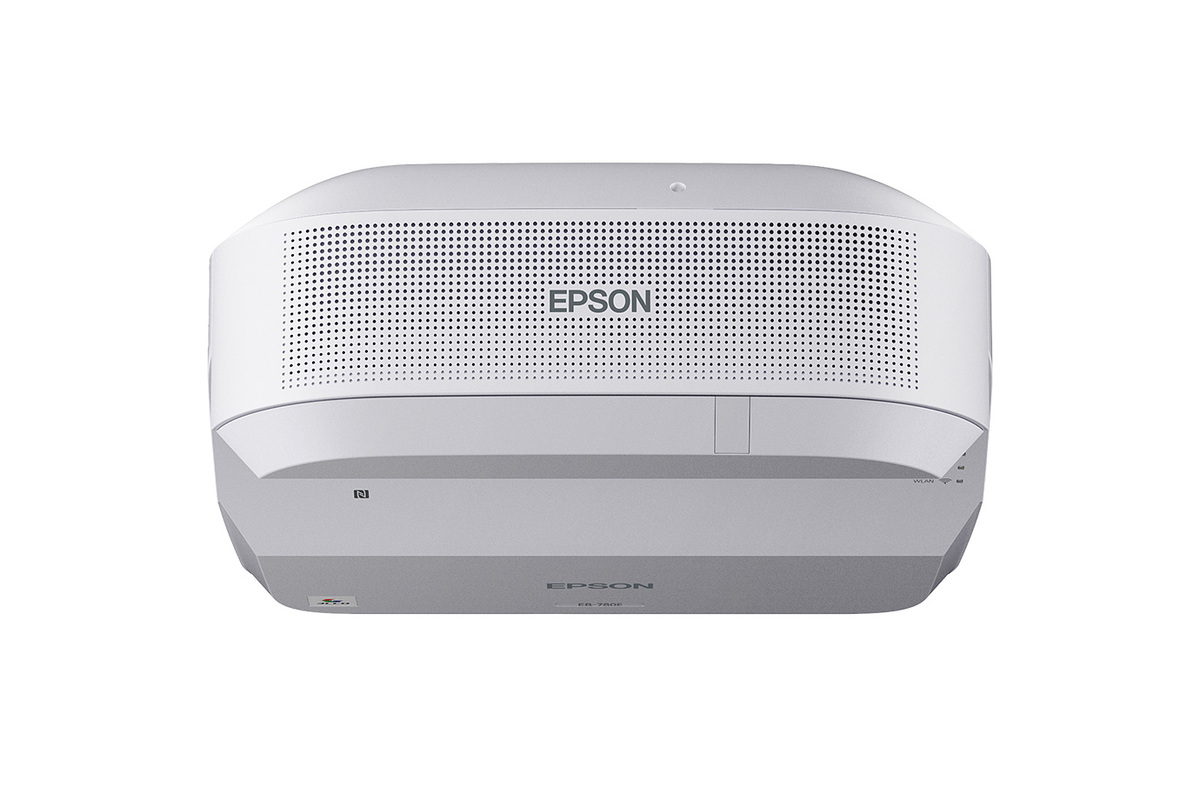
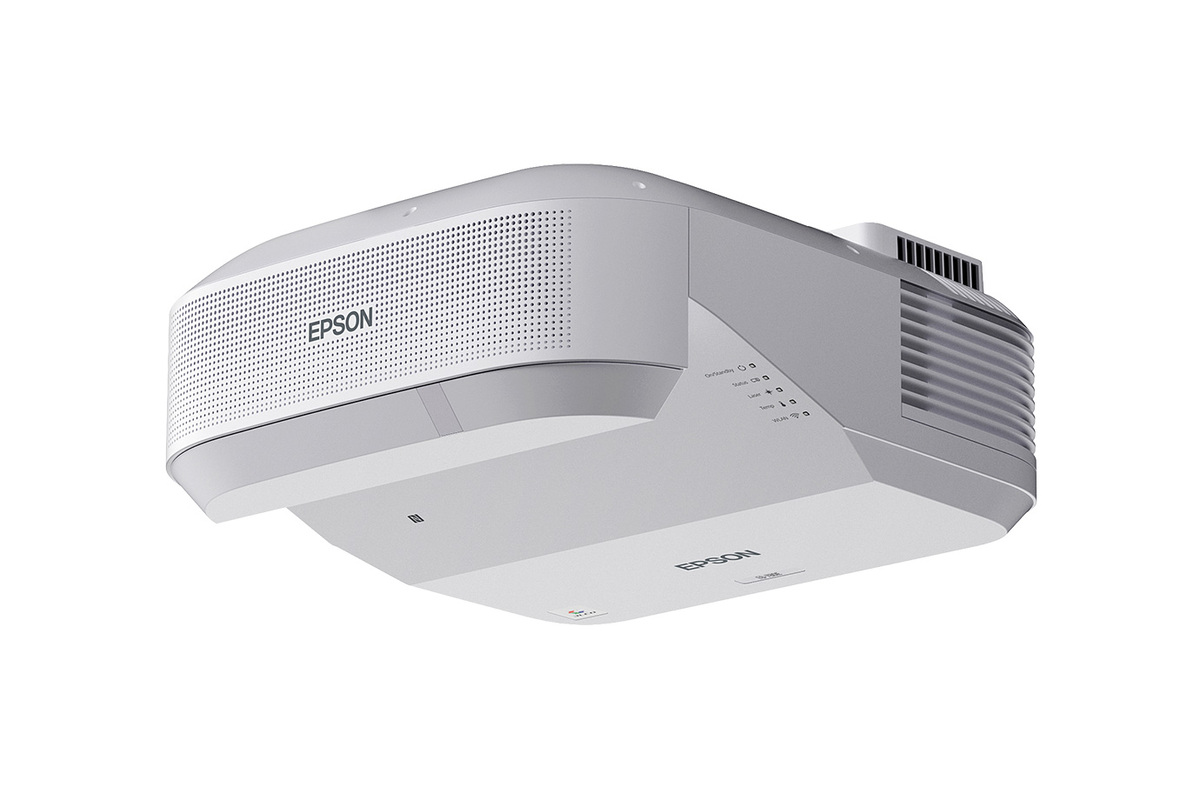
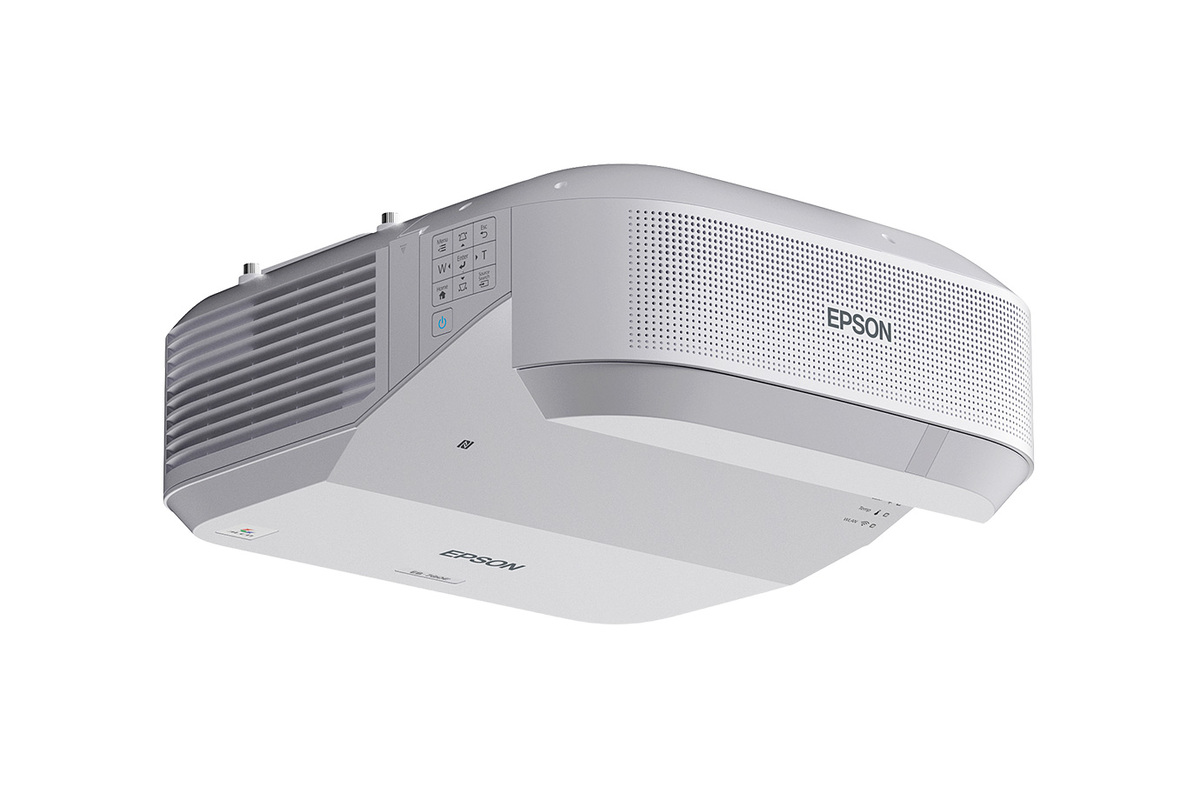
About PowerLite 780E
Epson PowerLite 780E is a 2026 ultra short throw laser projector aimed at classrooms, meeting rooms and shared learning spaces where a large display needs to sit close to the wall. Epson introduced it in May 2026 and scheduled it for Summer 2026 availability. The current US product page confirms the model is now part of Epson's active lineup. It combines 4,200 lumens of equal color and white brightness, 4K Enhancement, a 3-chip 3LCD light engine and images up to 180 inches. Its strongest case is not home cinema. It is a managed display for organizations that want wireless casting, flexible aspect ratios, fleet tools and a much larger image than a typical classroom flat panel.
Key specifications
Picture
| Display technology | 3-chip 3LCD |
|---|---|
| Resolution technology | 4K Enhancement; twice Full HD resolution on screen |
Brightness
| Color brightness | 4,200 lumens, IDMS rated |
|---|---|
| White brightness | 4,200 lumens, ISO rated |
Display
| Maximum image size | Up to 180 inches |
|---|---|
| Aspect ratios | 16:9, 16:6 and 21:9 supported |
Projection
| Throw type | Ultra short throw |
|---|
Installation
| Mounting | 360-degree placement supported |
|---|---|
| Multi-projection | Edge blending and split screen supported |
Wireless
| Wi-Fi | Integrated Wi-Fi 6/6E |
|---|---|
| Casting | Apple AirPlay and Miracast |
Collaboration
| Classroom Connect | Up to 50 connected devices; up to 4 displayed simultaneously |
|---|
Management
| Fleet tools | NFC configuration, OTA firmware and Projector Management Connected |
|---|
Light source
| Laser life | Up to 30,000 hours Extended Mode; 20,000 hours Normal Mode |
|---|
Where does the PowerLite 780E fit in Epson's 2026 lineup?
The 780E is the lower-brightness member of Epson's new non-interactive ultra short throw group. It shares the core large-display concept with the 870E and 875E, but its 4,200-lumen output is aimed at typical classrooms, meeting rooms and multipurpose spaces rather than installations that need the 5,000-lumen ceiling of the 800E-series models.
It also sits beside the BrightLink 780Ei. The BrightLink adds interactive classroom tools, while the PowerLite 780E is the better fit when users mainly need projection, casting and content sharing without paying for an interactive teaching layer.
How large can the PowerLite 780E display?
Epson specifies images up to 180 inches diagonal. That is the practical appeal of projection in rooms where a 75-inch or 86-inch panel can feel small from the back row. Because the projector is ultra short throw, it creates the image from close to the wall rather than sending light across the room from a ceiling position farther back.
The projector supports 16:9 plus ultra-wide 16:6 and 21:9 formats. Those wider layouts can be useful for hybrid meetings, dashboards and multi-window classroom content. Buyers should still measure the wall and confirm the required throw distance before choosing a screen size.
What does 4K Enhancement mean on the 780E?
The 780E uses Epson's 4K Enhancement technology, which shifts pixels to produce twice the resolution of Full HD on screen. It is not the same thing as a projector built around native 4K imaging panels, so buyers should understand the distinction rather than treating every 4K label as identical.
For the 780E's intended work, the extra displayed detail is most useful for text, spreadsheets, diagrams and large collaborative layouts. Epson pairs the processing with a 3-chip 3LCD system, avoiding the color wheel used by many single-chip projectors.
Is 4,200 lumens enough for a classroom?
Epson rates both color and white brightness at 4,200 lumens using the relevant IDMS and ISO measurement standards. That output is designed for well-lit classrooms and meeting spaces, although direct sunlight on the screen can still reduce perceived contrast.
The equal color and white ratings are useful when comparing projectors because a high white-lumen number alone does not describe color output. If a room is unusually large, has difficult ambient light or needs more brightness headroom, the 5,000-lumen PowerLite 870E or 875E is the logical comparison.
How does wireless casting work?
The PowerLite 780E includes Wi-Fi 6/6E, native Apple AirPlay and Miracast support. Epson Classroom Connect can handle wireless connections for up to 50 devices and can show content from up to four devices at the same time with moderator control.
That combination is especially useful in schools and shared meeting rooms where presenters arrive with different devices. Wireless performance still depends on network design, policy and device compatibility, so IT teams should review the deployment rather than assuming every casting method works identically on every network.
What makes the 780E easier to deploy across many rooms?
Epson built several fleet-management features into this generation. NFC can copy and transfer projector settings, over-the-air firmware updates reduce manual maintenance, and Epson Projector Management Connected supports cloud-based fleet administration. The Epson Setting Assistant app and new wall-mount design are intended to simplify installation.
These tools matter more when a school district or business is installing dozens of displays than when buying one projector. The 780E also supports 360-degree placement, edge blending and split screen, giving integrators more freedom for unusual or multi-projector layouts.
What should buyers know about maintenance?
The 780E is lamp-free. Epson states that the laser light source can operate for up to 30,000 hours in Extended Mode or 20,000 hours in Normal Mode before brightness reaches the stated threshold under Epson's test conditions. Other components can require service sooner, so this should not be read as a blanket 30,000-hour warranty.
Compared with lamp projectors, removing routine lamp replacement is valuable for ceiling or wall-mounted classroom fleets. Organizations should still plan for filters, cleaning, network administration and normal AV support.
PowerLite 780E vs 870E and BrightLink 780Ei
Choose the 780E when 4,200 lumens is enough and you want the 2026 UST platform without interactive BrightLink features. Move to the 870E when the room benefits from 5,000 lumens and the additional 800E-series positioning. The black 875E is especially suited to installations where a dark chassis blends into immersive or entertainment environments.
Choose BrightLink 780Ei when annotation and interactive classroom workflows are central to the purchase. The underlying display requirements may look similar, but the teaching experience and accessory needs are different.
Who should buy something else instead?
A conventional PowerLite L-Series projector is a better fit when ultra short throw placement is unnecessary or when the installation needs a different throw geometry. A commercial flat panel may be simpler in a small room where 75 to 86 inches is already large enough and users want a familiar television-like interface.
Home users should generally look at Epson's Lifestudio, Home Cinema or EpiqVision ranges instead. The PowerLite 780E earns its place in managed education and business environments through large scalable images, casting, fleet controls and installation flexibility rather than streaming entertainment features.
Reviews
No reviews yet
Nobody has reviewed PowerLite 780E here yet.