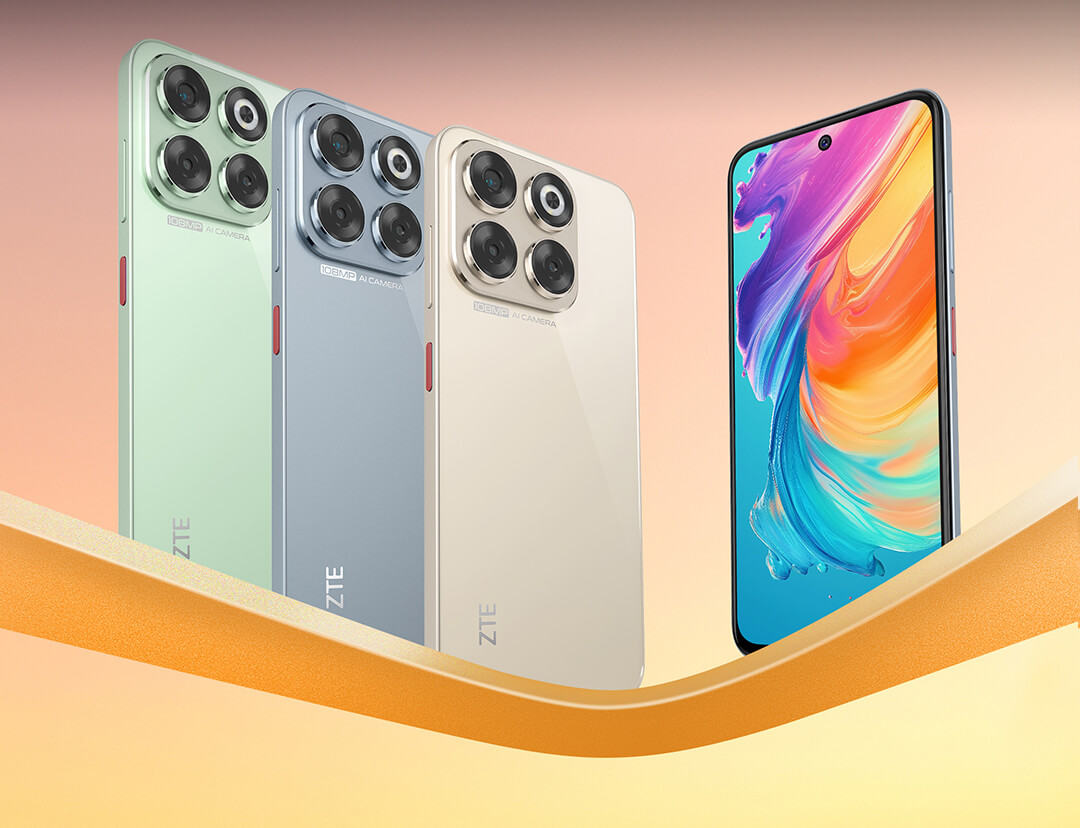
About ZTE Blade
Blade is one of the longest-running names in inexpensive Android phones, and it has stayed alive by being extremely good at one job: being the phone a carrier hands you.
That is not a backhanded compliment. An enormous number of people do not shop for a phone. They take what comes with the contract, or they buy the cheapest thing on the shelf that works, and what they need is a device that makes calls, runs messaging and maps, lasts the day and does not fall apart. Blade is built for exactly that and priced accordingly.
This page covers the line, which has been running long enough that individual models are beside the point. What matters is what the line is for and where its limits are.
Key specifications
Position
| Range | The value line, below Axon |
|---|
Build
| Typical | Plastic body, physical fingerprint sensor |
|---|
Connectivity
| Newer models | 5G available |
|---|
Distribution
| Sold through | Carriers, with model variants per operator |
|---|
What do you actually get?
The essentials, built to a price, with the compromises in predictable places.
Blade phones are typically plastic-bodied with a physical fingerprint sensor rather than one under the screen. Displays are adequate rather than notable. Newer models in the line have moved to 5G. Battery life is usually a strength, because a modest processor and a modest screen do not demand much.
What you give up is uniform across the budget category rather than particular to this line: cameras that struggle in low light, processors that show their limits in demanding apps, and shorter software support than a mid-range or flagship phone receives.
The important thing is that none of those compromises affect what most buyers of a phone at this price actually do with it. Messaging, calls, maps, music, a browser and a camera used in daylight are all well within it.
Why does the carrier channel matter so much here?
Because it explains nearly everything else about the line.
Blade phones reach most of their buyers through operators rather than through retail. That shapes the product in ways worth knowing. Model names and variants proliferate, because carriers want their own version, which is why the line looks confusing when you try to compare it. Availability differs sharply between countries, so a model reviewed abroad may not be the one you can buy. And the phone is often subsidised or bundled, which means the sticker price is not what most owners paid or thought about.
It also means software updates are frequently mediated by the operator, which tends to make them slower and less predictable than the manufacturer's own commitment implies.
For a buyer, the practical instruction is simple: judge the specific model your carrier is offering, in your country, rather than the line as a whole. The line is a price bracket and a distribution strategy more than it is a consistent product.
Who should buy something else?
Anyone who takes photographs they care about. Budget phone cameras are the most visible compromise at this price and no amount of value changes that. If photographs matter, spending more on the phone is the single highest-return upgrade available to you.
Anyone planning to keep the phone for four or five years. Software support at this end of the market is short, and a phone still in use after its security updates have stopped is a genuine risk rather than a theoretical one. Either budget for replacing it sooner or buy something with a longer published commitment.
Anyone who uses demanding applications or games. The processor is the limit and it will be reached.
Anyone who wants one predictable product. The model proliferation in this line is real, and if you find that frustrating rather than irrelevant, a manufacturer with a simpler range will be easier to live with.
Everyone else is well served, and there is no shame in it: a cheap phone that does the ordinary things reliably is one of the more useful objects available, and this line has been supplying it for a long time.
Reviews
No reviews yet
Nobody has reviewed ZTE Blade here yet.