About Twilio Segment Connections
Twilio Segment Connections is the customer data pipeline at the core of Twilio Segment. It collects first-party event data from websites, apps, servers, cloud tools and warehouses, then routes governed data to analytics, marketing, advertising, customer-engagement and storage destinations. It is a better fit for teams that need a reusable data layer than for organizations simply looking for a basic analytics dashboard.
What does Twilio Segment Connections do?
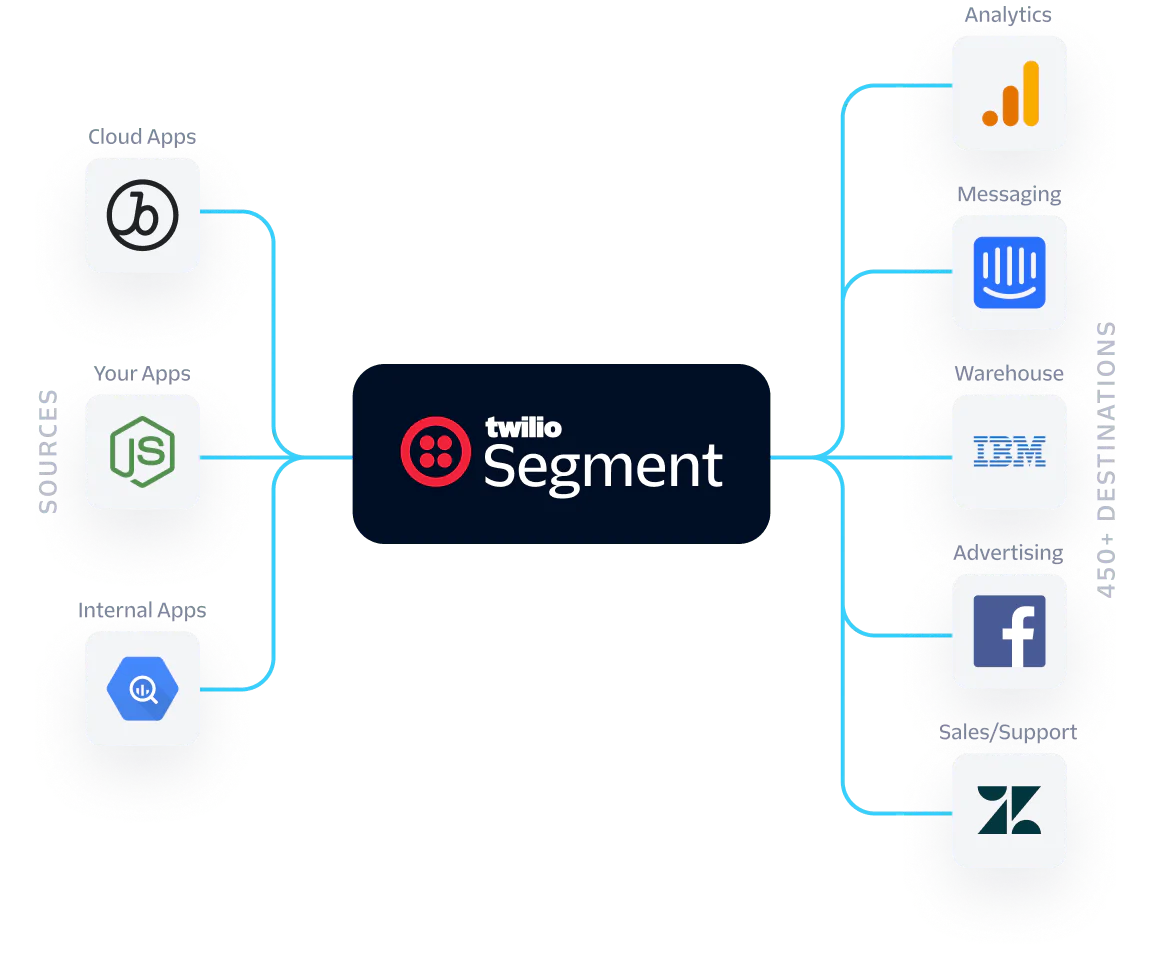
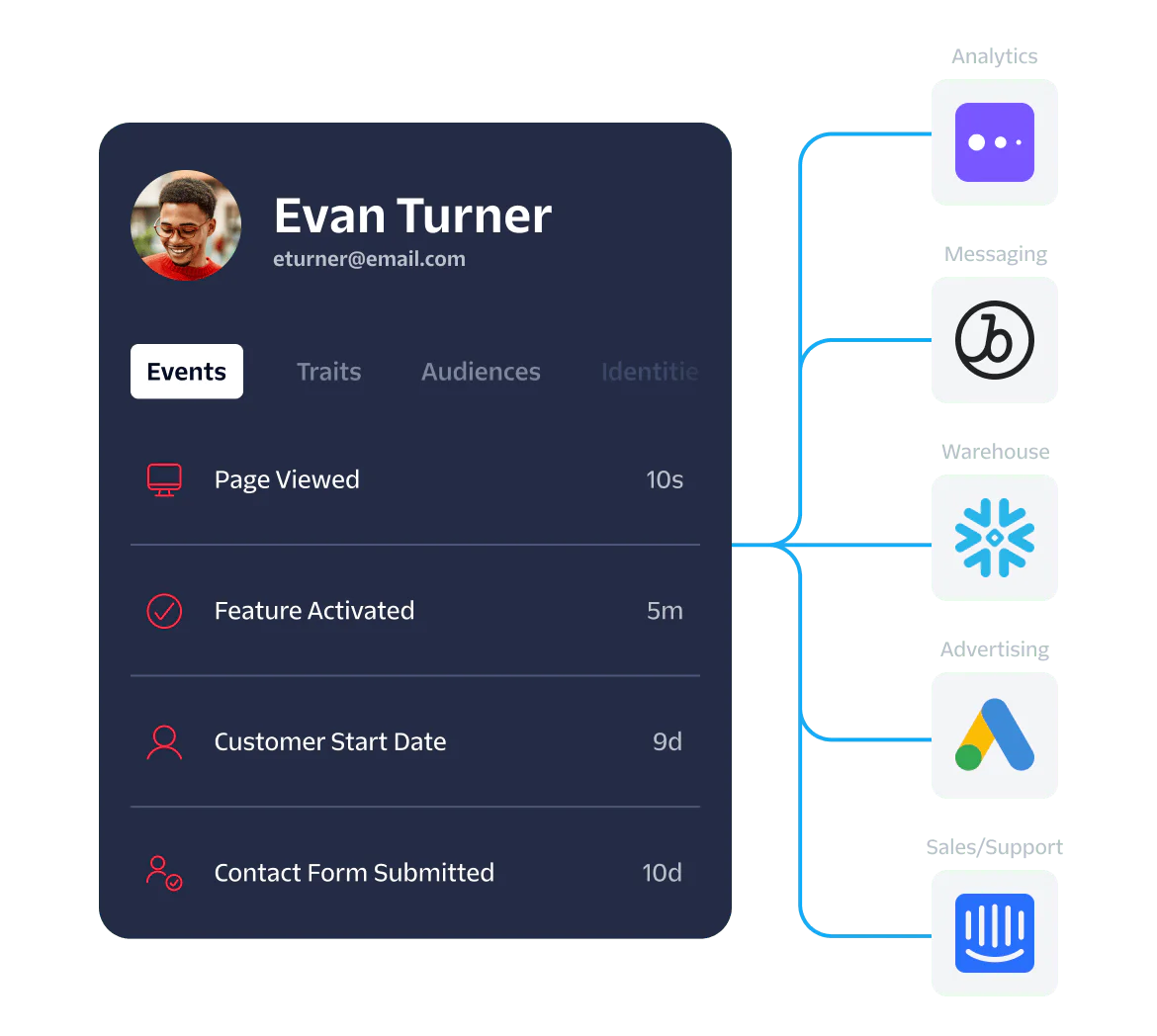
Connections gives teams a standard way to collect customer events once and send them to many downstream tools. Sources can include websites, mobile apps, servers and cloud applications. Segment can also work with warehouse data and route information to destinations such as analytics platforms, marketing systems, data warehouses and customer-engagement tools.
The practical value is decoupling collection from activation. Instead of adding a different vendor SDK every time the marketing or data team changes tools, organizations can send events into Segment and manage downstream destinations centrally. That can make tool changes faster, but it also makes the quality of the tracking plan and identity strategy more important because one bad event definition can propagate to many systems.
How do Sources, Destinations and Reverse ETL fit together?
Sources are the systems where customer data originates. Destinations are tools that receive data from Segment. Connections supports pre-built integrations plus custom integrations through Functions and APIs. Twilio currently describes more than 700 integrations across the Segment ecosystem.
Reverse ETL extends the model by taking useful data from a warehouse and activating it in downstream applications. This lets organizations combine behavioral events collected through Segment with attributes or calculated data already stored in a warehouse. Buyers should confirm the exact connector and sync behavior they require because integration counts alone do not show whether a connector supports the fields, direction or latency a specific workflow needs.
What governance and data-quality controls are available?
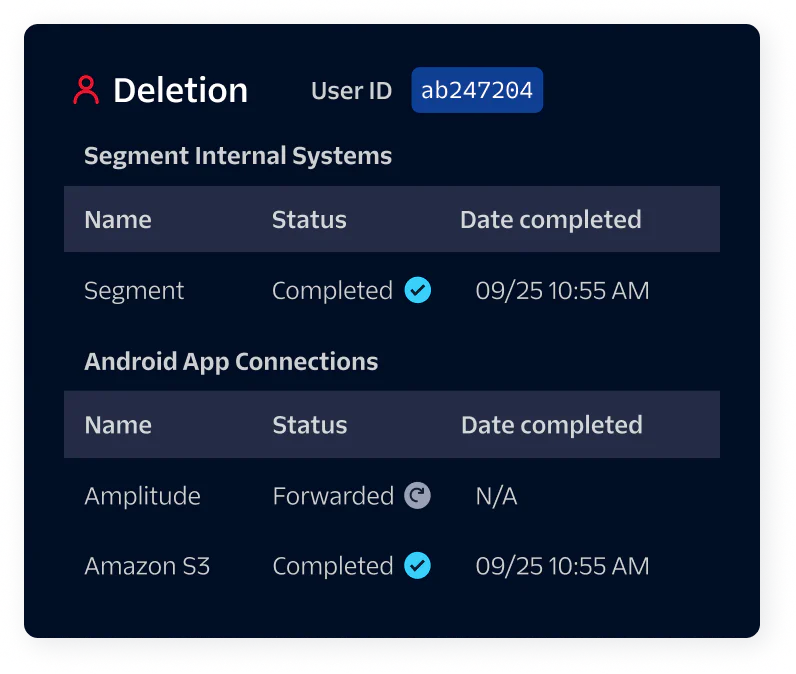
Connections includes debugging and observability features that help teams inspect event flows, diagnose delivery issues and monitor pipeline health. Segment Protocols can add tracking-plan governance and validation, while privacy tooling supports workflows such as user deletion and suppression. Some governance, role and regional capabilities are tied to higher plans or add-ons.
These controls are most valuable when several teams send data into a shared pipeline. Without clear event naming, ownership and schema rules, a CDP can become another source of inconsistent data. Organizations should define who can create Sources, modify Destinations, change tracking plans and approve new customer-data uses before scaling adoption.
How much does Twilio Segment Connections cost in August 2026?
Pricing checked on August 22, 2026 against Twilio's official Connections pricing page. The Free plan is $0 per month and includes up to 1,000 monthly tracked users, 500,000 Reverse ETL records per month, two Sources and one warehouse destination. Team starts at $120 per month and includes 10,000 monthly tracked users, unlimited Sources, public API access and 1,000,000 Reverse ETL records. Business uses custom pricing and adds capabilities for larger or more regulated deployments.
On the current Team pricing table, additional monthly tracked users are tiered: the published rate is $12 per additional 1,000 MTUs from 10,000 to 25,000, $11 per 1,000 from 25,000 to 100,000, and $10 per 1,000 above 100,000. Twilio also states that annual plans can save up to 20% compared with monthly billing. Buyers should model expected MTUs and overages rather than treating the $120 entry price as the likely total cost for a production deployment.
What is the difference between Connections and the full Twilio Segment CDP?
Connections is the data-pipeline layer. It focuses on collecting, routing and activating first-party data. Twilio's broader Customer Data Platform combines Connections with capabilities such as Unify and Engage for identity-resolved profiles, audiences and journey orchestration. Protocols can add deeper data-governance controls.
This distinction matters because a team may only need reliable event collection and routing. Paying for a full CDP makes more sense when identity resolution, audience building, real-time personalization or journey orchestration solves a defined requirement. Teams should avoid buying the broadest package simply because they expect to need it later.
What should teams know about implementation and migration?
The difficult part of a Segment deployment is usually not installing the SDK. Teams need to agree on event names, properties, identity rules, consent handling, environments and destination ownership. Existing analytics implementations may contain years of inconsistent tracking that should be rationalized before being copied into a new pipeline.
Migration should therefore be treated as a data-contract project. Validate events in development, compare downstream outputs, document owners, and stage destination changes carefully. Replays and debugging tools can help, but they do not replace a clean tracking plan. Organizations with many mobile applications should also evaluate how SDK changes and release cycles affect migration timing.
What are the main limitations and trade-offs?
Connections adds another critical layer to the data stack. If event definitions, identity logic or routing rules are wrong, errors can affect several downstream systems at once. Cost can also rise with monthly tracked users, higher-volume Reverse ETL, premium support, governance add-ons and broader CDP capabilities.
A warehouse-centric organization may decide that direct collection plus transformation and reverse ETL tools provide enough control without a traditional CDP. Smaller teams with only one analytics destination may not benefit from the additional abstraction. Segment is most compelling when many tools need consistent first-party data and the organization has enough data maturity to govern the shared pipeline.
How does Twilio Segment Connections compare with alternatives?
RudderStack is a common alternative for teams that want a warehouse-oriented customer-data pipeline and often evaluate deployment flexibility closely. mParticle and Tealium are alternatives for larger customer-data and activation programs. Hightouch can be attractive when the warehouse is already the center of the customer-data architecture and reverse ETL is the primary requirement. Snowplow may fit teams that want detailed control over behavioral data collection and modeling.
The right choice depends on whether the organization wants Segment to be the collection hub, how strongly it prefers warehouse-native patterns, required governance, supported destinations, real-time needs and the engineering effort it is willing to own.
Who should consider another product instead?
A small team that only needs product analytics may be better served by an analytics platform with its own SDK rather than introducing a separate customer-data pipeline. A company whose customer model already lives cleanly in a warehouse may prefer warehouse-native activation tools. Organizations that need a packaged marketing suite may also get more value from a broader application platform than from assembling a composable stack around Segment.
Twilio Segment Connections is a strong fit when the problem is consistent, reusable customer-data collection and routing across many systems. It is less compelling when there are few destinations, weak internal data governance or no clear reason to separate collection from the tools consuming the data.
Reviews
No reviews yet
Nobody has reviewed Twilio Segment Connections here yet.