About IT Service Management
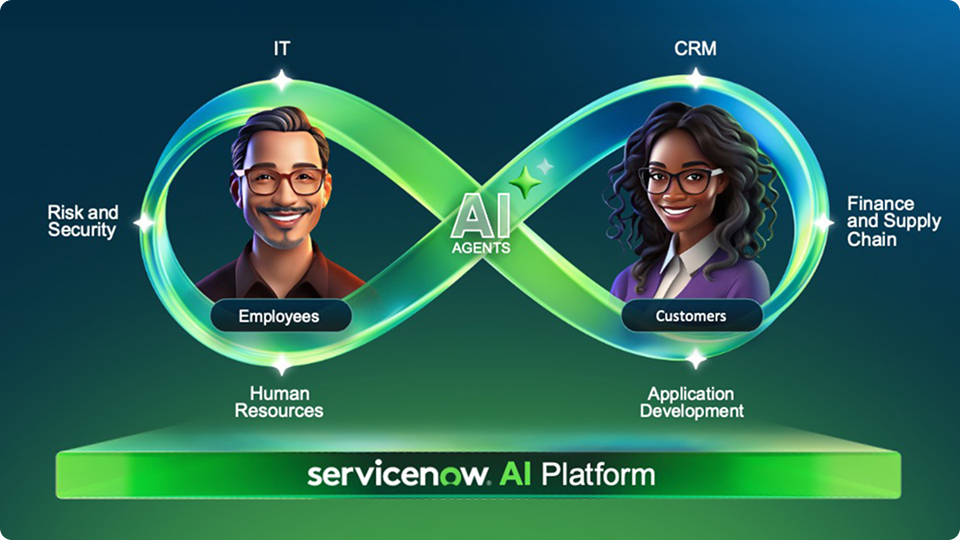
ServiceNow IT Service Management (ITSM) is the company's cloud software for running enterprise IT service workflows such as incidents, service requests, problems, changes, knowledge, self-service, and service operations. It runs on the ServiceNow AI Platform and is aimed at organizations that need governed IT processes, automation, configuration context, and service experiences at enterprise scale. This page focuses on ITSM itself; ServiceNow's corporate strategy and wider software portfolio are covered separately.
What does ServiceNow ITSM manage?
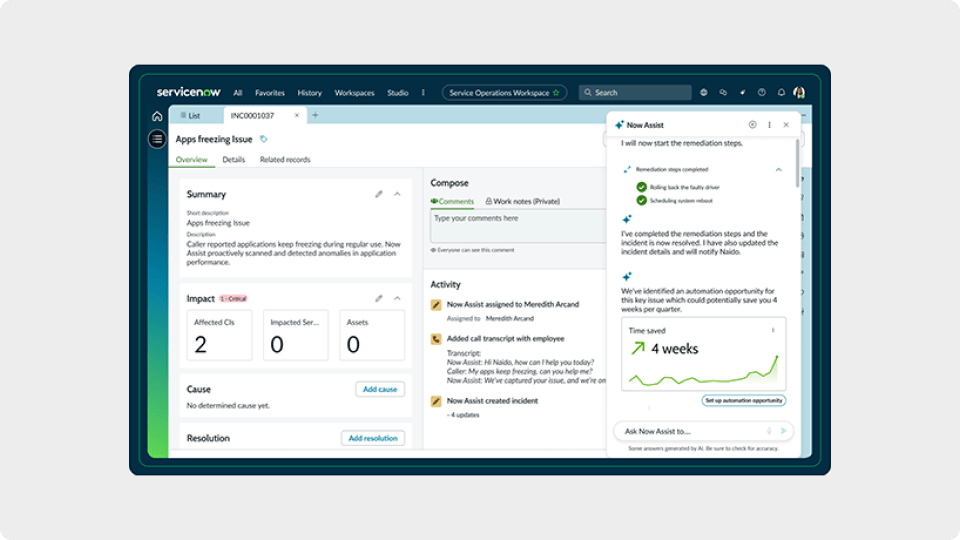
ServiceNow ITSM brings core service-management processes into one platform. Current product materials emphasize incident, problem, change, and service-request management, along with knowledge, self-service, service operations workspaces, analytics, automation, and related service-delivery capabilities. The goal is to give IT teams one operating model for receiving requests, resolving issues, controlling changes, and tracking service performance.
The product can support users through portals, chat, mobile, voice, Microsoft Teams, Slack, and other channels. That omnichannel model is useful for large organizations with distributed workforces, but it requires careful identity, catalog, knowledge, and routing design to avoid simply moving the same service-desk complexity into more channels.
How does AI work in ServiceNow ITSM?
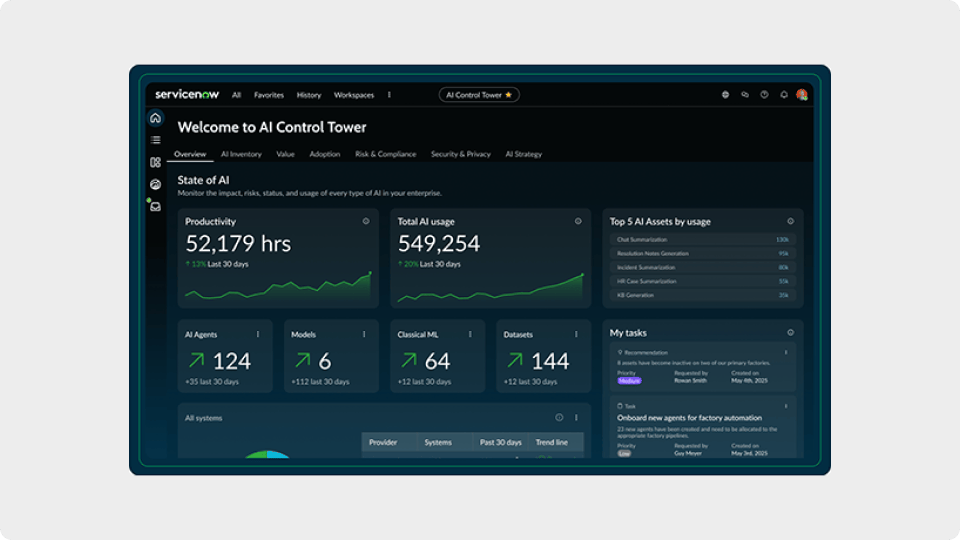
ServiceNow is increasingly using AI agents and domain-specific AI specialists inside ITSM rather than limiting AI to text generation. Current ITSM materials describe autonomous handling of routine requests, triage, investigation, incident resolution, knowledge generation, suggested actions, and proactive service workflows. AI is grounded in the same ServiceNow platform data, permissions, business rules, and workflow engine used by the rest of the product.
This can reduce repetitive work, but buyers should distinguish between capabilities included in a specific ITSM package and capabilities that require advanced licensing or additional platform entitlements. AI effectiveness also depends on data quality, knowledge quality, permissions, configuration data, and workflow design. Poor source data can limit the value of even strong automation.
What are the current ITSM packages?
ServiceNow currently markets ITSM Standard, ITSM Professional, and ITSM Enterprise. Standard is the foundation for core service-management processes such as incident, problem, change, request, asset and cost management, walk-up experience, and Service Operations Workspace. Professional builds on Standard with advanced analytics and automation capabilities such as Virtual Agent, Predictive Intelligence, Digital Product Release, Continual Improvement Management, DevOps Change Velocity, and related features. Enterprise adds capabilities including Workforce Optimization and Process Mining.
Exact entitlements can change between releases and contracts, so a buyer should verify the current package comparison in ServiceNow's official documentation before signing or renewing. The package names are useful for understanding the product hierarchy, but they should not be treated as fixed forever.
How much does ServiceNow ITSM cost?
Pricing checked on August 22, 2026. ServiceNow does not publish a standard public per-user list price for ITSM. Its current pricing page directs buyers to request a custom quote and states that quotes can cover Standard, Professional, and Enterprise packages with pricing tailored to requirements.
That means any third-party page presenting one universal ServiceNow ITSM seat price should be treated cautiously. The real contract can depend on package, roles, user counts, modules, AI and analytics entitlements, support, implementation scope, environments, and negotiated terms. Buyers should compare the full contract and expected implementation cost rather than use an unsupported headline figure.
How does ITSM use the CMDB and service context?
A key ServiceNow advantage is the ability to connect service-management workflows with configuration and service data on the same platform. Incident, problem, and change processes can use configuration-item relationships and service context to understand dependencies, assess impact, and coordinate resolution. This becomes especially important in larger environments where a change to one system can affect many dependent services.
The benefit depends heavily on data quality. A CMDB that is incomplete, duplicated, or poorly governed can weaken automation and impact analysis. Organizations should treat discovery, ownership, reconciliation, service mapping, and data stewardship as ongoing operating disciplines rather than one-time implementation tasks.
What should enterprises plan for during implementation?
ServiceNow ITSM is configurable enough to support complex enterprises, which makes implementation discipline important. Buyers should define process ownership, approval rules, catalog structure, service taxonomy, roles, integrations, data migration, notification standards, reporting, and customization boundaries before expanding broadly. It is usually safer to prefer supported configuration and reusable platform patterns over large amounts of custom code.
Implementation partners can accelerate deployment, but they also add cost and dependency. Organizations should retain internal architecture knowledge, document customizations, plan upgrades, and decide who owns long-term platform governance. A technically successful launch can still become difficult to maintain if every department creates a separate process model.
What are the main limitations and trade-offs?
ServiceNow ITSM can be broader and more complex than smaller organizations need. Quote-based pricing also makes early cost comparison less transparent than products with public self-service prices. Advanced implementations may require specialist administrators, developers, process owners, integration expertise, and partner support.
The platform's flexibility can also encourage over-customization. If every team reproduces its historical process exactly, upgrades and administration can become harder. Organizations get more value when they are willing to standardize processes where possible and use customization only where it creates clear business value.
How does ServiceNow ITSM compare with alternatives?
Atlassian Jira Service Management can be attractive to organizations already centered on Jira and Confluence, especially where development and service workflows need close alignment. BMC Helix is another enterprise-focused service-management platform. Freshservice and ManageEngine ServiceDesk Plus can be easier to evaluate for organizations looking for a narrower service-management footprint or more transparent entry pricing. Microsoft-centric organizations may also compare integrations and workflow options across the Microsoft ecosystem.
The best choice depends on enterprise scale, process complexity, CMDB requirements, automation depth, deployment model, administration skills, integration needs, and whether the organization plans to expand beyond IT into other ServiceNow workflow families.
Who should consider another product instead?
A small or midsize organization with straightforward ticketing, a limited service catalog, minimal change management, and no need for a broad enterprise workflow platform may be better served by a simpler ITSM product. Teams that need fast self-service setup and predictable public pricing may also prefer a narrower SaaS alternative.
ServiceNow ITSM is most compelling when service management is strategically important, workflows are complex, enterprise governance matters, and the organization can benefit from sharing data and automation with adjacent ServiceNow products. Buying it only for basic ticket handling can leave much of the platform's value unused.
Reviews
No reviews yet
Nobody has reviewed IT Service Management here yet.