About ChatGPT Edu
ChatGPT Edu is OpenAI's institution-managed ChatGPT plan for universities and higher-education organizations that want to provide AI access to students, faculty, researchers and campus staff under centralized administration. It sits above personal ChatGPT plans in governance rather than simply offering a larger individual quota: the institution controls identity, permissions, workspace settings, data handling and access to advanced capabilities. This page focuses on campus deployment, administration, privacy, current Edu functionality, commercial structure and the practical issues universities should evaluate before rollout.
What is ChatGPT Edu designed for?
ChatGPT Edu is intended for university-wide or institution-managed use rather than individual student subscriptions. OpenAI positions it for teaching, learning, research, student support and campus operations, with a managed workspace that can be deployed to broad campus communities. Universities can use the same general ChatGPT interface for tasks such as analysis, writing support, coding, research, file work and web search while retaining institutional controls that are not available on ordinary personal plans.
That difference matters operationally. A university may need separate policies for students, faculty, researchers and administrative staff, along with clear rules for sensitive data, assessment, academic integrity and acceptable use. The software can support many academic workflows, but an institution still needs its own governance model and training program rather than assuming a campus license automatically produces responsible use.
What administration and identity controls does ChatGPT Edu include?
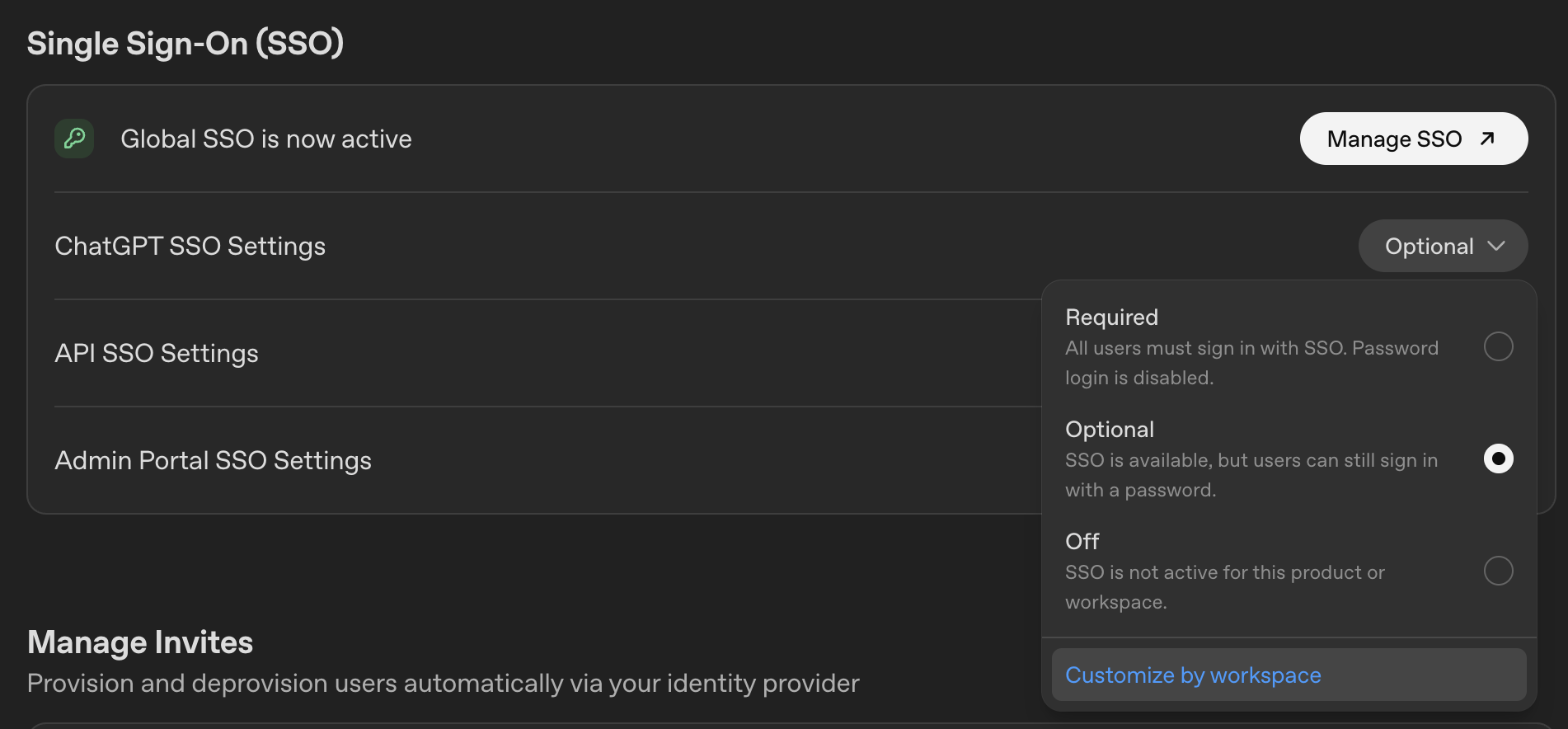
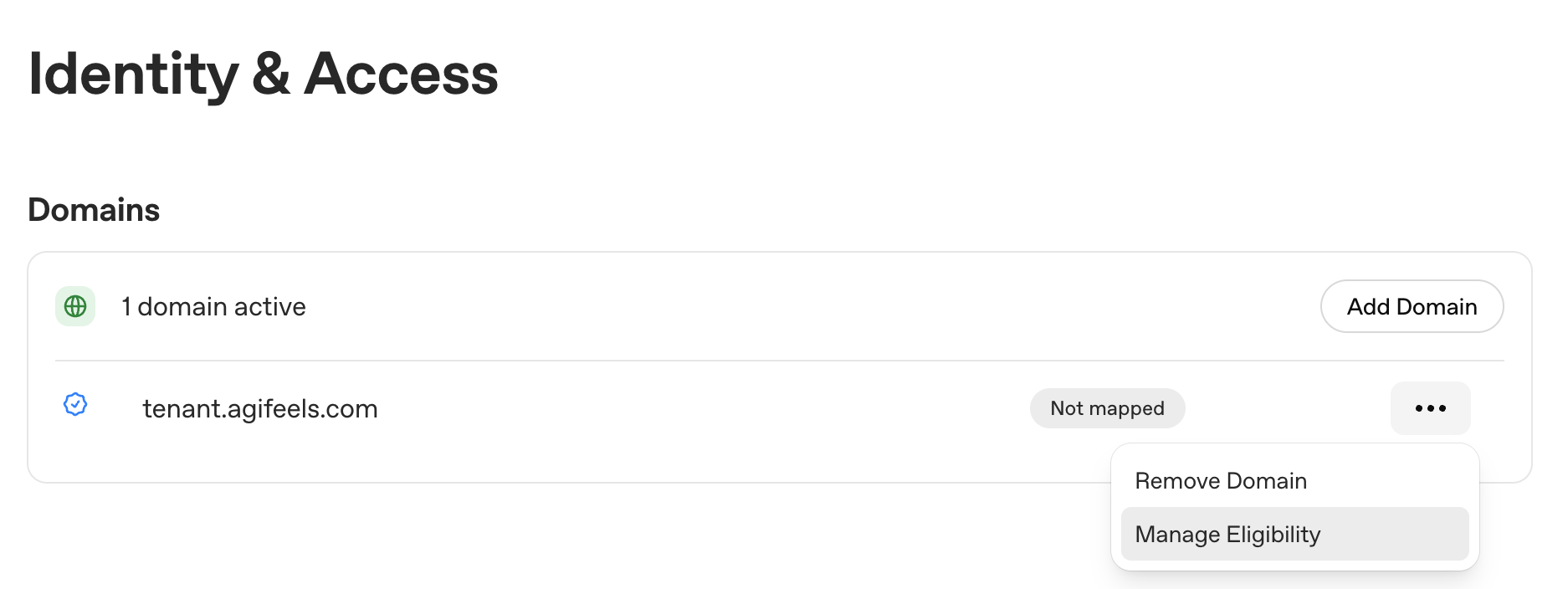
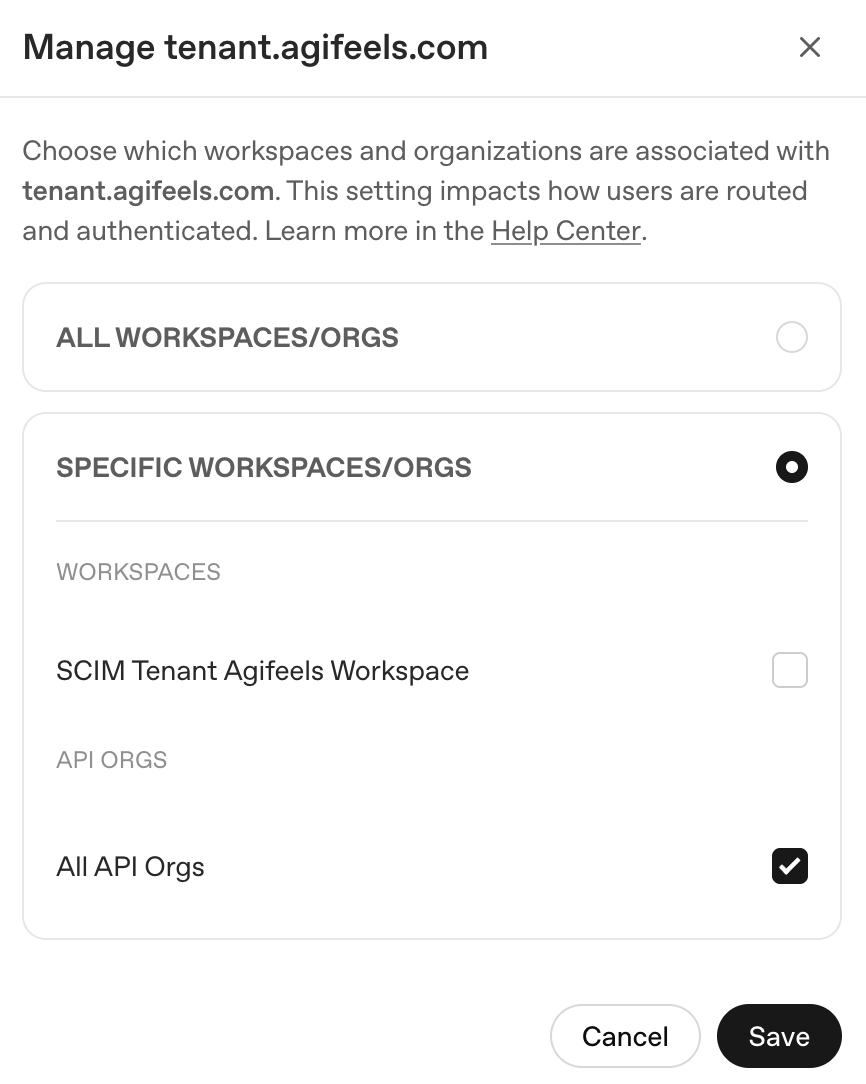
OpenAI currently supports SAML single sign-on for ChatGPT Edu, along with SCIM provisioning for eligible Edu workspaces. SCIM can automate invitations and removals through the institution's identity provider, while domain verification and mapping determine which institutional domains apply to specific workspaces. Role-based controls can further separate what different groups are allowed to access or manage.
The Global Admin Console provides a broader management surface for eligible Edu organizations. OpenAI documents controls for domains, SSO, workspace access, analytics, agents, governance and supported administrative credentials. This becomes important for universities with several schools, campuses or workspaces because central administrators can manage the tenant while local workspace administrators retain more limited scope.
How does OpenAI handle university data in ChatGPT Edu?
OpenAI states that ChatGPT Edu inputs and outputs are not used to train its models by default. The organization owns and controls its business data, and Edu customers can manage retention and connected internal sources. OpenAI also documents encryption at rest and in transit and says its enterprise infrastructure has undergone independent security auditing.
Eligible new Enterprise and Edu customers can select supported data-residency regions for customer content, and eligible deployments can add inference residency in supported regions. These options can help with institutional policy or regulatory requirements, but availability varies by geography and feature. Universities should confirm whether the exact features they plan to enable are compatible with their selected residency configuration rather than assuming every ChatGPT capability behaves identically in every region.
What current ChatGPT features are available to Edu users?
ChatGPT Edu includes access to OpenAI's current flagship ChatGPT experience and advanced tools such as file uploads, data analysis and web browsing, with substantially higher limits than ChatGPT Free. Universities can also create and manage custom GPTs inside their workspace. Exact model names and usage allowances change as OpenAI updates ChatGPT, so the current workspace model picker and institutional agreement are more reliable than a fixed historical feature table.
The Edu experience has continued expanding in 2026. ChatGPT Work is rolling out to Edu as a mode for longer, multi-step tasks that can research, analyze information and create finished documents, spreadsheets, presentations, reports and Sites. OpenAI has also rolled out Library for Edu workspaces so members can find and reuse uploaded or created files subject to workspace retention policies. Skills are available in beta for Enterprise and Edu, giving institutions a way to package repeatable instructions and workflows under role-based controls.
How do credits and usage limits work in ChatGPT Edu?
ChatGPT Edu does not have one public self-service monthly price. OpenAI directs universities to contact sales, so institutions should treat pricing as contract-based rather than quoting a universal per-student number. Commercial terms can depend on deployment size, agreement structure and included usage.
OpenAI also supports flexible, credit-based usage for Enterprise and Edu plans. Credits can extend access to advanced capabilities such as deeper reasoning, Deep Research, image generation, advanced voice, ChatGPT Work and Codex when those capabilities are included in the organization's setup. Edu administrators can set usage limits and control overages, and current administration tools expose credit consumption and cost-related analytics where supported. Universities should therefore evaluate both the base agreement and expected usage of expensive advanced modes rather than comparing only a headline seat price.
What should universities know about ChatGPT Work, Codex and education workflows?
ChatGPT Edu is broader than a study assistant. OpenAI is increasingly connecting education deployments to longer-running agentic work. ChatGPT Work can help with research, analysis and creation of finished materials, while Codex provides a dedicated software-development workflow for programming, code review and related engineering tasks. OpenAI has also introduced education-focused plugins and resources aimed at educators and college students using these newer capabilities with course materials and context they select.
For universities, that expansion increases both opportunity and governance needs. A tool that can read files, connect to institutional systems or perform multi-step work requires clearer permissions than a simple question-and-answer interface. Institutions should decide which apps, agents, plugins and actions can be enabled for each audience and should test higher-risk workflows before broad deployment.
What compliance and audit options are available?
OpenAI provides a Compliance Platform for Enterprise and Edu customers that can supply audit and compliance data for use with eDiscovery, data-loss-prevention and SIEM systems. Current documentation describes append-only compliance logs and APIs for supported workspace state and events. The Global Admin Console also exposes usage and administrative analytics depending on role and configuration.
These tools help institutions build oversight, but they do not replace local compliance responsibilities. Universities still need to define retention rules, determine which academic or research data may be entered into ChatGPT, establish procedures for investigations and legal holds, and understand what administrators can access in managed accounts.
Can students export their data from a ChatGPT Edu workspace?
OpenAI added member data export for eligible ChatGPT Edu workspaces in June 2026. Data export is off by default and requires administrator enablement. It is available only when the workspace does not have a data-residency configuration, and members can export only their own data. Administrators can control the permission through workspace defaults or custom roles.
That creates a real policy trade-off. Institutions that enable residency for regulatory or governance reasons may not have the same export path available, while institutions without residency can decide whether students should be able to take a copy of their conversations when they leave. Universities should plan this before graduation, employment changes or account deprovisioning rather than addressing it only when users request access.
What are the main limitations and risks of ChatGPT Edu?
ChatGPT can produce incorrect or incomplete answers, so it should not be treated as an authoritative source simply because access is institution-managed. Faculty and students still need source checking, subject expertise and appropriate citation practices. Academic-integrity policies also need to distinguish acceptable assistance from prohibited substitution of student work.
Campus rollout can be complex. Identity provisioning, role design, data policies, research restrictions, faculty guidance, support processes, credit budgets and app permissions all require ownership. Features also change rapidly, which means documentation and training need regular revision. Some universities may prefer a narrower deployment to selected departments before committing to institution-wide access.
Who should consider another option instead of ChatGPT Edu?
A university should consider another approach if it only needs AI access for a small pilot group, if it cannot support centralized identity and governance, or if most users would be adequately served by individual plans under existing policy. Institutions that already standardize heavily on another productivity or cloud ecosystem may also prefer AI capabilities that inherit those systems' administration and content permissions more directly.
The best fit for ChatGPT Edu is an institution that wants ChatGPT broadly available while keeping campus identity, permissions, privacy, analytics and advanced usage under institutional control. The buying decision should therefore be made jointly by academic leadership, IT, security, privacy, procurement and the people responsible for teaching and research policy.
Reviews
No reviews yet
Nobody has reviewed ChatGPT Edu here yet.