About Lifestudio Flex
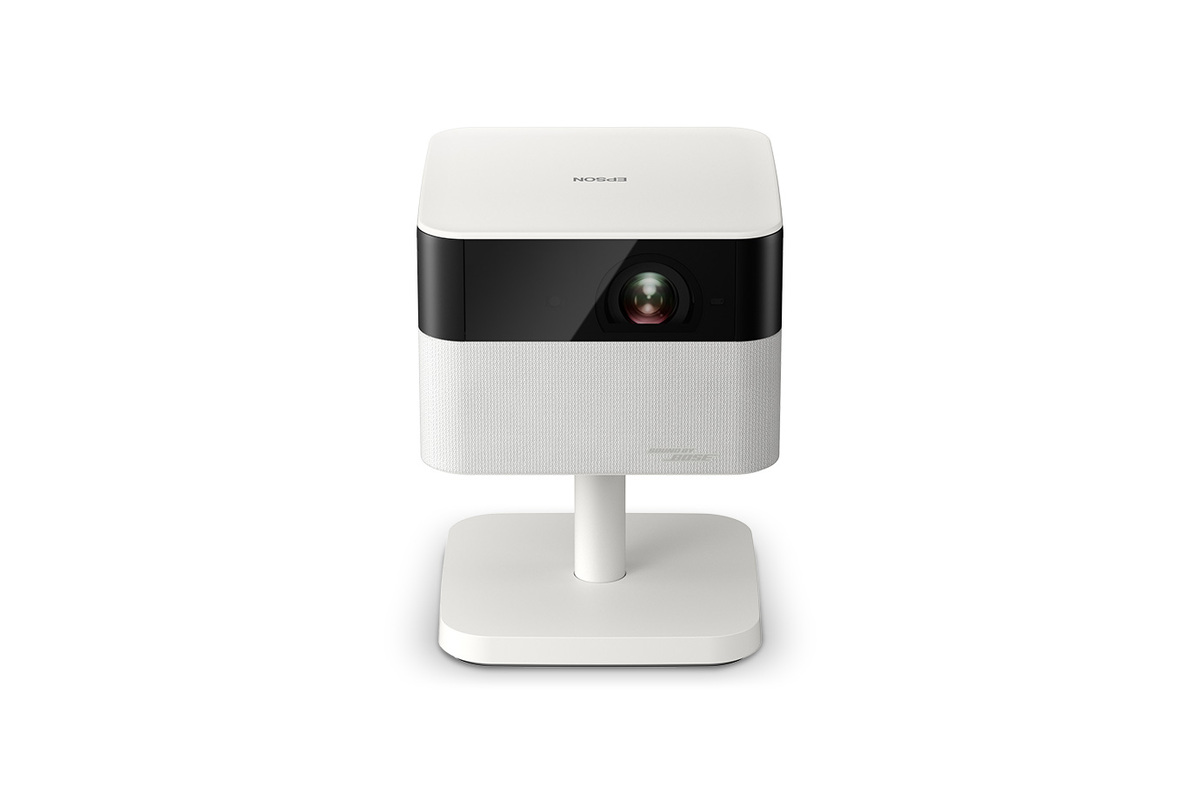
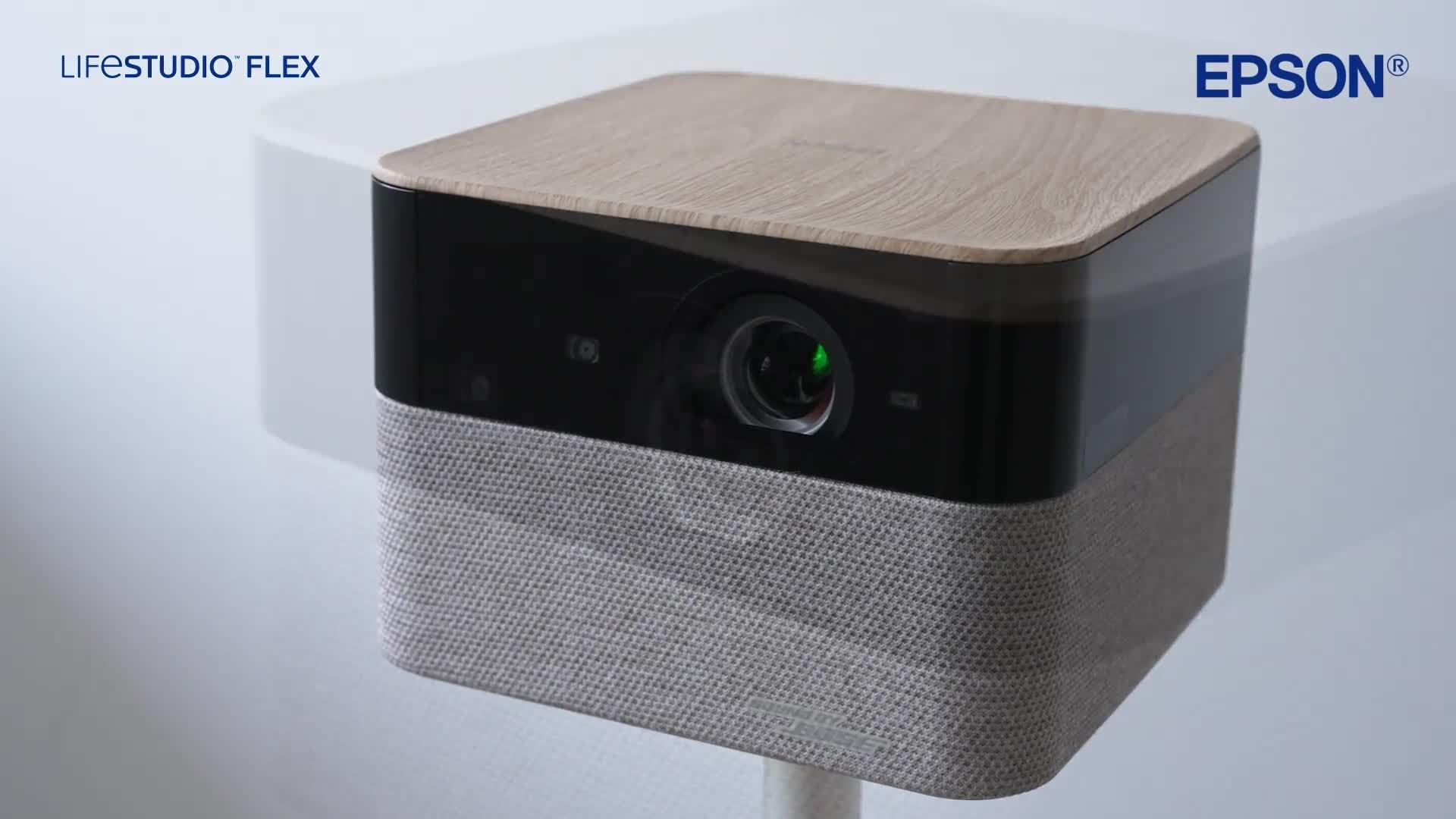
Epson Lifestudio Flex is the Full HD model in Epson's adjustable-stand lifestyle projector range. It is built for people who want to point a projector at a wall, screen or other flat surface without committing to a fixed installation. The integrated swivel-and-tilt stand, Google TV, Sound by Bose and automatic picture setup make it especially practical for bedrooms, apartments and shared living spaces. Its 700-lumen brightness means it works best when you can control the room lighting, while the Flex Plus is the step-up choice for buyers who want 4K PRO-UHD and more brightness.
Key specifications
Picture
| Resolution | Full HD |
|---|---|
| Maximum image size | Up to 150 inches |
| White brightness | 700 lumens, ISO rated |
| Color brightness | 700 lumens, IDMS rated |
Projection
| Display technology | 3-chip 3LCD Triple Core Engine |
|---|
Design
| Placement | Built-in adjustable swivel-and-tilt stand |
|---|
Smart features
| Streaming platform | Built-in Google TV |
|---|
Audio
| Sound | Integrated stereo system featuring Sound by Bose technology |
|---|
Setup
| Automatic setup | EpiqSense 2.0 |
|---|
Gaming
| Gaming feature | Low Latency Mode |
|---|
Software
| Companion app | Epson Projection Studio for iOS and Android |
|---|
Support
| US limited warranty | 2 years |
|---|
Why choose the Lifestudio Flex instead of a normal projector?
The adjustable stand is the main reason. Rather than balancing a projector on books or buying a separate stand, you can rotate and tilt the Flex to aim the picture where you want it. That makes room-to-room use much less awkward.
EpiqSense 2.0 then helps with picture setup, including focus and image alignment. It does not remove the need for a suitable projection surface, but it reduces the fiddling that can make portable projectors frustrating.
What picture quality can you expect?
Lifestudio Flex uses Epson's 3-chip 3LCD Triple Core Engine and produces a Full HD image up to 150 inches. Epson rates both white and color brightness at 700 lumens. Matching color and white brightness is useful for films, animation and sports where colorful scenes matter as much as a bright white test pattern.
This is still a lifestyle projector rather than a high-output living-room TV replacement. A darker room will give it more impact. If you regularly watch with daylight pouring through the windows, a brighter projector is the safer choice.
How do streaming and sound work?
Google TV is built in, so everyday streaming does not require a separate stick. Epson says the platform provides access to Netflix and thousands of apps, although subscriptions and regional availability still apply.
The integrated stereo system features Sound by Bose technology. That keeps the setup clean and makes the Flex useful for spontaneous movie nights. Buyers building a dedicated cinema can still connect a more substantial audio system, but many casual users will appreciate not needing speakers on day one.
Is Lifestudio Flex suitable for gaming?
Epson includes a low-latency gaming mode, and HDMI lets you connect a console or PC. The large picture is well suited to relaxed single-player games, party games and local multiplayer.
Serious competitive players should compare measured input lag before choosing any projector. The Flex is designed first around flexible entertainment, not esports. Buyers with a 4K console should also consider Flex Plus because the standard Flex is Full HD.
Lifestudio Flex vs Flex Plus: what changes?
The standard Flex is the value-focused Full HD option. Flex Plus moves to 4K PRO-UHD, increases rated color and white brightness from 700 to 1,000 lumens, and adds mood lighting. Both keep the adjustable lifestyle design, Google TV, Bose audio and Epson's easy-setup approach.
Epson currently lists Flex at $849.99 and Flex Plus at $999.99 in the US. That relatively small price gap makes Flex Plus worth considering when sharper 4K presentation and extra brightness matter. Flex remains sensible when Full HD is enough and keeping the purchase price lower matters more.
What are the main limitations?
Brightness is the first consideration. Seven hundred lumens can look attractive in controlled lighting, but it cannot compete with a bright television or a high-output home cinema projector in a sunlit room. The 150-inch maximum is also a capability, not a promise that every room will look best at that size.
The integrated stand improves placement, but you still need power and enough throw distance. Buyers wanting a projector that sits inches from the wall should look at an ultra-short-throw model such as Lifestudio Grand instead.
Who should buy something else instead?
Choose Flex Plus if 4K detail and 1,000-lumen brightness justify the extra cost. Choose Lifestudio Grand if you want an ultra-short-throw living-room installation with much higher brightness. A dedicated Home Cinema or Pro Cinema model is a better direction when picture performance matters more than portability and all-in-one convenience.
Lifestudio Flex makes the strongest case for buyers who move their entertainment around the home and want the projector itself to handle streaming, sound and much of the setup.
Reviews
No reviews yet
Nobody has reviewed Lifestudio Flex here yet.