About Edge AI
Edge AI is ClearBlade's software for running artificial intelligence and operational logic close to the devices and machines where data is created. It is designed for industrial and field environments where latency, bandwidth, resilience or intermittent connectivity make cloud-only processing a poor fit. The product combines edge infrastructure management with local AI inference and data control.
What Edge AI is built to do
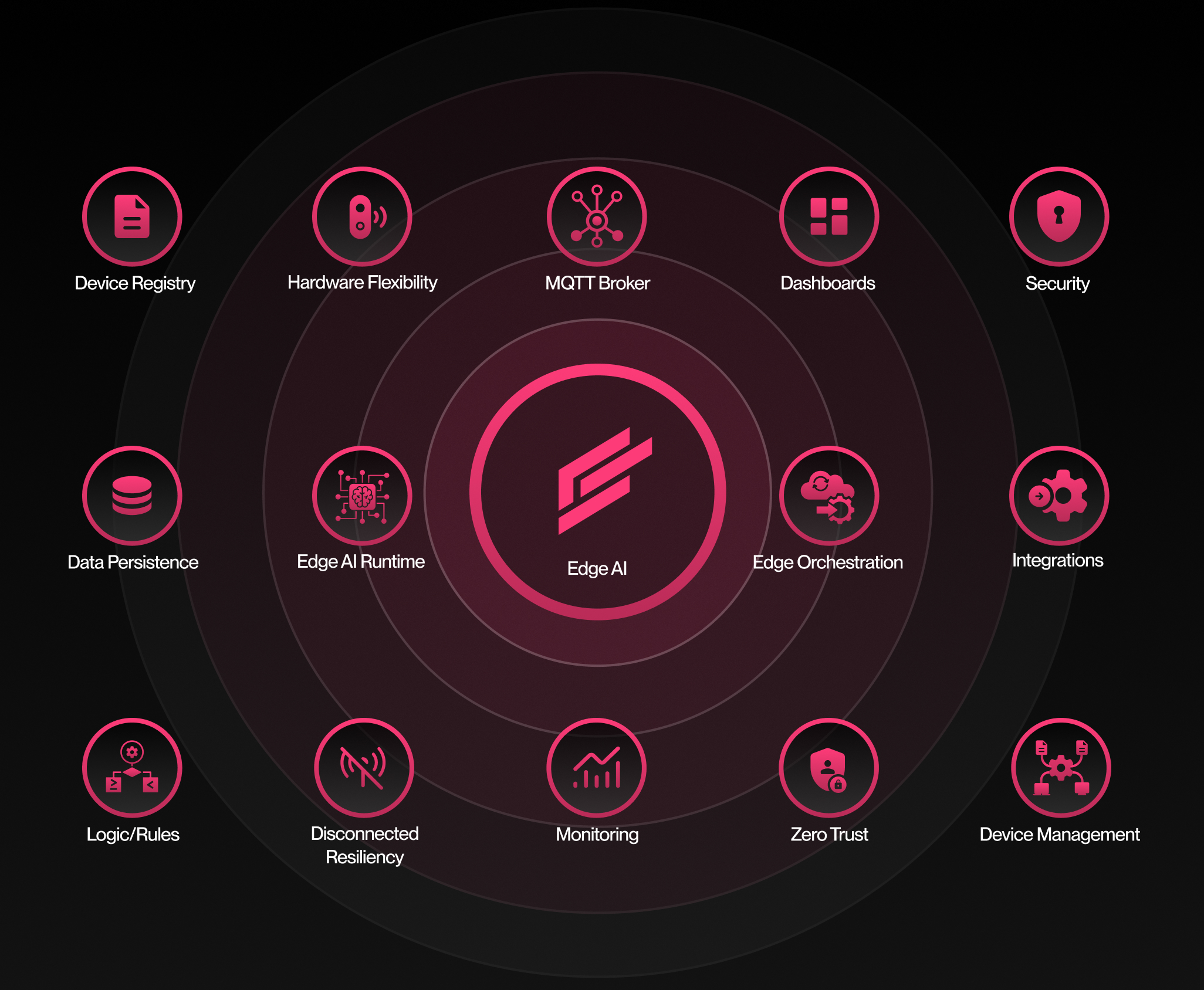
ClearBlade positions Edge AI around local processing, AI inference and operational response at the edge. It can run models near industrial equipment, gateways and other field systems so teams can detect conditions and trigger actions without waiting for a round trip to the cloud. The platform also includes edge device management, container control, health monitoring and remote oversight so distributed edge nodes can be operated as a managed fleet rather than as isolated computers.
Who should consider Edge AI
The product is relevant to organizations that need fast decisions from machine or sensor data in locations where connectivity may be slow, expensive or unreliable. Manufacturing, energy, transportation, utilities and infrastructure operators are natural candidates because they often have equipment that must continue operating when cloud access is limited. Buyers may also consider it when sending all raw data to the cloud would create unnecessary bandwidth cost or delay.
How it differs from Intelligent Assets
Edge AI and Intelligent Assets address different layers of the operational stack. Edge AI focuses on local compute, inference, data handling and immediate response near devices. Intelligent Assets provides digital twins, business-facing visualization and workflow automation for operations teams. An organization may use both when it needs local decision-making in the field and a broader operational view for people, but a buyer should not assume the two products solve the same problem.
What buyers should evaluate
Teams should test the hardware they actually plan to deploy, including processor architecture, available memory and local network conditions. They should also measure inference latency, model update workflow, remote management, offline behavior and how data is synchronized when connectivity returns. Security at the edge is critical because field hardware can be exposed to different physical and network risks than cloud systems. Integration with existing IoT and operational systems should be validated early.
Where it fits in the ClearBlade Platform
Edge AI can complement IoT Core+ when organizations want a common stack across device connectivity, cloud services and local execution. It can also feed events and insights into Intelligent Assets for digital twin visualization and operational workflows. This makes it useful in architectures where not every decision belongs in the cloud. The edge layer can handle immediate filtering, inference and response, while central systems retain broader analytics, coordination and governance.
Who should choose something else
Organizations whose data is already centralized, whose applications tolerate normal cloud latency and whose sites have dependable connectivity may not need a dedicated edge AI layer. Teams that only need secure device connectivity should look first at IoT Core, while buyers focused on operator dashboards and digital twins may prefer Intelligent Assets. Edge AI is strongest when local compute provides a clear operational benefit, not simply because edge computing is available as a feature.
Reviews
No reviews yet
Nobody has reviewed Edge AI here yet.